
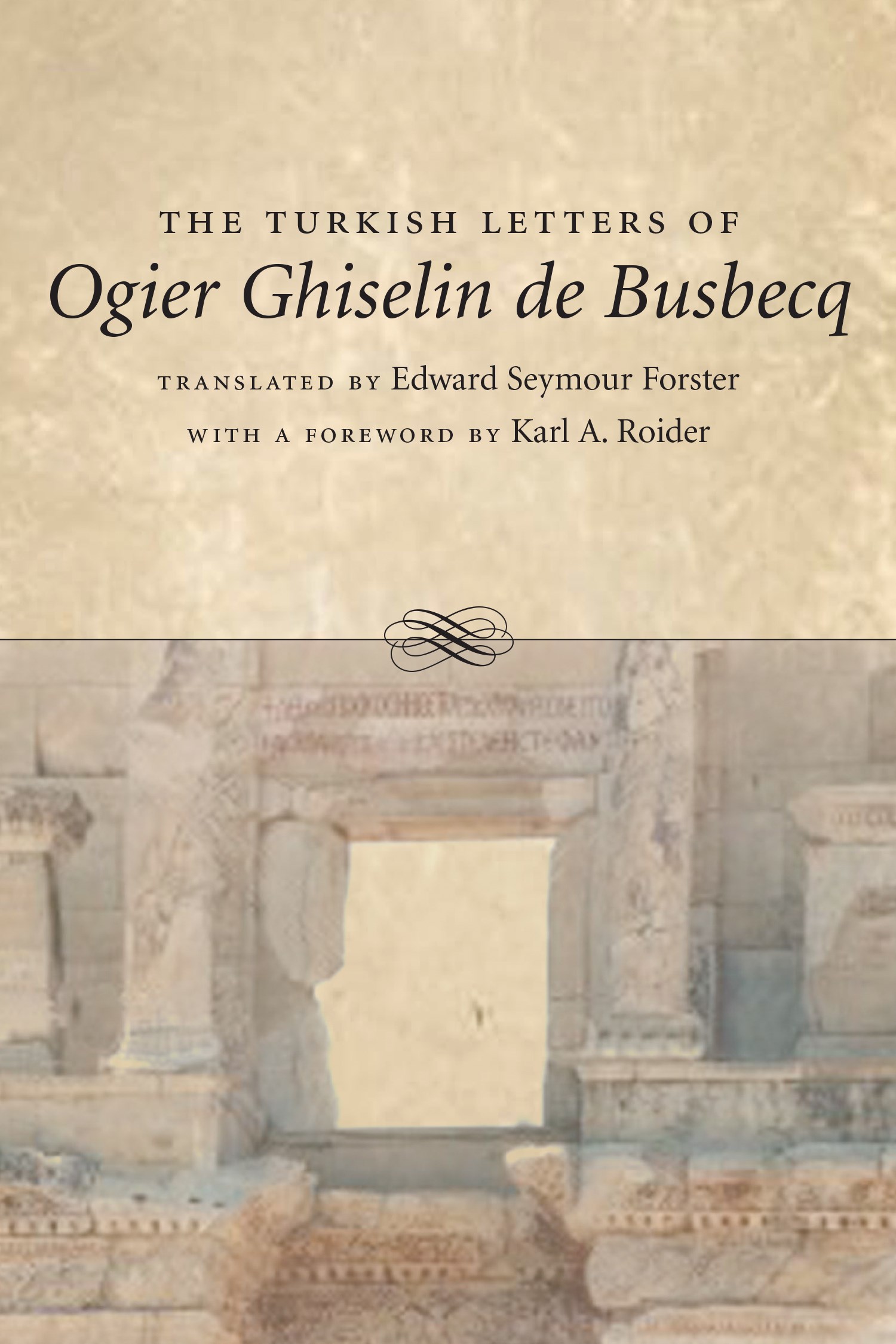
Book
The Turkish Letters of Ogier Ghiselin De Busbecq
Edward Seymour Forster
LSU Press · Paperback · June 1, 2005
Reading lane: Travel in Turkey
A native of western Flanders, Ogier Ghiselin de Busbecq served in several posts as diplomatic representative for the Habsburg ruler Ferdinand I (King of Bohemia and Hungary, 1526?64, and Holy Roman Emperor, 1556?64).
At a Glance
Why This Clicks
A Diplomat’s Eye
Four letters make 16th-century Turkey vivid through an observant diplomat’s wide-ranging impressions.
Come here for
- Early travel writing attentive to landscapes, customs, faith, and court life
- A historical view of cultural difference shaped by diplomacy
Expect
- A broad sweep of observations, from plants and architecture to the Sultan
- Entertaining prose with a classical scholar’s eye for detail
Book Details
- Authors
- Edward Seymour Forster
- Publisher
- LSU Press
- Published
- June 1, 2005
- Format
- Paperback
- Theme
- Travel in Turkey · History of Syria
- Reading lane
- Travel in Turkey
Affinity
Publisher Categories
Vision Care
Western European History
Travel Writing
About This Book
A native of western Flanders, Ogier Ghiselin de Busbecq served in several posts as diplomatic representative for the Habsburg ruler Ferdinand I (King of Bohemia and Hungary, 1526?64, and Holy Roman Emperor, 1556?64). Busbecq's most famous mission was undoubtedly to the Ottoman Empire at the zenith of its power and glory during the reign of Suleiman the Magnificent. In four letters to his friend Nicholas Michault?who had been Busbecq's fellow student in Italy and afterwards w...
Read full description
Similar Books

A Traveller's History of Turkey
Richard Stoneman · Interlink Publishing Group Inc
Affinity signal
Travel in Turkey
History of Syria

Ottoman Centuries
Lord Kinross · HarperCollins
Affinity signal
History of Syria
Travel in Turkey

Istanbul
John Freely · Penguin Publishing Group
Affinity signal
Travel in Turkey
History of Syria

The Man Who Stopped the Sultan
Edoardo Albert · Osprey
Affinity signal
Medieval Warfare
Western European History

The Sultan Speaks
L. McJannet, Linda McJannet · Palgrave Macmillan
Affinity signal
History

A Short History of Byzantium
John Julius Norwich · Knopf Doubleday Publishing Group
Affinity signal
Ancient Rome
Medieval History

Daily Life in the Ottoman Empire
Mehrdad Kia · Bloomsbury Academic
Affinity signal
History of Syria
Travel in Turkey