
The Sullivanians
Sex, Psychotherapy, and the Wild Life of an American Commune
A secretive Manhattan commune’s ideals of liberation give way to an unsettling story of control.
- Themes
- Radical communal living, Sexual liberation, Therapeutic control and cult dynamics
Utopia Under Strain
Come here for
- Psychoanalysis, sexual liberation, and communal life in mid-century New York
- A radical experiment’s uneasy passage into control
Expect
- A reconstructed inner world pieced together from interviews and personal papers
- The unsettling turn from utopian ideals to an insular cult
Where it sits
How strongly BookFrontier reads the book as belonging to each subject.
Nearest books
Matched by our semantic model. Ordered by what its readers also loved.
 Hidden Valley RoadRobert Kolker60% subject match
 When the World Didn't EndGuinevere Turner58% subject matchShares Cults & New Religions
 Eden UndoneAbbott Kahler58% subject match
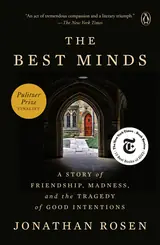 The Best MindsJonathan Rosen54% subject match
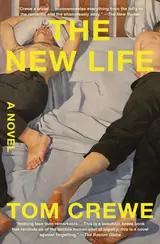 The New LifeTom Crewe53% subject match
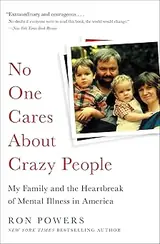 No One Cares About Crazy PeopleRon Powers52% subject match
 Cheap Land ColoradoTed Conover52% subject match
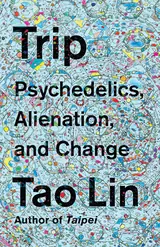 TripTao Lin51% subject match
For younger readers: Death in the Jungle, Every Last Word, The Acid King
Start with three books, and this one can be the first.
Members get a new edition every morning: a route out from their books to essays, research and talks, with the reason for each.
Sign upAbout this book
FINALIST FOR THE 2024 GOTHAM BOOK PRIZE
The devolution of the Sullivan Institute, from psychoanalytic organization to insular, radical cult.
In the middle of the Ozzie and Harriet 1950s, the birth control pill was introduced and a maverick psychoanalytic institute, the Sullivan Institute for Research in Psychoanalysis, opened its doors in New York City.
Continue reading
Its founders, Saul Newton and Jane Pearce, wanted to start a revolution, one grounded in ideals of creative expression, sexual liberation, and freedom from the expectations of society, and the revolution, they felt, needed to begin at home. Dismantling the nuclear family—and monogamous marriage—would free people from the repressive forces of their parents. In its first two decades, the movement attracted many brilliant, creative people as patients: the painter Jackson Pollock and a swarm of other abstract expressionist artists, the famed art critic Clement Greenberg, the singer Judy Collins, and the dancer Lucinda Childs. In the 1960s, the group evolved into an urban commune of three or four hundred people, with patients living with other patients, leading creative, polyamorous lives.
But by the mid-1970s, under the leadership of Saul Newton, the Institute had devolved from a radical communal experiment into an insular cult, with therapists controlling virtually every aspect of their patients’ lives, from where they lived and the work they did to how often they saw their sexual partners and their children. Although the group was highly secretive during its lifetime and even after its dissolution in 1991, the noted journalist Alexander Stille has succeeded in reconstructing the inner life of a parallel world hidden in plain sight in the middle of Manhattan. Through countless interviews and personal papers, The Sullivanians reveals the nearly unbelievable story of a fallen utopia.
Publisher details
Publisher categories
- 20th-Century America
- History of Psychology
- Cults & New Religions
- Authors
- Alexander Stille
- Publisher
- Farrar Straus & Giroux
- Published
- June 20, 2023
- Format
- Print & ebook
- Reading lane
- 20th-Century America