
Book
The Slow Plague
A Geography of the AIDS Pandemic
Peter R. Gould, Peter Gould
Wiley · Print & ebook · October 8, 1993
Reading lane: Geography
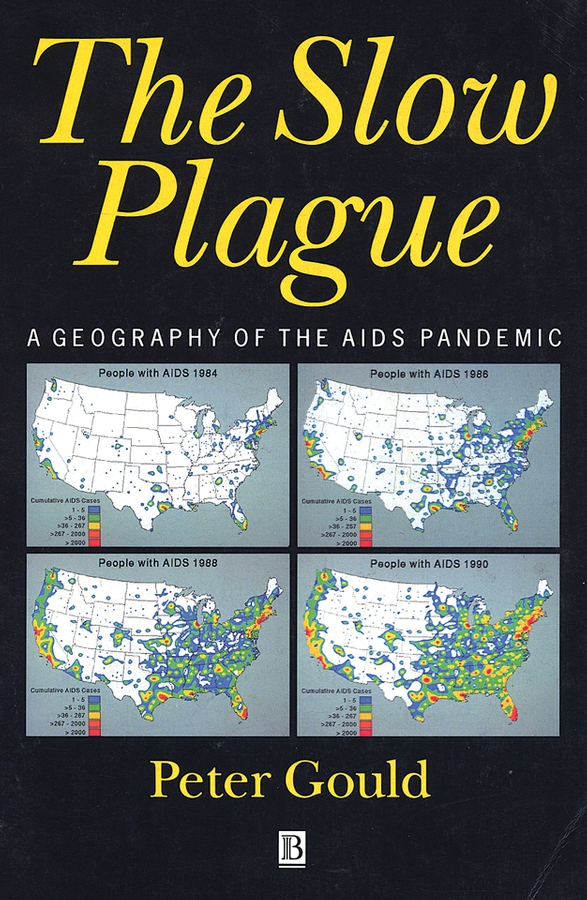
Based on research by a leading geographer and specialist in diffusion theory, The Slow Plague discloses the geographic dimension of the AIDS pandemic.
At a Glance
Who It's For
Book Details
- Authors
- Peter R. Gould, Peter Gould
- Publisher
- Wiley
- Published
- October 8, 1993
- Format
- Print & ebook
- Theme
- Geography
- Reading lane
- Geography
Affinity
- 100%
Publisher Categories
Geography
About This Book
Based on research by a leading geographer and specialist in diffusion theory, The Slow Plague discloses the geographic dimension of the AIDS pandemic. It provides a lucid description of the HIV, its origins, and the extent to which it has now permeated our lives. The author shows how the virus jumps from city to city, creating regional epicenters from which it spreads into surrounding areas. Four case studies at different geographic scales demonstrate the devastating effects...
Read full description
Similar Books

The Epidemic
Jonathan Engel · HarperCollins
Affinity signal
HIV & AIDS
Infectious Diseases

How to Survive a Plague
David France · Knopf Doubleday Publishing Group
Affinity signal
HIV & AIDS
Infectious Diseases

AIDS in the Twenty-first Century
T. Barnett, A. Whiteside · Palgrave Macmillan
Affinity signal
Sociology

Inside the AIDS Fight
Harry W. Haverkos M.D. · McFarland & Company, Inc., Publishers
Affinity signal
Reader-facing shelf signals are still being refined for this title.

AIDS, Drugs and Prevention
Richard Hartnoll, Tim Rhodes · Taylor and Francis
Affinity signal
Social Work

No Place Left to Bury the Dead
Nicole Itano · Atria Books
Affinity signal
HIV & AIDS
African Studies