
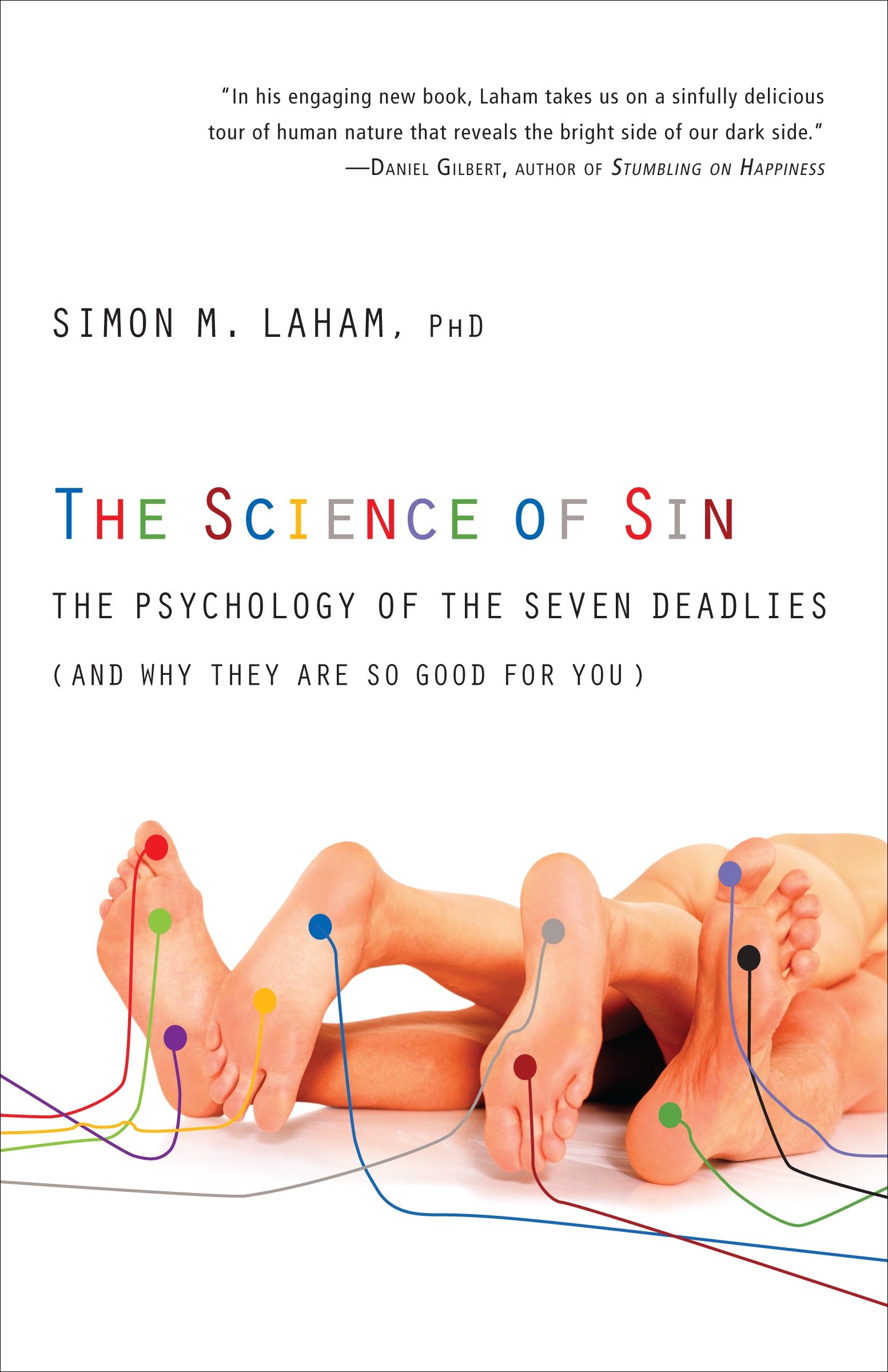
Book
The Science of Sin
The Psychology of the Seven Deadlies (and Why They Are So Good for You)
Simon M. Laham, PhD
Harmony/Rodale/Convergent · Print & ebook · February 7, 2012
Reading lane: Behavioral Psychology
Pride, lust, gluttony, greed, envy, sloth, and anger.
At a Glance
Why This Clicks
Rethinking the Vices
Seven familiar sins become a lively lens on the complicated psychology of being human.
Come here for
- A curious take on how supposedly bad impulses can sometimes help
- Psychology that complicates the tidy line between good and evil
Expect
- Seven sins considered as complex psychological states
- A brisk, counterintuitive look at everyday human behavior
Book Details
- Authors
- Simon M. Laham, PhD
- Publisher
- Harmony/Rodale/Convergent
- Published
- February 7, 2012
- Format
- Print & ebook
- Theme
- Behavioral Psychology · Social Theory
- Reading lane
- Behavioral Psychology
Affinity
Publisher Categories
Behavioral Psychology
The Pursuit of Happiness
Pop Culture Studies
About This Book
Pride, lust, gluttony, greed, envy, sloth, and anger. They’re considered “deadly” because of their capacity to generate other evils. The truth is, we all sin and we do it all the time—in fact, usually several times over before breakfast! But human behavior, argues social psychologist Simon Laham, is more complex than “good” or “evil.” In psychology, these sins aren’t considered morally wrong or even uniformly bad, but are treated rather as complex and interesting psychologic...
Read full description
Similar Books

The Goodness Paradox
Richard Wrangham, Richard W. Wrangham · Knopf Doubleday Publishing Group
Affinity signal
Physical Anthropology
Social Theory

The Sociopath Next Door
Martha Stout · Harmony/Rodale/Convergent
Affinity signal
Personality Disorders
Serial Killers

The Laws of Human Nature
Robert Greene · Penguin Publishing Group
Affinity signal
Social Theory
Behavioral Psychology
Dopamine Nation
Anna Lembke, MD · Penguin Publishing Group
Affinity signal
Pharma & Biotech Industry
Brain & Nervous System Disorders

Hope for Cynics
Jamil Zaki · Grand Central Publishing
Affinity signal
Social Theory
Behavioral Psychology
Why We Lie
David Livingstone Smith · St. Martin's Press
Affinity signal
Social Theory
Physical Anthropology