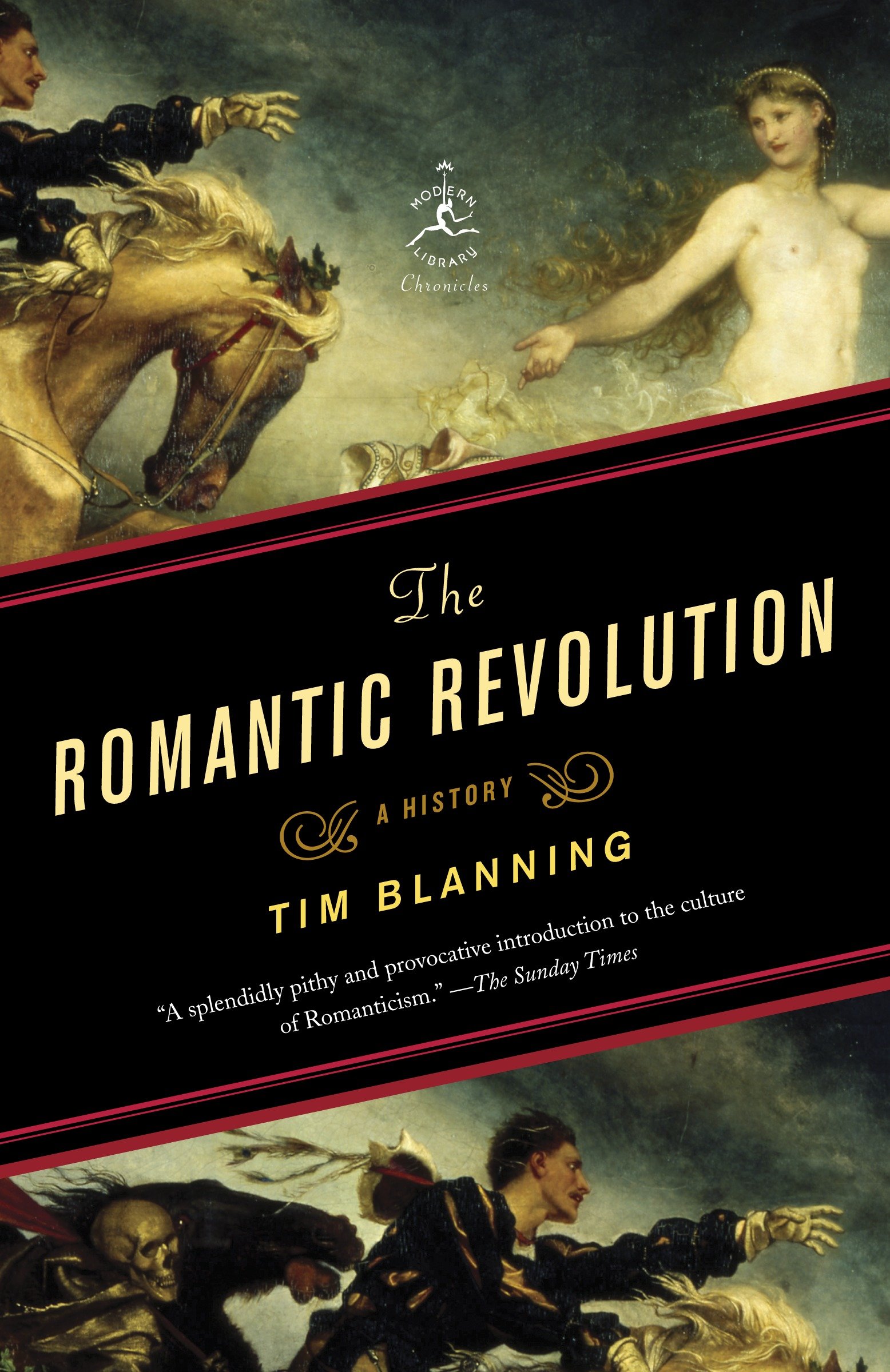
Follow Romanticism’s upheaval across the arts and see why its sensibilities outlasted its age.
Reason Meets Feeling
Come here for
- How Romanticism pushed back against Enlightenment reason
- Art, psychology, and cultural change in one concise account
Expect
- A broad cultural history, from Rousseau to Goethe, Goya, and Berlioz
- A lively introduction to the ideas reshaping artistic expression
Where it sits
How strongly BookFrontier reads the book as belonging to each subject.
Nearest books
Matched by our semantic model. Ordered by what its readers also loved.
 The Age of WonderRichard Holmes58% subject match
 Heretics and HeroesThomas Cahill56% subject match
 The American RevolutionGordon S. Wood55% subject match
 American RevolutionsAlan Taylor50% subject match
 What Is History?Edward Hallett Carr49% subject match
 The Private Lives of the ImpressionistsSue Roe52% subject match
For younger readers: The Renaissance in Europe, Renaissance Fashions Coloring Book, What Was the Renaissance?
Start with three books, and this one can be the first.
Members get a new edition every morning: a route out from their books to essays, research and talks, with the reason for each.
Sign upAbout this book
“A splendidly pithy and provocative introduction to the culture of Romanticism.”—The Sunday Times
“[Tim Blanning is] in a particularly good position to speak of the arrival of Romanticism on the Euorpean scene, and he does so with a verve, a breadth, and an authority that exceed every expectation.”—National Review
Continue reading
From the preeminent historian of Europe in the eighteenth and nineteenth centuries comes a superb, concise account of a cultural upheaval that still shapes sensibilities today. A rebellion against the rationality of the Enlightenment, Romanticism was a profound shift in expression that altered the arts and ushered in modernity, even as it championed a return to the intuitive and the primitive. Tim Blanning describes its beginnings in Rousseau’s novel La Nouvelle Héloïse, which placed the artistic creator at the center of aesthetic activity, and reveals how Goethe, Goya, Berlioz, and others began experimenting with themes of artistic madness, the role of sex as a psychological force, and the use of dreamlike imagery. Whether unearthing the origins of “sex appeal” or the celebration of accessible storytelling, The Romantic Revolution is a bold and brilliant introduction to an essential time whose influence would far outlast its age.
“Anyone with an interest in cultural history will revel in the book’s range and insights. Specialists will savor the anecdotes, casual readers will enjoy the introduction to rich and exciting material. Brilliant artistic output during a time of transformative upheaval never gets old, and this book shows us why.”—The Washington Times
“It’s a pleasure to read a relatively concise piece of scholarship of so high a caliber, especially expressed as well as in this fine book.”—Library Journal
Publisher details
Publisher categories
- Romanticism Art History
- Western European History
- Music History
- Authors
- Tim Blanning
- Publisher
- Random House Publishing Group
- Published
- August 14, 2012
- Format
- Print & ebook
- Reading lane
- Romanticism Art History