
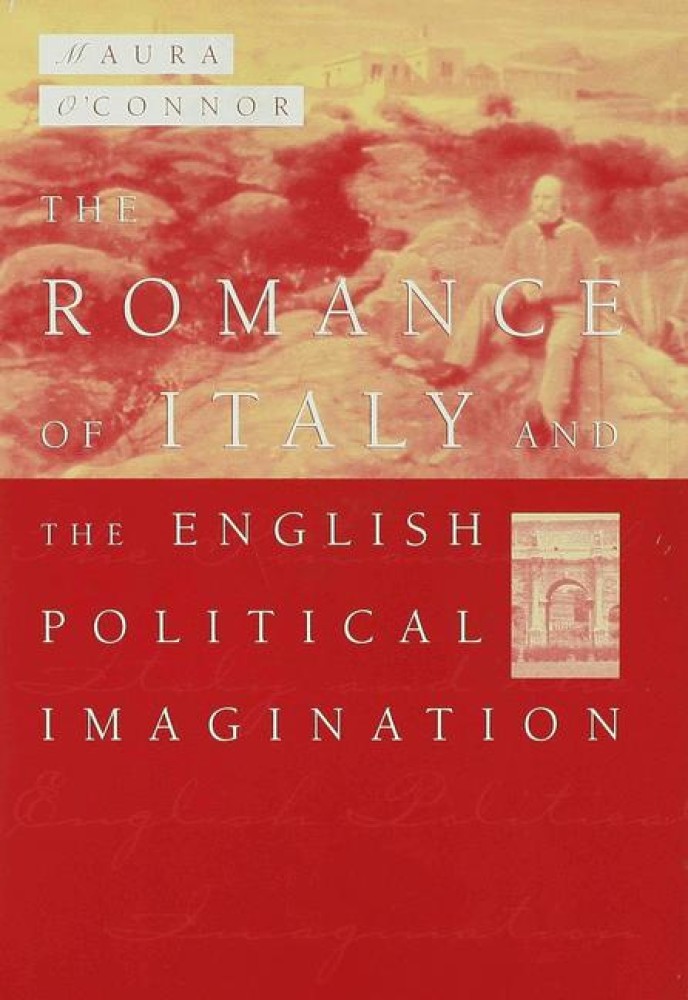
Book
The Romance of Italy and the English Imagination
Italy, the English Middle Class and Imaging the Nation in the Nineteenth Century
Maura O'Connor
Palgrave Macmillan · Print & ebook · October 14, 1998
Reading lane: Italian Literary Criticism
In blurring the boundaries between fact and fiction, diplomats and travellers, English nation and Italian nation, Maura O'Connor shows us the extent to which imagination, pleasure and politics were intimately interwoven in her story of the English middle-class fascination with the Italian peninsula from the early 1800s through to the 1860s.
At a Glance
Who It's For
Book Details
- Authors
- Maura O'Connor
- Publisher
- Palgrave Macmillan
- Published
- October 14, 1998
- Format
- Print & ebook
- Theme
- Italian Literary Criticism · British & Irish Literary Criticism
- Reading lane
- Italian Literary Criticism
Affinity
Publisher Categories
History
How Cultures Work
Sociology
About This Book
In blurring the boundaries between fact and fiction, diplomats and travellers, English nation and Italian nation, Maura O'Connor shows us the extent to which imagination, pleasure and politics were intimately interwoven in her story of the English middle-class fascination with the Italian peninsula from the early 1800s through to the 1860s. O'Connor uses a variety of sources, ranging from travel writings and the popular press to diplomatic dispatches and official corresponde...
Read full description
Similar Books

The Prodigious Muse
Virginia Cox · Johns Hopkins University Press
Affinity signal
Italian Literary Criticism
Renaissance History

The Shortest History of Italy
Ross King · The Experiment
Affinity signal
Italy Travel
Ancient Rome
The Civilization of the Renaissance in Italy
Jacob Burckhardt · Random House Publishing Group
Affinity signal
Renaissance History
Renaissance Art History