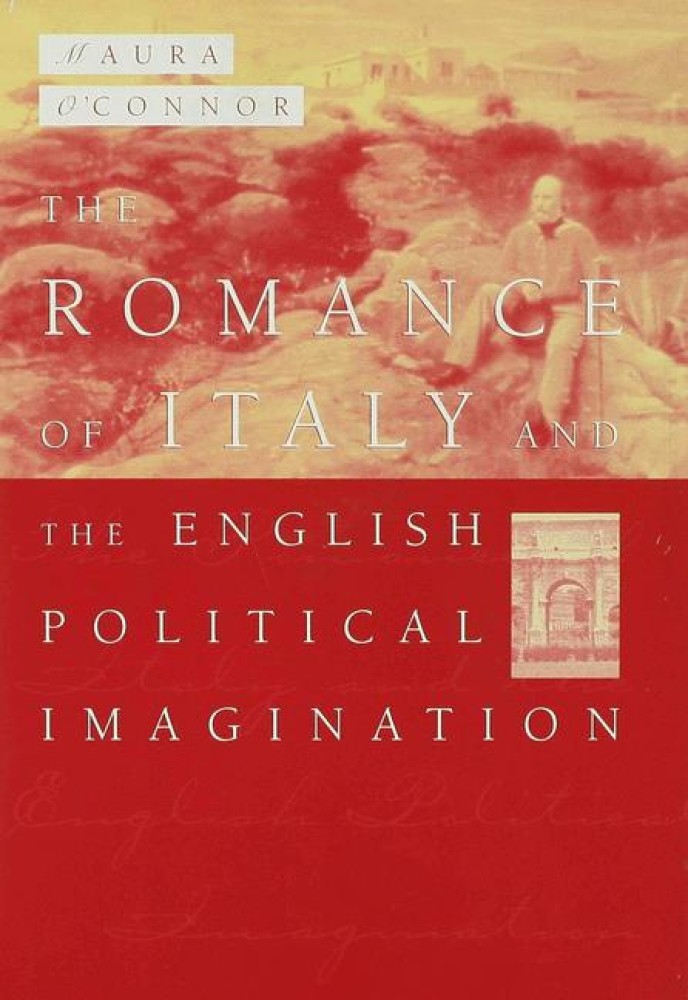
The Romance of Italy and the English Imagination
Italy, the English Middle Class and Imaging the Nation in the Nineteenth Century
Maura O’Connor traces how imagining Italy intertwined with English class, national identity, and politics.
- Themes
- Cultural imagination and politics, English national identity, Class and social change
Imagining Italy
Come here for
- English middle-class fascination with Italy from the early 1800s through the 1860s
- Travel writing, popular press, and diplomatic correspondence
Expect
- Cultural readings of travel writing and popular press
- Diplomatic documents considered as reflections of culture
Where it sits
How strongly BookFrontier reads the book as belonging to each subject.
Nearest books
Matched by our semantic model. Ordered by what its readers also loved.
 Hollow MenSusan Gaylard56% subject match
 The ItaliansJohn Hooper55% subject matchShares Italian History
 Ireland in Mind: An AnthologyAlice Leccese Powers54% subject match
 Italy - Culture Smart!Barry Tomalin52% subject match
 The Shortest History of ItalyRoss King51% subject matchShares Italian History
For younger readers: Imperialism, Renaissance Fashions Coloring Book, Da Vinci's Tiger
Start with three books, and this one can be the first.
Members get a new edition every morning: a route out from their books to essays, research and talks, with the reason for each.
Sign upAbout this book
In blurring the boundaries between fact and fiction, diplomats and travellers, English nation and Italian nation, Maura O'Connor shows us the extent to which imagination, pleasure and politics were intimately interwoven in her story of the English middle-class fascination with the Italian peninsula from the early 1800s through to the 1860s.
Continue reading
O'Connor uses a variety of sources, ranging from travel writings and the popular press to diplomatic dispatches and official correspondence, to illustrate how influential the romance of Italy was to the bourgeois, liberal, and above all English social order during a time when class society was undergoing reconfiguration. Her use of the collective imagination as a crucial historical tool, and her emphasis on narrative as a means not only to read texts but also to understand political sources such as diplomatic documents as reflections of culture, ensures that this book breaks new ground and defies conventional categorization. Also included are the unique assertions that the concepts of Englishness and 'England' were conceived in anything but isolation, and that neither high politics nor foreign policy may be viewed as domains separate from the forces of cultural imagination and production.
Publisher details
Publisher categories
- History
- How Cultures Work
- Sociology
- Authors
- Maura O'Connor
- Publisher
- Palgrave Macmillan
- Published
- October 14, 1998
- Format
- Print & ebook
- Reading lane
- History