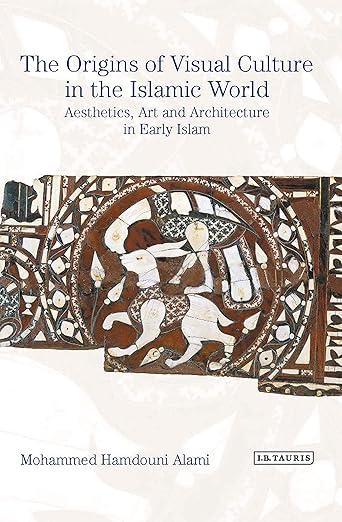
The Origins of Visual Culture in the Islamic World
Aesthetics, Art and Architecture in Early Islam
I.B. Tauris & Co Ltd · Print & ebook · September 30, 2018
In 10th century Iraq, a group of Arab intellectuals and scholars known as the Ikhwan al-Safa began to make their intellectual mark on the society around them.
We earn from qualifying purchases.
- Who it’s for
- Explore how Fatimid art and architecture connect medieval Islamic aesthetics with debates of the Italian Renaissance.
- Genres
- Middle Eastern Art, History of Islam, Medieval Art History
- Published
- I.B. Tauris & Co Ltd, September 30, 2018
Nearest books
Matched by what the books are about, then ordered by what their readers also loved. Most of these share its genre: History of Islam.
 Islamic Art in Context Perspectivesharry-n-abrams-staff, Robert Irwin61% matchAlso shares Middle Eastern Art
 Sectarian MilieuJohn E. Wansbrough, John Wansbrough53% match
 The Walking Qur'anRudolph T. Ware III, Rudolph T. Ware51% match
 Hidden Origins of IslamKarl-Heinz Ohlig, Gerd- R. Puin50% match
For younger readers: The Genius of Islam, Uthman Ibn Affan, Mosque
Start with three books, and this one can be the first.
Members get a new edition every morning: a route out from their books to essays, research and talks, with the reason for each.
Join the waitlistAbout this book
In 10th century Iraq, a group of Arab intellectuals and scholars known as the Ikhwan al-Safa began to make their intellectual mark on the society around them. A mysterious organisation, the identities of its members have never been clear. But its contribution to the philosophy, art and culture of the era—and indeed subsequent ones—is evident.
Continue reading
In the visual arts, for example, Hamdouni Alami argues that the theory of human proportions which the Ikwan al-Safa propounded (something very similar to those of da Vinci), helped shape the evolution of the philosophy of aesthetics, art and architecture in the 10th and 11th centuries CE, in particular in Egypt under the Fatimid rulers. By examining the arts of the Fatimids, focusing on painting and architectural works such as the first Fatimid mosque in al-Mahdiyya, Tunisia, Hamdouni Alami offers analysis of the debates surrounding the ethics of the appreciation of Islamic art and architecture from a vital time in medieval Middle Eastern history, and shows their similarity with aesthetic debates of Italian Renaissance.
Fatimid Visual Arts
Explore how Fatimid art and architecture connect medieval Islamic aesthetics with debates of the Italian Renaissance.
Come here for
- The Ikhwan al-Safa’s theory of human proportions
- Fatimid painting and the first Fatimid mosque in al-Mahdiyya
Expect
- Analysis of Islamic art’s ethics and appreciation
- Focus on painting and architecture under the Fatimid rulers
Where it sits
| Middle Eastern Art | 87% |
|---|---|
| History of Islam | 64% |
| Medieval Art History | 29% |
Percentages are BookFrontier’s reading of the book.
Publisher categories
- Renaissance Architecture
- Islam - General
- Authors
- Mohammed Hamdouni Alami
- Publisher
- I.B. Tauris & Co Ltd
- Published
- September 30, 2018
- Format
- Print & ebook
- Reading lane
- Renaissance Architecture