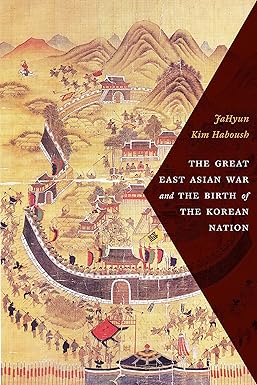
The Great East Asian War and the Birth of the Korean Nation
JaHyun Kim Haboush traces how war and political upheaval shaped an enduring Korean national narrative.
War and Nationhood
Come here for
- The Imjin War’s regional scope and its devastation across the Korean Peninsula
- A national discourse that emerged within the Chosŏn polity
Expect
- The Chosŏn Dynasty’s survival amid regional realignment
- A counternarrative to histories tying Korean nationhood to modern colonialism
Where it sits
How strongly BookFrontier reads the book as belonging to each subject.
Nearest books
Matched by our semantic model. Ordered by what its readers also loved. Most of these share its genre: Korean History.
 Korea at WarMichael J. Seth68% subject match
 The Korean WarBruce Cumings65% subject match
 Mao's Generals Remember KoreaXiaobing Li, Allan R. Millett60% subject matchAlso shares Chinese History
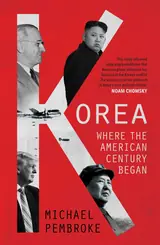 Korea: Where the American Century BeganMichael Pembroke60% subject match
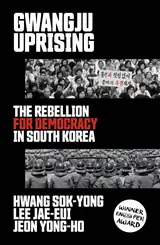 Gwangju UprisingHwang Sok-yong, Lee Jae-Eui56% subject match
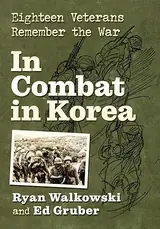 In Combat in KoreaRyan Walkowski, Ed Gruber55% subject match
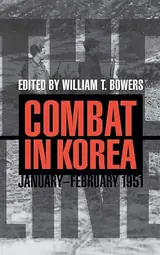 The LineWilliam T. Bowers54% subject match
 On Desperate GroundHampton Sides54% subject match
For younger readers: So Far from the Bamboo Grove, I Remember Korea, The Hundred Choices Department Store
Start with three books, and this one can be the first.
Members get a new edition every morning: a route out from their books to essays, research and talks, with the reason for each.
Sign upAbout this book
The Imjin War (1592–1598) was a grueling conflict that wreaked havoc on the towns and villages of the Korean Peninsula. The involvement of Chinese, Japanese, and Korean forces, not to mention the regional scope of the war, was the largest the world had seen, and the memory dominated East Asian memory until World War II. Despite massive regional realignments, Korea's Chosŏn Dynasty endured, but within its polity a new, national discourse began to emerge.
Continue reading
Meant to inspire civilians to rise up against the Japanese army, this potent rhetoric conjured a unified Korea and intensified after the Manchu invasions of 1627 and 1636.
By documenting this phenomenon, JaHyun Kim Haboush offers a compelling counternarrative to Western historiography, which ties Korea's idea of nation to the imported ideologies of modern colonialism. She instead elevates the formative role of the conflicts that defined the second half of the Chosŏn Dynasty, which had transfigured the geopolitics of East Asia and introduced a national narrative key to Korea's survival. Re-creating the cultural and political passions that bound Chosŏn society together during this period, Haboush reclaims the root story of solidarity that helped Korea thrive well into the modern era.
Publisher details
Publisher categories
- Korean History
- 16th-Century History
- Nationalism & Patriotism
- Authors
- JaHyun Kim Haboush, William J. Haboush, Jisoo Kim
- Publisher
- Columbia University Press
- Published
- March 8, 2016
- Format
- Hardcover
- Reading lane
- Korean History