
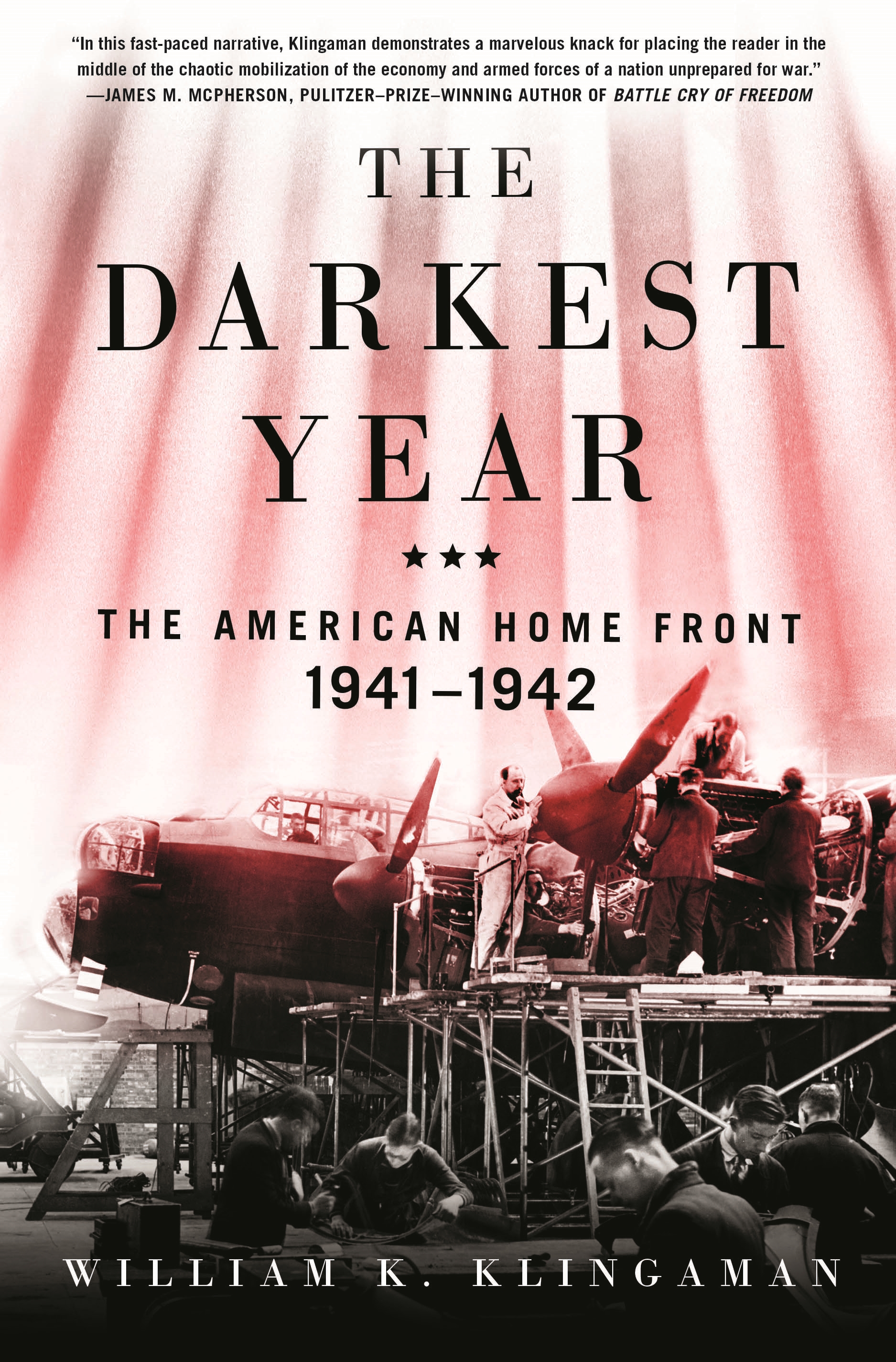
Book
The Darkest Year
The American Home Front 1941-1942
William K. Klingaman
St. Martin's Press · Print & ebook · February 19, 2019
Reading lane: World War II History
At a Glance
Why This Clicks
Anxious Home Front
A psychological history of a divided nation facing military setbacks and the pressures of total war.
Come here for
- The American home front beyond battlefield accounts
- War’s effects on family roles, race relations, work, and culture
Expect
- A focus on public words and everyday behavior
- A portrait of anxiety, uncertainty, and deepening divisions
Book Details
- Authors
- William K. Klingaman
- Publisher
- St. Martin's Press
- Published
- February 19, 2019
- Format
- Print & ebook
- Theme
- World War II History · World War II: European Theater
- Reading lane
- World War II History
Affinity
Publisher Categories
World War II History
About This Book
The Darkest Year is acclaimed author William K. Klingaman’s narrative history of the American home front from December 7, 1941 through the end of 1942, a psychological study of the nation under the pressure of total war. For Americans on the home front, the twelve months following the Japanese attack on Pearl Harbor comprised the darkest year of World War Two. Despite government attempts to disguise the magnitude of American losses, it was clear that the nation had suffered...
Read full description
Similar Books

Pearl Harbor
Mark Stille, Mark E. Stille · Osprey
Affinity signal
WWII Pacific Theater
Naval History

Pearl Harbor
George Guidall, Craig Nelson · Scribner
Affinity signal
WWII Pacific Theater
Naval History

American Midnight
Adam Hochschild, Jonathan Todd Ross · HarperCollins
Affinity signal
20th-Century America
World War I History

Air Raid--pearl Harbor!
Theodore Taylor · HarperCollins
Affinity signal
WWII Pacific Theater
Military & Wars

Days of Infamy: How a Century of Bigotry Led to Japanese American Internment (scholastic Focus)
Lawrence Goldstone · Scholastic Inc.
Affinity signal
U.S. State & Local History for Teens
20th Century America for Teens

Eyewitness to World War II
Stephen G. Hyslop, Winston Groom · Disney Publishing Group
Affinity signal
World War II History
World War II: European Theater

The Rising Sun
John Toland · Random House Publishing Group
Affinity signal
WWII Pacific Theater
World War II History
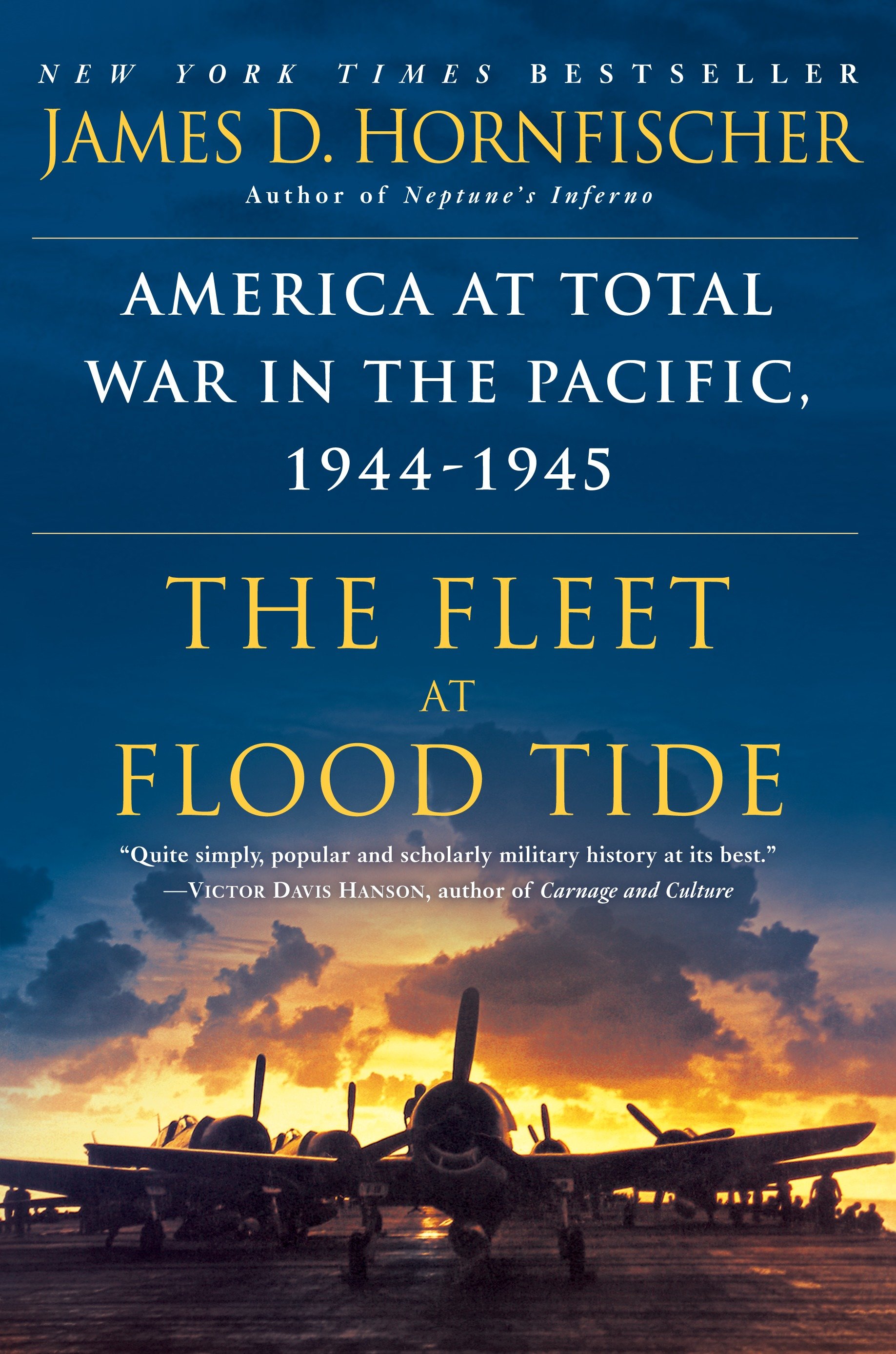
The Fleet at Flood Tide
Pete Larkin, James D. Hornfischer · Random House Publishing Group
Affinity signal
WWII Pacific Theater
Naval History