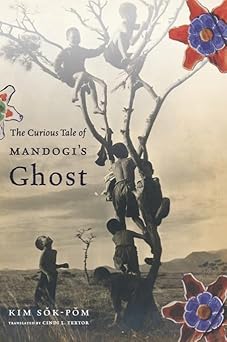
Mandogi's story brings Cheju-do's 1948 Four-Three Incident into focus through myth.
Cheju-do in 1948
Come here for
- Korean folk tales
- Ghost stories and myth
Expect
- A young priest caught up in the 1948 uprising
- The lasting imprint of the incident on Japanese and Korean memory
Where it sits
How strongly BookFrontier reads the book as belonging to each subject.
Nearest books
Matched by our semantic model. Ordered by what its readers also loved.
 Japanese Legends and FolkloreA.B. Mitford55% subject matchShares Japanese Literary Collections
 A River in DarknessMasaji Ishikawa52% subject match
 The Temple of the Golden PavilionYukio Mishima52% subject match
 Ghost of the Bamboo RoadSusan Spann51% subject match
 KwaidanLafcado Hearn51% subject matchShares Japanese Literary Collections
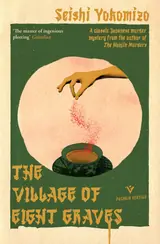 The Village of Eight GravesSeishi Yokomizo51% subject match
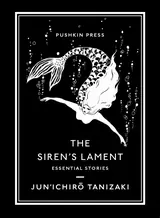 The Siren’s LamentJun'Ichiro Tanizaki50% subject matchShares Japanese Literary Collections
For younger readers: Festival of Shadows, So Far from the Bamboo Grove, The Hundred Choices Department Store
Start with three books, and this one can be the first.
Members get a new edition every morning: a route out from their books to essays, research and talks, with the reason for each.
Sign upAbout this book
The Curious Tale of Mandogi's Ghost incorporates Korean folk tales, ghost stories, and myth into a phenomenal depiction of epic tragedy. Written by a zainichi, a permanent resident of Japan who is not of Japanese ancestry, the novel tells the story of Mandogi, a young priest living on the island of Cheju-do.
Continue reading
Mandogi becomes unwittingly involved in the Four-Three Incident of 1948, in which the South Korean government brutally suppressed an armed peasant uprising and purged Cheju-do of communist sympathizers. Although Mandogi is sentenced to death for his part in the riot, he survives (in a sense) to take revenge on his enemies and fully commit himself to the resistance.
Mandogi's indeterminate, shapeshifting character is emblematic of Japanese colonialism's outsized impact on both ruler and ruled. A central work of postwar Japanese fiction, The Curious Tale of Mandogi's Ghost relates the trauma of a long-forgotten history and its indelible imprint on Japanese and Korean memory.
Around this book
- The Curious Tale of Mandogi’s GhostA review from Journal of Asian Studies. Janet Poole’s scholarly review discusses the translation’s significance and Kim’s place in zainichi literature.
- Representing Radical Difference: Kim Sŏkpŏm’s Korea(n) in Japan(ese)An essay from positions. Cindi Textor examines how this novel and Kim’s other fiction represent Korean identity and language within Japanese writing.
Publisher details
Publisher categories
- Literary Fiction
- Asian Literary Collections
- Asian Lit Crit
- Authors
- Sok-pom Kim
- Publisher
- Columbia University Press
- Published
- September 29, 2010
- Format
- Ebook
- Reading lane
- Literary Fiction