
The Burger Court and the Rise of the Judicial Right
A pointed legal history reconsiders the Burger Court’s conservatism and its imprint on constitutional life today.
- Themes
- Burger Court conservatism, Criminal law, race, and corporate power, Supreme Court decisions' lasting legacy
The Court’s Afterlife
Come here for
- A challenge to the “transitional court” story
- Connections among rulings on race, criminal law, and corporate power
Expect
- A close look at how landmark decisions shaped today’s constitutional landscape
Where it sits
How strongly BookFrontier reads the book as belonging to each subject.
Nearest books
Matched by our semantic model. Ordered by what its readers also loved. Most of these share its genre: Courts & the Judiciary.
 Justice on TrialMollie Hemingway, Carrie Severino63% subject match
 The OathJeffrey Toobin56% subject matchAlso shares Constitutional Law
 Without PrecedentJoel Richard Paul54% subject match
 My Own WordsRuth Bader Ginsburg49% subject match
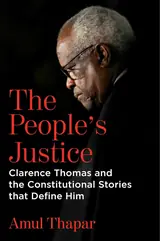 The People's JusticeAmul Thapar59% subject matchAlso shares Constitutional Law
For younger readers: Becoming RBG, Truth, Lies, and the Questions in Between, My Little Golden Book About Ruth Bader Ginsburg
Start with three books, and this one can be the first.
Members get a new edition every morning: a route out from their books to essays, research and talks, with the reason for each.
Sign upAbout this book
A revelatory look at the Warren Burger Supreme Court finds that it was not moderate or transitional, but conservative—and it shaped today’s constitutional landscape. It is an “important book…a powerful corrective to the standard narrative of the Burger Court” (The New York Times Book Review).
When Richard Nixon campaigned for the presidency in 1968 he promised to change the Supreme Court.
Continue reading
With four appointments to the court, including Warren E. Burger as the chief justice, he did just that. In 1969, the Burger Court succeeded the famously liberal Warren Court, which had significantly expanded civil liberties and was despised by conservatives across the country.
The Burger Court is often described as a “transitional” court between the Warren Court and the Rehnquist and Roberts Courts, a court where little of importance happened. But as this “landmark new book” (The Christian Science Monitor) shows, the Burger Court veered well to the right in such areas as criminal law, race, and corporate power. Authors Graetz and Greenhouse excavate the roots of the most significant Burger Court decisions and in “elegant, illuminating arguments” (The Washington Post) show how their legacy affects us today.
“Timely and engaging” (Richmond Times-Dispatch), The Burger Court and the Rise of the Judicial Right draws on the personal papers of the justices as well as other archives to provide “the best kind of legal history: cogent, relevant, and timely” (Publishers Weekly).
Publisher details
Publisher categories
- 20th-Century America
- 21st-Century America
- Legal History
- Authors
- Michael J. Graetz, Linda Greenhouse
- Publisher
- Simon & Schuster
- Published
- June 6, 2017
- Format
- Print & ebook
- Reading lane
- 20th-Century America