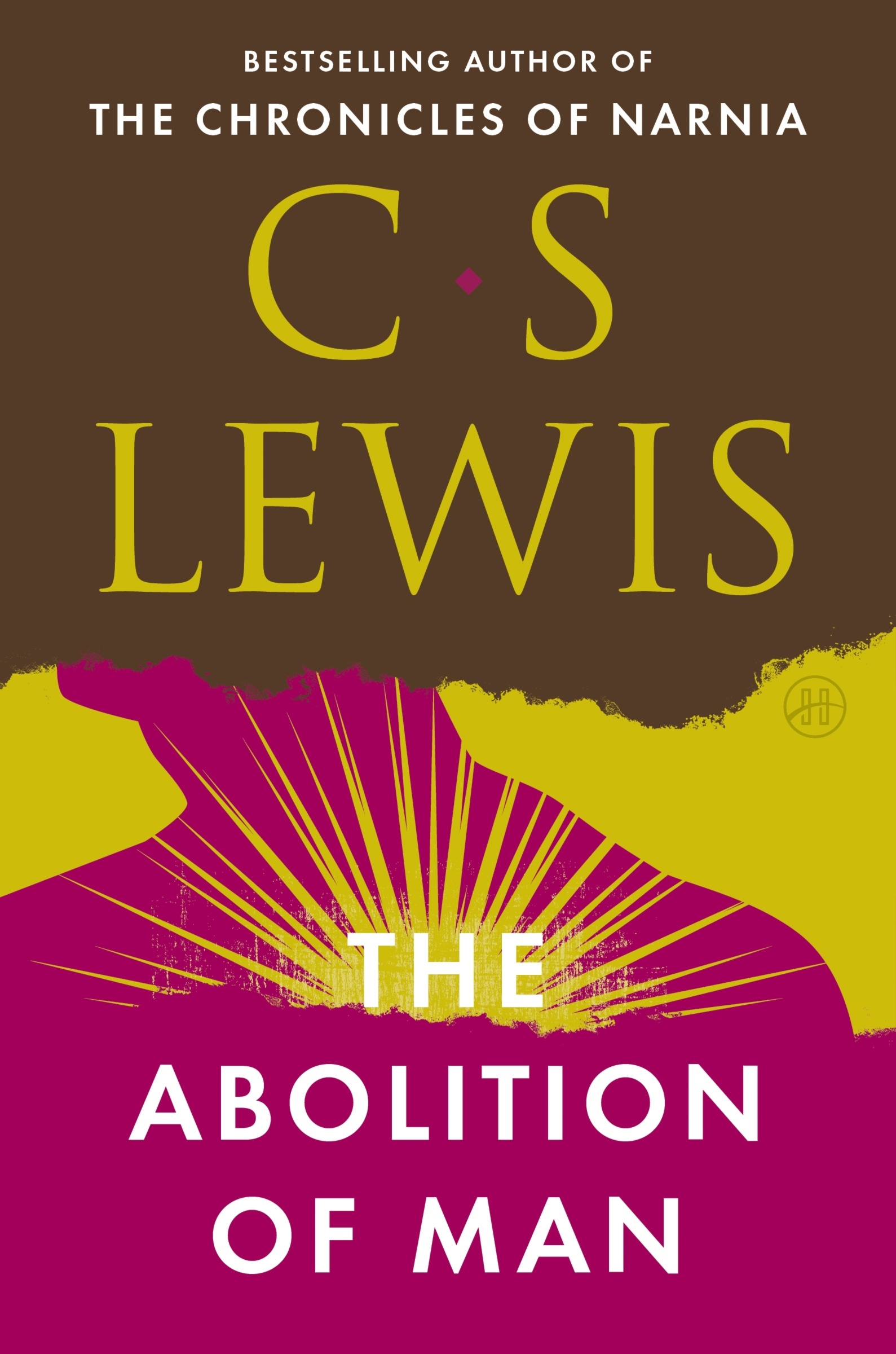
The Abolition of Man
Lewis makes a bracing case for why reason needs emotion—and why moral truths matter.
- Themes
- Reason and emotion, Traditional moral virtues, Universal moral absolutes
Reason and Feeling
Come here for
- A thoughtful challenge to reason as the sole guide
- Questions about science, virtue, and moral absolutes
Expect
- A compact philosophical argument rooted in lectures on education
- A case for truths that reach beyond personal preference
Where it sits
How strongly BookFrontier reads the book as belonging to each subject.
Nearest books
Matched by our semantic model. Ordered by what its readers also loved.
 The Great DivorceC. S. Lewis51% subject match
 The Medieval Mind of C. S. LewisJason M. Baxter62% subject match
 The Rise and Triumph of the Modern SelfTrueman, Carl R.49% subject match
Start with three books, and this one can be the first.
Members get a new edition every morning: a route out from their books to essays, research and talks, with the reason for each.
Sign upAbout this book
In many ways C. S. Lewis predicted the future. “He foresaw the rise of trends we’re currently experiencing: ethical emotivism, the sometimes unquestioned authority of science, and the increasing use of technology by states to control their populations.” –The Gospel Coalition, Joseph A. Kohm Jr.
The Abolition of Man discusses why we shouldn’t always listen to only reason and cut out our emotions. Lewis argues that reason without emotion there is not a reality.
Continue reading
He debunks arguments that the purist form of reason is instinct, that benevolent actions will be found through pursuing science, and that science will be the best moral compass for mankind to follow. Lewis proves that moral absolutes do exist and they are universal throughout all of time.
This is a book for C. S. Lewis fans and anyone who wants to better understand traditional moral virtues and how they impact your life. Lewis said, “If nothing is self-evident then nothing can be proved.” There must be self-evident truths that can be applied everywhere. The book brings together a series of lectures on education that Lewis delivered over three nights at the University of Durham.
Publisher details
Publisher categories
- Civilizations
- Essay Collections
- Faith & Inspiration
- Catholicism
Show all 8 publisher categories
- Devotional Readings
- Inspirational Christian Books
- Spiritual Growth
- Religion in the Arts
- Authors
- C. S. Lewis
- Publisher
- HarperCollins
- Published
- April 7, 2015
- Format
- Print & ebook
- Reading lane
- Civilizations