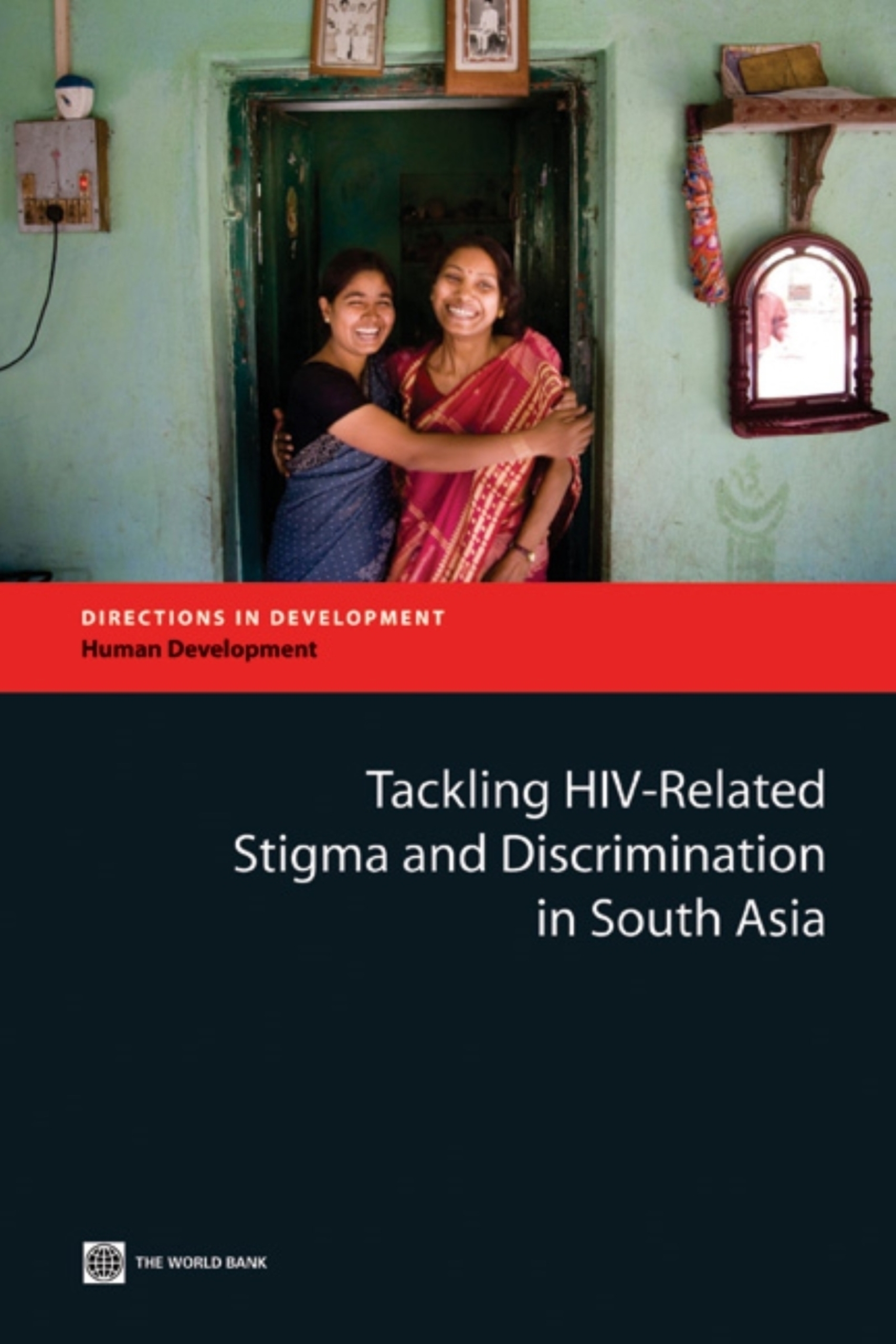
Tackling HIV-Related Stigma and Discrimination in South Asia
First Edition
The World Bank · Print & ebook · July 6, 2010
Although overall HIV prevalence in South Asia is low, the widespread stigma attached to HIV and AIDS impedes efforts to reach people most in need of prevention, care, and treatment services.
We earn from qualifying purchases.
- Who it’s for
- This account examines community-led efforts to address HIV stigma across six South Asian countries.
- Genres
- HIV & AIDS, Public Health, Disease & Public Health
- Published
- The World Bank, July 6, 2010
Nearest books
Matched by what the books are about, then ordered by what their readers also loved.
 War in the BloodChris Beyrer68% matchShares Public Health
 Rethinking AIDS Prevention: Learning From Successes in Developing CountriesEdward C. Green63% matchShares HIV & AIDS and Public Health
 HIV ExceptionalismAdia Benton62% match
 Fierce Medicines, Fragile SocialitiesDominik Mattes58% match
 Scrambling for AfricaJohanna Tayloe Crane57% matchShares HIV & AIDS
 The Invisible CureHelen Epstein, Helen C. Epstein57% matchShares Public Health
For younger readers: The Fight of Our Lives: AIDS in America, Ana's Story, When Plague Strikes
Start with three books, and this one can be the first.
Members get a new edition every morning: a route out from their books to essays, research and talks, with the reason for each.
Join the waitlistAbout this book
Although overall HIV prevalence in South Asia is low, the widespread stigma attached to HIV and AIDS impedes efforts to reach people most in need of prevention, care, and treatment services. To address this challenge, the 2008 South Asia Region Development Marketplace partnership, led by the World Bank, launched a competitive grants program to support innovative community approaches.
Continue reading
'Tackling HIV-Related Stigma and Discrimination in South Asia' summarizes the monitoring, evaluation, and case study data and documents successful community innovations. Twenty-six community groups in Afghanistan, Bangladesh, India, Nepal, Pakistan, and Sri Lanka received funds. The initiatives involved a broad spectrum, including vulnerable groups as well as people living with HIV, the media, local government authorities, health workers, and religious leaders. The interventions used traditional cultural and media approaches to discuss taboo subjects. The reach of the initiatives was amplifi ed by involving opinion leaders. The strategies engaged marginalized groups to design and lead the interventions and to facilitate contact between groups experiencing stigma and the general public to reduce fears and misconceptions about transmission. Projects that combined economic and stigma reduction interventions helped the marginalized populations to overcome the internalized stigma and become empowered to advocate for their rights. 'Tackling HIV-Related Stigma and Discrimination in South Asia' identifies effective strategies to raise awareness and reports on shifts—albeit slow—of attitudes, norms, and behaviors. Through its recommendations for successful interventions to reduce barriers to effective HIV prevention, care, and treatment programs, the book provides a strong foundation on which to build stigma reduction efforts in the region and world.
Community HIV Initiatives
This account examines community-led efforts to address HIV stigma across six South Asian countries.
Come here for
- Traditional cultural and media approaches opened discussion of taboo subjects.
- Opinion leaders amplified initiatives involving marginalized groups.
Expect
- Strategies included contact between stigmatized groups and the general public.
- Economic and stigma-reduction interventions supported advocacy for rights.
Where it sits
| HIV & AIDS | 56% |
|---|---|
| Public Health | 34% |
| Disease & Public Health | 23% |
Percentages are BookFrontier’s reading of the book.
Publisher categories
- HIV & AIDS
- Asian Culture & Society
- Social Work
- The Developing World
Show all 6 publisher categories
- Disease & Public Health
- Activism & Social Justice
- Authors
- Anne Stangl, Dara Carr, Laura Brady
- Publisher
- The World Bank
- Published
- July 6, 2010
- Format
- Print & ebook
- Reading lane
- HIV & AIDS