
Slow Poison
A measured, conversation-ready read with room for reflection.
Why It Clicks
Come here for
- a history pick with clear intellectual pull
- cultural context you can talk about
Expect
- accessible explanations
- a sustained, thoughtful narrative
Where it sits
How strongly BookFrontier reads the book as belonging to each subject.
Nearest books
Matched by our semantic model. Ordered by what its readers also loved.
 State of RebellionLouisa Lombard48% subject matchShares African Politics
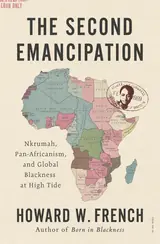 The Second EmancipationHoward W. French50% subject matchShares Colonialism & Its Aftermath
 The Cameroon WarThomas Deltombe, Jacob Tatsitsa46% subject matchShares Colonialism & Its Aftermath
 Imperial ReckoningCaroline Elkins54% subject matchShares Colonialism & Its Aftermath and East African History
 Another Fine MessHelen C. Epstein75% subject matchShares East African History and African Politics
 First Kill Your FamilyPeter Eichstaedt60% subject matchShares East African History
 Living with Bad SurroundingsSverker Finnström58% subject matchShares East African History
 Death in the CongoEmmanuel Gerard, Bruce Kuklick57% subject matchShares Colonialism & Its Aftermath and African Politics
For younger readers: Strongman, AK
Start with three books, and this one can be the first.
Members get a new edition every morning: a route out from their books to essays, research and talks, with the reason for each.
Sign upAbout this book
A leading public intellectual gives his authoritative and personal account of the tragic postcolonial fate of Uganda, his homeland.
In 1972, when Mahmood Mamdani came home to Uganda, he found a country transformed by “an orgy of violence.” Two years earlier, with support from the colonial powers of Great Britain and Israel, Idi Amin had forcefully cemented his rule. He soon expelled Uganda’s Indian minority in hopes of fostering a nation for Black Ugandans.
Continue reading
The plan backfired. Amin was followed by Yoweri Museveni, who has now ruled for nearly four decades. Whereas Amin tried to create a Black nation out of the majority, Museveni sought to fragment this majority into multiple ethnic minorities, re-creating a version of colonial indirect rule.
Slow Poison is Mamdani’s firsthand report on the tragic unraveling of his country’s struggle for decolonialization. A witness to East Africa’s endlessly intricate power plays, and one of the most insightful political philosophers of his generation, Mamdani casts a learned and wary eye on Amin, internationally depicted as a buffoon; the radical scholar Museveni; and the global heavyweights that exploited and manipulated Uganda before and after its independence.
Each leader made violence central to his project, but Mamdani sees a signal difference between Amin, who retained popular support to the end, and Museveni, who has not. The Asian expulsion made Amin a monster in the eyes of the West. In contrast, Museveni was hailed as standard bearer of the “war on terror” in Africa and was protected from accountability for far greater crimes. In exchange for adopting the package of neoliberal reforms known as the Washington Consensus, he became Africa’s poster child. Amin, who aimed to create a nation of Black millionaires, never became one himself. Meanwhile, Uganda’s surrender to privatization has brought Museveni’s family immense wealth, even as the country remains one of the world’s poorest.
Publisher details
Publisher categories
- Political Lives
- East African History
- African Politics
- Authors
- Mahmood Mamdani
- Publisher
- WW Norton
- Published
- October 14, 2025
- Format
- Print & ebook
- Reading lane
- Political Lives