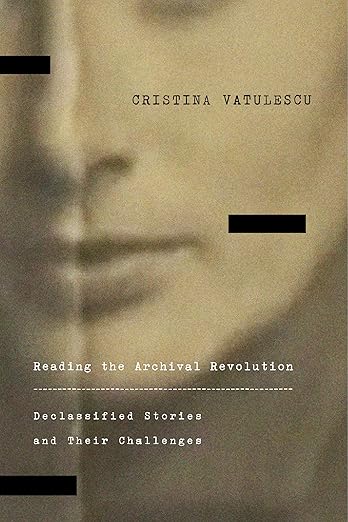
Reading the Archival Revolution
Declassified Stories and Their Challenges
Cristina Vatulescu examines how Eastern European archives shape the reading of documents, fiction, and one another.
Secret Police Archives
Come here for
- Ethical questions in reading secret police archives
- A Polish bank heist across files, film, and photo albums
Expect
- Herta Müller’s secret police files alongside autofiction and disinformation
- Contested translations of the Iron Curtain trope, from 1946 to today
Where it sits
How strongly BookFrontier reads the book as belonging to each subject.
Nearest books
Matched by our semantic model. Ordered by what its readers also loved.
 Worlds ApartBenjamin Paloff56% subject match
 The CIA Book ClubCharlie English55% subject match
 Soviet Scientific InstitutesEric Lusito, Damon Murray52% subject matchShares Soviet-Era Russia
 RevolutionEnzo Traverso51% subject match
 StasilandAnna Funder50% subject match
For younger readers: The Story That Cannot Be Told, I Must Betray You, The Wall
Start with three books, and this one can be the first.
Members get a new edition every morning: a route out from their books to essays, research and talks, with the reason for each.
Sign upAbout this book
The opening of classified documents from the Soviet era has been dubbed the archival revolution due to its unprecedented scale, drama, and impact. With a storyteller's sensibility, Cristina Vatulescu identifies and takes on the main challenges of reading in these archives.
This transnational study foregrounds peripheral Eastern European perspectives and the ethical stakes of archival research.
Continue reading
In so doing, it contributes to the urgent task of decolonizing the field of Eastern European and Russian studies at this critical moment in the region's history. Drawing on diverse work ranging from Mikhail Bakhtin to Tina Campt, the book enters into broader conversations about the limits and potential of reading documents, fictions, and each other. Pairing one key reading challenge with a particularly arresting story, Vatulescu in turn investigates Michel Foucault's traces in Polish secret police archives; tackles the files, reenactment film, and photo albums of a socialist bank heist; pits autofiction against disinformation in the secret police files of Nobel Prize laureate Herta Müller; and takes on the digital remediation of Soviet-era archives by analyzing contested translations of the Iron Curtain trope from its 1946 origins to the current war in Ukraine. The result is a bona fide reader's guide to Eastern Europe's ongoing archival revolution.
Publisher details
Publisher categories
- Eastern European History
- East European Literary Criticism
- Russian & Post-Soviet Politics
- Authors
- Cristina Vatulescu
- Publisher
- Stanford University Press
- Published
- November 5, 2024
- Format
- Print & ebook
- Reading lane
- Eastern European History