
Qatar
Small State, Big Politics
- Themes
- Contemporary Qatari politics and society, Small-state influence in global affairs, Diplomatic, cultural, and economic power
Who it’s for
- Readers interested in contemporary Qatari politics and society
- Readers studying small states’ influence on global affairs
Where it sits
How strongly BookFrontier reads the book as belonging to each subject.
Nearest books
Matched by our semantic model. Ordered by what its readers also loved. Most of these share its genres: Middle Eastern Politics and Arabian Peninsula History.
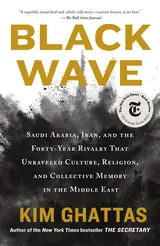 Black WaveKim Ghattas44% subject match
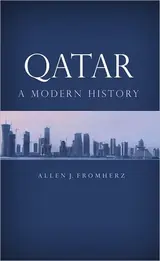 QatarAllen J. Fromherz74% subject match
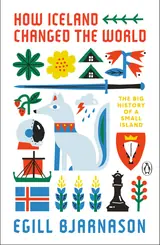 How Iceland Changed the WorldEgill Bjarnason42% subject match
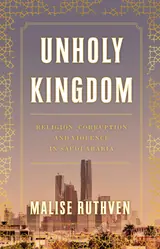 Unholy KingdomMalise Ruthven50% subject match
 Behind the Kingdom's VeilSusanne Koelbl48% subject match
 City of GoldJim Krane46% subject match
For younger readers: Who’s in Charge? Systems of Power: Saudi Arabia, The Middle East, Black Gold
Start with three books, and this one can be the first.
Members get a new edition every morning: a route out from their books to essays, research and talks, with the reason for each.
Sign upAbout this book
The Persian Gulf state of Qatar has fewer than 2 million inhabitants, virtually no potable water, and has been an independent nation only since 1971. Yet its enormous oil and gas wealth has permitted the ruling al Thani family to exert a disproportionately large influence on regional and even international politics.
Continue reading
Qatar is, as Mehran Kamrava explains in this knowledgeable and incisive account of the emirate, a "tiny giant": although severely lacking in most measures of state power, it is highly influential in diplomatic, cultural, and economic spheres.
Kamrava presents Qatar as an experimental country, building a new society while exerting what he calls "subtle power." It is both the headquarters of the global media network Al Jazeera and the site of the U.S. Central Command's Forward Headquarters and the Combined Air Operations Center. Qatar has been a major player during the European financial crisis, it has become a showplace for renowned architects, several U.S. universities have established campuses there, and it will host the FIFA World Cup in 2022. Qatar's effective use of its subtle power, Kamrava argues, challenges how we understand the role of small states in the global system. Given the Gulf state's outsized influence on regional and international affairs, this book is a critical and timely account of contemporary Qatari politics and society.
Publisher details
Publisher categories
- Arabian Peninsula History
- International Relations
- Authors
- Mehran Kamrava
- Publisher
- Cornell University Press
- Published
- June 15, 2015
- Format
- Print & ebook
- Reading lane
- Arabian Peninsula History