

Book
Punching Out
One Year in a Closing Auto Plant
Paul Clemens
Knopf Doubleday Publishing Group · Print & ebook · January 17, 2012
Reading lane: Automobile Industry
An elegy—angry, funny, and powerfully detailed—about the slow death of a Detroit auto plant and an American way of life.
At a Glance
Why This Clicks
Work’s Last Shift
A Detroit plant’s closing becomes an angry, funny elegy for industrial work and working-class culture.
Come here for
- A sharp, detailed look at America’s deindustrialization
- The history and loss bound up in one plant’s closing
Expect
- An up-close report, both tender and angry
- A lament for a vanishing working-class culture
Book Details
- Authors
- Paul Clemens
- Publisher
- Knopf Doubleday Publishing Group
- Published
- January 17, 2012
- Format
- Print & ebook
- Theme
- Automobile Industry · Manufacturing Industry
- Reading lane
- Automobile Industry
Affinity
Publisher Categories
Personal Memoirs
Urban Life
Social Class
About This Book
An elegy—angry, funny, and powerfully detailed—about the slow death of a Detroit auto plant and an American way of life. How does a country dismantle a century’s worth of its industrial heritage? To answer that question, Paul Clemens investigates the 2006 closing of one of America’s most potent symbols: a Detroit auto plant. Prior to its closing, the Budd Company stamping plant on Detroit’s East Side, built in 1919, was one of the oldest active auto plants in America’s forem...
Read full description
Similar Books

Roots of Steel
Deborah Rudacille · Knopf Doubleday Publishing Group
Affinity signal
Manufacturing Industry
Rural Life

Punching Bag
Rex Ogle · WW Norton
Affinity signal
Abuse & Recovery for Teens
Parents

Cutting Into the Meatpacking Line
Deborah Fink · The University of North Carolina Press
Affinity signal
Rural Life
Agribusiness
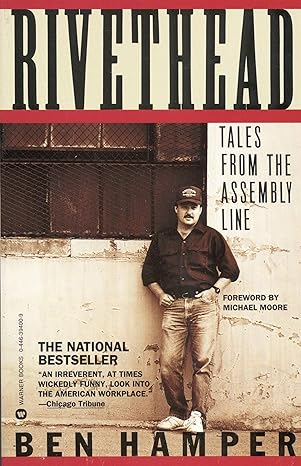
Rivethead
Ben Hamper · Grand Central Publishing
Affinity signal
Social Science