
Professional Assembly Language
Explore Pentium assembly programming, from data manipulation and advanced functions to performance in Linux.
- Themes
- Assembly language programming, Application performance optimization, Reverse engineering and hacking exploits
Pentium Assembly
Come here for
- Creating stand-alone assembly programs
- Adding assembly libraries or routines to C applications
Expect
- Examples use C, Linux, and GNU assembling, compiling, linking, and debugging tools.
- Coverage includes data manipulation and advanced functions and libraries.
Where it sits
How strongly BookFrontier reads the book as belonging to each subject.
Nearest books
Matched by our semantic model. Ordered by what its readers also loved.
 Inside the MachineJon Stokes58% subject match
 Effective Modern C++Scott Meyers46% subject matchShares Programming Basics
 The Art of Assembly Language, 2nd EditionRandall Hyde73% subject matchShares Assembly Language Programming and Programming Basics
 Assembly Language Step-by-StepJeff Duntemann70% subject matchShares Assembly Language Programming
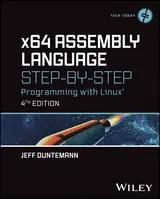 x64 Assembly Language Step-by-StepJeff Duntemann64% subject matchShares Assembly Language Programming
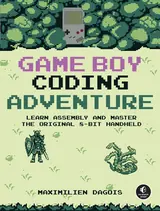 Game Boy Coding AdventureMaximilien Dagois58% subject matchShares Assembly Language Programming
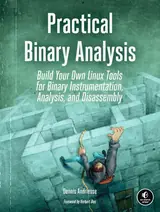 Practical Binary AnalysisDennis Andriesse57% subject matchShares Programming Basics
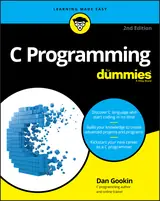 C Programming For DummiesDan Gookin56% subject matchShares C Programming and Programming Basics
For younger readers: Scratch 3 Programming Playground, Python for Kids, Coding Projects in Scratch
Start with three books, and this one can be the first.
Members get a new edition every morning: a route out from their books to essays, research and talks, with the reason for each.
Sign upAbout this book
- Unlike high-level languages such as Java and C++, assembly language is much closer to the machine code that actually runs computers; it's used to create programs or modules that are very fast and efficient, as well as in hacking exploits and reverse engineering
Continue reading
- Covering assembly language in the Pentium microprocessor environment, this code-intensive guide shows programmers how to create stand-alone assembly language programs as well as how to incorporate assembly language libraries or routines into existing high-level applications
- Demonstrates how to manipulate data, incorporate advanced functions and libraries, and maximize application performance
- Examples use C as a high-level language, Linux as the development environment, and GNU tools for assembling, compiling, linking, and debugging
Publisher details
Publisher categories
- Assembly Language Programming
- Authors
- Richard Blum
- Publisher
- Wiley
- Published
- February 11, 2005
- Format
- Print & ebook
- Reading lane
- Assembly Language Programming