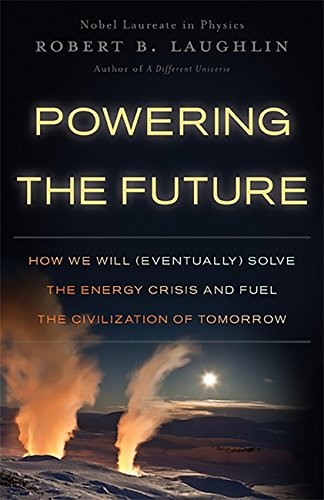
Powering the Future
How We Will (eventually) Solve the Energy Crisis and Fuel the Civilization of Tomorrow
Where it sits
How strongly BookFrontier reads the book as belonging to each subject.
Nearest books
Matched by our semantic model. Ordered by what its readers also loved.
 Rising Powers, Shrinking PlanetMichael T. Klare57% subject match
 The GridGretchen Bakke62% subject matchShares Renewable Energy
 Short Circuiting PolicyLeah Cardamore Stokes52% subject match
 Life after Fossil FuelsAlice J. Friedemann75% subject matchShares Renewable Energy and Energy
 Power HungryRobert Bryce74% subject matchShares Energy
 More and More and MoreJean-Baptiste Fressoz69% subject matchShares Energy
 Fossil FutureAlex Epstein69% subject match
 Energy for Future PresidentsRichard A Muller68% subject matchShares Energy
For younger readers: Eyes Wide Open: Going Behind the Environmental Headlines, The Story of More, Buried Sunlight: How Fossil Fuels Have Changed the Earth
Start with three books, and this one can be the first.
Members get a new edition every morning: a route out from their books to essays, research and talks, with the reason for each.
Sign upAbout this book
In Powering the Future, Nobel laureate Robert B. Laughlin transports us two centuries into the future, when we've ceased to use carbon from the ground -- either because humans have banned carbon burning or because fuel has simply run out. Boldly, Laughlin predicts no earth-shattering transformations will have taken place. Six generations from now, there will still be soccer moms, shopping malls, and business trips. Firesides will still be snug and warm.
How will we do it?
Continue reading
Not by discovering a magic bullet to slay our energy problems, but through a slew of fascinating technologies, drawing on wind, water, and fire. Powering the Future is an objective yet optimistic tour through alternative fuel sources, set in a world where we've burned every last drop of petroleum and every last shovelful of coal.
The Predictable:Fossil fuels will run out. The present flow of crude oil out of the ground equals in one day the average flow of the Mississippi River past New Orleans in thirteen minutes. If you add the energy equivalents of gas and coal, it's thirty-six minutes. At the present rate of consumption, we'll be out of fossil fuels in two centuries" time. We always choose the cheapest gas. From the nineteenth-century consolidation of the oil business to the California energy crisis of 2000-2001, the energy business has shown, time and again, how low prices dominate market share. Market forces -- not green technology -- will be the driver of energy innovation in the next 200 years.The laws of physics remain fixed. Energy will still be conserved, degrade entropically with use, and have to be disposed of as waste heat into outer space. How much energy a fuel can pack away in a given space is fixed by quantum mechanics -- and if we want to keep flying jet planes, we will need carbon-based fuels.The Potential:Animal waste.If dried and burned, the world's agricultural manure would supply about one-third as much energy as all the coal we presently consume.Trash. The United States disposes of 88 million tons of carbon in its trash per year. While the incineration of waste trash is not enough to contribute meaningfully to the global demand for energy, it will constrain fuel prices by providing a cheap supply of carbon.Solar energy.The power used to light all the cities around the world is only one-millionth of the total power of sunlight pouring down on earth's daytime side. And the amount of hydropump storage required to store the world’s daily electrical surge is equal to only eight times the volume of Lake Mead.
Publisher details
Publisher categories
- Earth Science
- Authors
- Robert B Laughlin
- Publisher
- Basic Books
- Published
- April 23, 2013
- Format
- Print & ebook
- Reading lane
- Earth Science