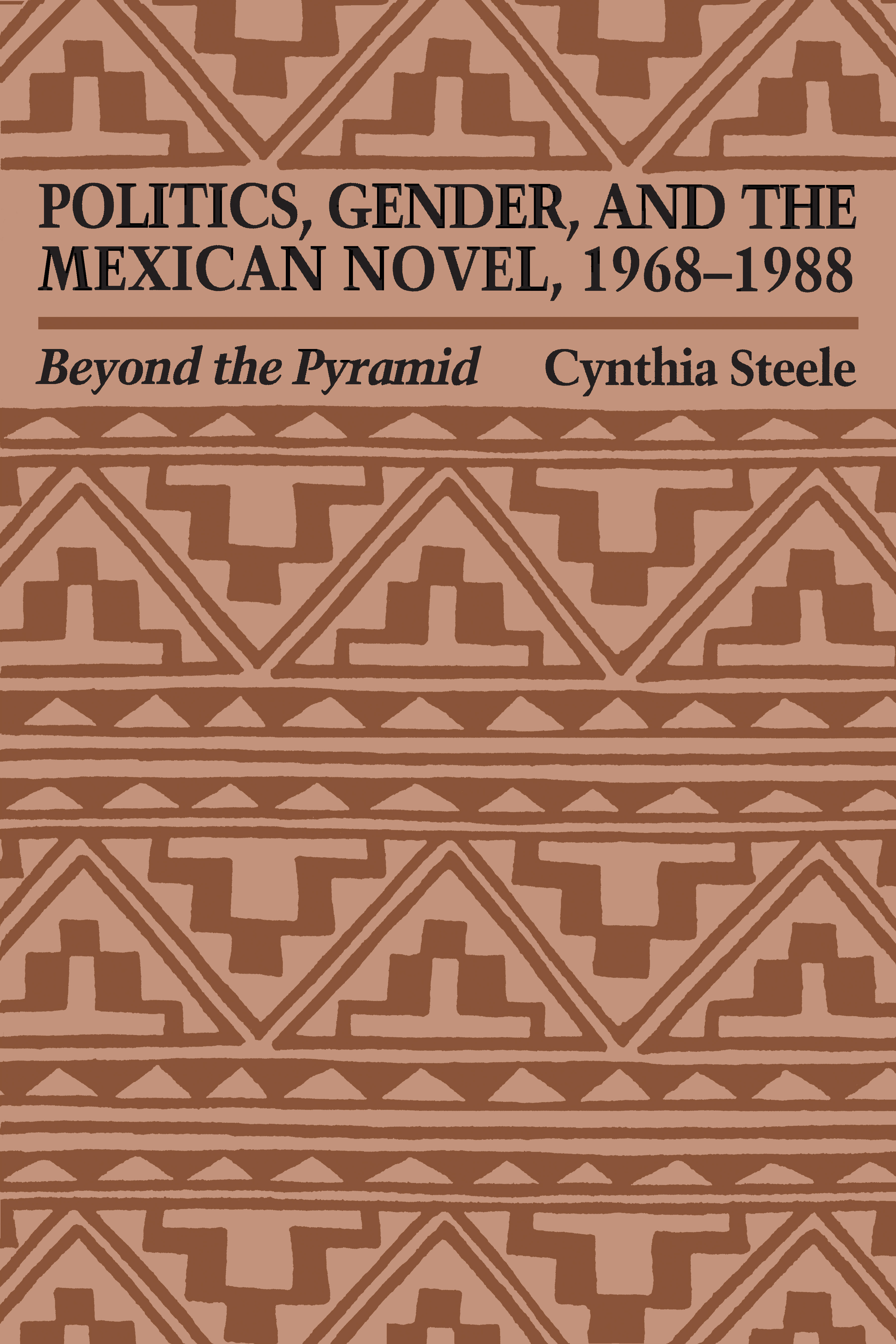
Politics, Gender, and the Mexican Novel, 1968-1988
Beyond the Pyramid
Series: Texas Pan American Series
Cynthia Steele examines how writers responded to Tlatelolco and the social crisis it signaled.
After Tlatelolco
Come here for
- The literary response to the 1968 Tlatelolco massacre
- Political change and gender identity in Mexican writing
Expect
- A study of writing from the two decades after the massacre
- Attention to politics and gender identity
Where it sits
How strongly BookFrontier reads the book as belonging to each subject.
Nearest books
Matched by our semantic model. Ordered by what its readers also loved.
 Shakin' Up Race and GenderMarta E. Sánchez47% subject matchShares Gender Studies
 Unspeakable ViolenceNicole M. Guidotti-Hernández47% subject match
 First Stop In The New WorldDavid Lida46% subject match
For younger readers: Rosa by Any Other Name, Mexico, All the Stars Denied
Start with three books, and this one can be the first.
Members get a new edition every morning: a route out from their books to essays, research and talks, with the reason for each.
Sign upAbout this book
The student massacre at Tlatelolco in Mexico City on October 2, 1968, marked the beginning of an era of rapid social change in Mexico. In this illuminating study, Cynthia Steele explores how the writers of the next two decades responded to the massacre and to the social crisis it signaled in terms of political change and gender identity.
Publisher details
Publisher categories
- Caribbean & Latin American Criticism
- Caribbean & Latin American Politics
- Authors
- Cynthia Steele
- Publisher
- University of Texas Press
- Published
- July 1, 1992
- Format
- Print & ebook
- Reading lane
- Caribbean & Latin American Criticism