
Explore planets, moons, dwarf planets, and exoplanets through discoveries, illustrations, and hands-on activities.
- Themes
- Planets and the solar system, Planet formation and orbits, Searching for life beyond Earth
Planetary Frontiers
Come here for
- Planet formation, planetary orbits, and discoveries from Mars and Kepler
- Activities include building scale models and crafting a comet
Expect
- Links to online primary sources, sidebars, and fun facts
- Questions about past life on Mars and a possible ninth planet
Where it sits
How strongly BookFrontier reads the book as belonging to each subject.
Nearest books
Matched by our semantic model. Ordered by what its readers also loved. Most of these share its genres: Astronomy and Space & Rockets.
 Solar System for KidsHilary Statum69% subject match
 Astronomy Activity Book for KidsAurora Lipper66% subject match
 PlanetsElizabeth Carney66% subject match
 Science Comics: Solar SystemRosemary Mosco66% subject match
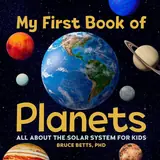 My First Book of PlanetsDr. Bruce Betts65% subject match
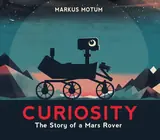 Curiosity: The Story of a Mars RoverMarkus Motum65% subject match
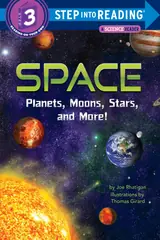 Space: Planets, Moons, Stars, and More!Joe Rhatigan63% subject match
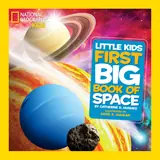 National Geographic Little Kids First Big Book of SpaceCatherine D. Hughes63% subject match
For older readers: Who Owns the Moon?, Chasing New Horizons, I am the Universe
Start with three books, and this one can be the first.
Members get a new edition every morning: a route out from their books to essays, research and talks, with the reason for each.
Sign upAbout this book
What do you see when you look up into the sky at night? The moon, stars, maybe even a comet or asteroid? You can also see other planets!
In Planetary Science: Explore New Frontiers, readers ages 12 to 15 embark on a journey through the solar system and beyond, exploring planets, moons, dwarf planets, exoplanets and everything in-between.
Continue reading
For many ancient cultures, planets were mysterious objects that moved against the backdrop of the heavens in strange but predictable patterns. Ever since Galileo Galilee first used a telescope to explore the moons of Jupiter, we’ve known that the planets are much more than mysterious points of light in the night sky. With the creation of incredible technologies such as space probes, giant ground-based telescopes, and Earth-orbiting observatories, we’ve learned that Mars once had water on its surface, that Jupiter’s Great Red Spot has been churning for centuries, and that thousands of exoplanets circle distant suns. Planetary science is also exciting because of what we don’t know. Was there ever life on Mars? Is Planet Nine lurking in the outer reaches of the solar system? Will we ever find another Earth? How far can we go? In Planetary Science, readers examine the latest information on Pluto, the discoveries of the Mars rover Curiosity, and the incredible catalog of distant planets uncovered by the Kepler Space Telescope. They learn about how planets are formed and why they travel on their orbits. Planets, those pinpricks of light you might spot on a clear night, come closer through informative illustrations, links to online primary sources, illuminating sidebars and fun facts, and hands-on, in-depth activities, such as building scale models of planets, hunting for alien worlds through citizen science, and crafting a comet in the kitchen. Planetary Science also promotes critical thinking skills through inquiry, discovery, and research by encouraging readers to explore questions that remain unanswered, such as whether Mars once had life or the possibility of a ninth planet hiding in the furthest reaches of the solar system. With discoveries being made almost every day, it’s an exciting time to be a planetary scientist!
Publisher details
Publisher categories
- Space & Rockets
- Science Projects & Experiments
- Scientific Discoveries
- Authors
- Matthew Brenden Wood
- Illustrator
- Samuel Carbaugh
- Publisher
- Nomad Press
- Published
- September 15, 2017
- Format
- Print & ebook
- Reading lane
- Space & Rockets