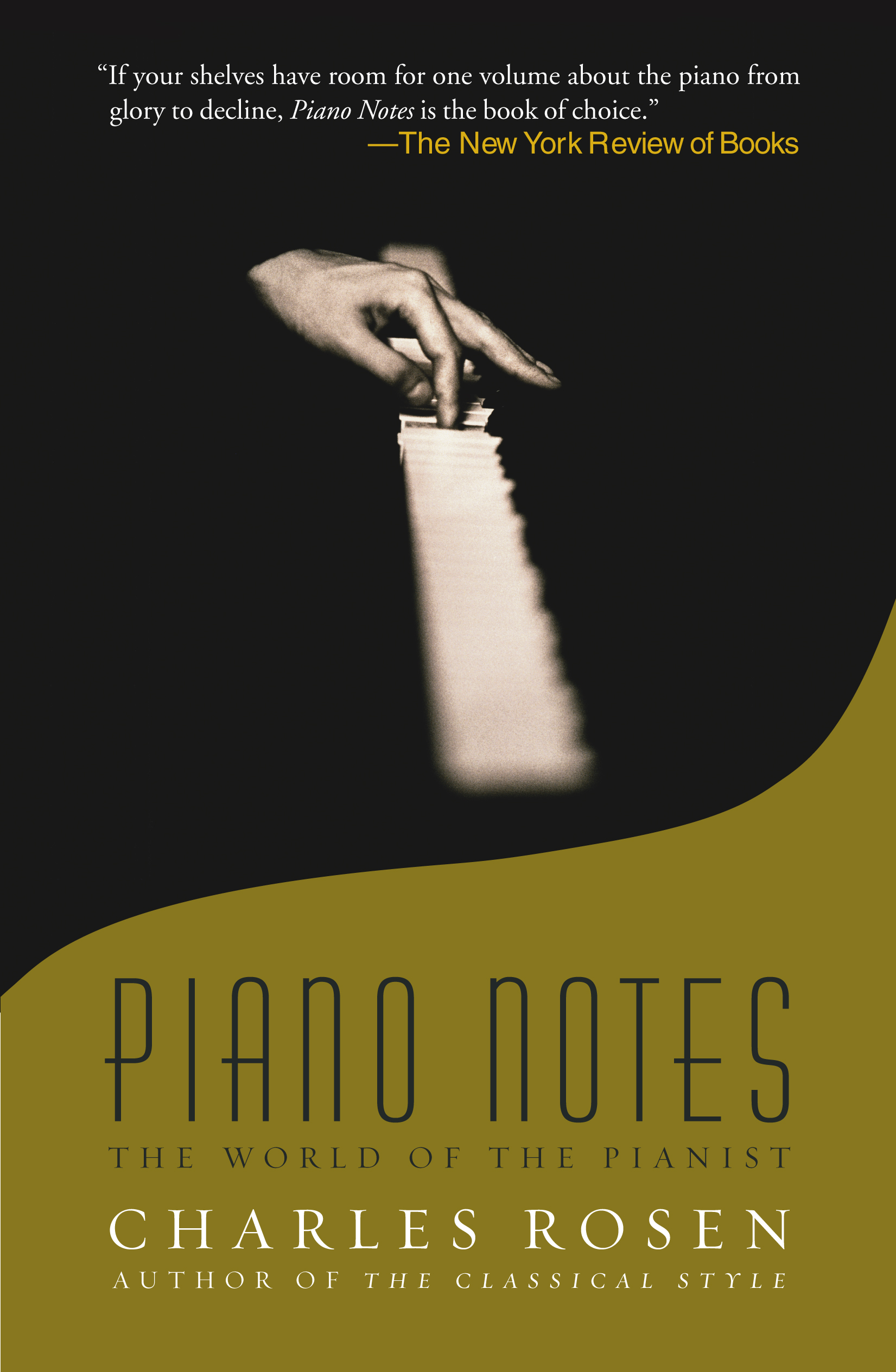
Piano Notes
The World of the Pianist
Charles Rosen makes piano playing a meeting point of mechanics, musical meaning, and cultural change.
- Themes
- Piano technique and sound, The piano’s influence on Western music, Piano playing in the age of recordings
- Pacing
- Reflective
Inside the Piano
Come here for
- Curious explanations of how notes, chords, and pianists work
- A pianist’s perspective on the instrument’s place in Western music
Expect
- Ideas that connect physical technique with musical drama
- A thoughtful question about piano playing in an age of recordings
Where it sits
How strongly BookFrontier reads the book as belonging to each subject.
Nearest books
Matched by our semantic model. Ordered by what its readers also loved. Most of these share its genre: Piano & Keyboards.
 A Natural History of the PianoStuart Isacoff76% subject matchAlso shares Music History
 Adult Piano Adventures All-in-One Lesson Book 1 Book/Online AudioNancy Faber, Randall Faber52% subject match
 Playing the Piano for PleasureCharles Cooke56% subject match
 BeethovenJan Swafford55% subject match
 On Late StyleEdward W. Said46% subject matchAlso shares Music History
 The Art of the PianoDavid Dubal66% subject matchAlso shares Music History
 Where I'm Reading FromTim Parks43% subject match
 The Piano HandbookCarl Humphries60% subject match
For younger readers: Allegro, The Mozart Season, Dancing Hands
Start with three books, and this one can be the first.
Members get a new edition every morning: a route out from their books to essays, research and talks, with the reason for each.
Sign upAbout this book
Among the world's instruments, the piano stands out as the most versatile, powerful, and misunderstood -- even by those who have spent much of their lives learning to play. In Piano Notes, a finalist for a 2003 National Book Critics Circle Award, Charles Rosen, one of the world's most talented pianists, distills a lifetime of wisdom and lore into an unforgettable tour of the hidden world of piano playing.
Continue reading
You'll read about how a note is produced, why a chord can move us, why the piano -- "hero and villain" of tonality -- has shaped the course of Western music, and why it is growing obsolete. Rosen explains what it means that Beethoven composed in his head whereas Mozart would never dream of doing so, why there are no fortissimos in the works of Ravel, and why a piano player's acrobatics have an important dramatic effect but nothing more. Ending on a contemplative note, Piano Notes offers an elegant argument that piano music "is not just sound or even significant sound" but a mechanical, physical, and fetishistic experience that faces new challenges in an era of recorded music. Rosen ponders whether piano playing will ever again be the same, and his insights astonish.
Publisher details
Publisher categories
- Music
- Classical
- Piano & Keyboards
- Authors
- Charles Rosen
- Publisher
- Free Press
- Published
- February 3, 2004
- Format
- Print & ebook
- Reading lane
- Music