
Paper Machines
About Cards & Catalogs, 1548-1929
A history of the card file as an ancestor to computing’s basic operations.
- Themes
- History of information organization, Card catalogs as precursors to computers, Data storage and processing
- Pacing
- Mixed
The Paper Machine
Come here for
- Card files as tools for storing, processing, and transferring data
- From Gessner’s paper slips to office bookkeeping
Expect
- The card catalog’s evolution through libraries and business
Where it sits
How strongly BookFrontier reads the book as belonging to each subject.
Nearest books
Matched by our semantic model. Ordered by what its readers also loved. Most of these share its genre: History of Computing.
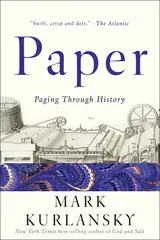 PaperMark Kurlansky58% subject matchAlso shares History of Technology
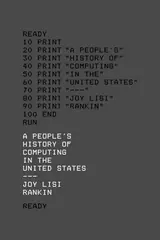 People's History of Computing in the United StatesJoy Lisi Rankin57% subject match
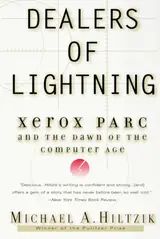 Dealers of LightningMichael A. Hiltzik52% subject match
For younger readers: Digital Revolutionaries, The Story of Clocks and Calendars, The Way Things Work: Newly Revised Edition
Start with three books, and this one can be the first.
Members get a new edition every morning: a route out from their books to essays, research and talks, with the reason for each.
Sign upAbout this book
Why the card catalog—a “paper machine” with rearrangeable elements—can be regarded as a precursor of the computer.
Today on almost every desk in every office sits a computer. Eighty years ago, desktops were equipped with a nonelectronic data processing machine: a card file. In Paper Machines, Markus Krajewski traces the evolution of this proto-computer of rearrangeable parts (file cards) that became ubiquitous in offices between the world wars.
Continue reading
The story begins with Konrad Gessner, a sixteenth-century Swiss polymath who described a new method of processing data: to cut up a sheet of handwritten notes into slips of paper, with one fact or topic per slip, and arrange as desired. In the late eighteenth century, the card catalog became the librarian's answer to the threat of information overload. Then, at the turn of the twentieth century, business adopted the technology of the card catalog as a bookkeeping tool. Krajewski explores this conceptual development and casts the card file as a “universal paper machine” that accomplishes the basic operations of Turing's universal discrete machine: storing, processing, and transferring data. In telling his story, Krajewski takes the reader on a number of illuminating detours, telling us, for example, that the card catalog and the numbered street address emerged at the same time in the same city (Vienna), and that Harvard University's home-grown cataloging system grew out of a librarian's laziness; and that Melvil Dewey (originator of the Dewey Decimal System) helped bring about the technology transfer of card files to business.
Publisher details
Publisher categories
- Cataloging & Classification
- History of Technology
- Authors
- Markus Krajewski
- Publisher
- MIT Press
- Published
- December 26, 2023
- Format
- Print & ebook
- Reading lane
- Cataloging & Classification