
Practical Pandas examples move from preparing data to visualization, modeling, and analysis at scale.
- Themes
- Python data analysis, Data cleaning and visualization, Predictive and unsupervised modeling
- Pacing
- Steady
Pandas Data Work
Come here for
- Cleaning, reshaping, and combining data with Pandas
- Fitting linear models and exploring clustering
Expect
- Examples with matplotlib, seaborn, and pandas plotting
- Coverage of missing data, groupby, and date-time capabilities
Where it sits
How strongly BookFrontier reads the book as belonging to each subject.
Nearest books
Matched by our semantic model. Ordered by what its readers also loved. Most of these share its genre: Python Programming.
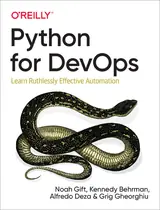 Python for DevOpsNoah Gift, Kennedy Behrman58% subject match
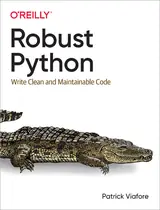 Robust PythonPatrick Viafore54% subject match
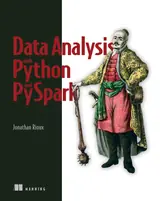 Data Analysis with Python and PySparkJonathan Rioux73% subject matchAlso shares Data Mining and Machine Learning
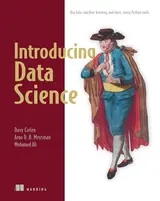 Introducing Data ScienceDavy Cielen, Arno Meysman66% subject matchAlso shares Machine Learning
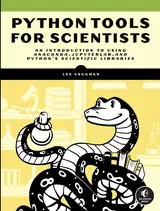 Python Tools for ScientistsLee Vaughan66% subject match
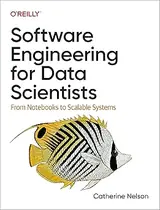 Software Engineering for Data ScientistsCatherine Nelson63% subject match
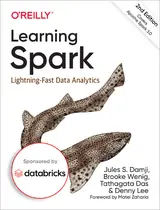 Learning SparkJules Damji, Brooke Wenig63% subject matchAlso shares Data Mining and Machine Learning
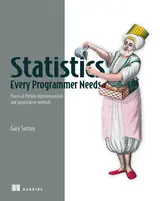 Statistics Every Programmer NeedsGary Sutton63% subject matchAlso shares Data Mining
For younger readers: Python for Kids, 2nd Edition, Python for Kids, Adventures in Python
Start with three books, and this one can be the first.
Members get a new edition every morning: a route out from their books to essays, research and talks, with the reason for each.
Sign upAbout this book
Manage and Automate Data Analysis with Pandas in Python
Today, analysts must manage data characterized by extraordinary variety, velocity, and volume. Using the open source Pandas library, you can use Python to rapidly automate and perform virtually any data analysis task, no matter how large or complex. Pandas can help you ensure the veracity of your data, visualize it for effective decision-making, and reliably reproduce analyses across multiple data sets.
Continue reading
Pandas for Everyone, 2nd Edition, brings together practical knowledge and insight for solving real problems with Pandas, even if you’re new to Python data analysis. Daniel Y. Chen introduces key concepts through simple but practical examples, incrementally building on them to solve more difficult, real-world data science problems such as using regularization to prevent data overfitting, or when to use unsupervised machine learning methods to find the underlying structure in a data set.
New features to the second edition include:
- Extended coverage of plotting and the seaborn data visualization library
- Expanded examples and resources
- Updated Python 3.9 code and packages coverage, including statsmodels and scikit-learn libraries
- Online bonus material on geopandas, Dask, and creating interactive graphics with Altair
Chen gives you a jumpstart on using Pandas with a realistic data set and covers combining data sets, handling missing data, and structuring data sets for easier analysis and visualization. He demonstrates powerful data cleaning techniques, from basic string manipulation to applying functions simultaneously across dataframes.
Once your data is ready, Chen guides you through fitting models for prediction, clustering, inference, and exploration. He provides tips on performance and scalability and introduces you to the wider Python data analysis ecosystem.
- Work with DataFrames and Series, and import or export data
- Create plots with matplotlib, seaborn, and pandas
- Combine data sets and handle missing data
- Reshape, tidy, and clean data sets so they’re easier to work with
- Convert data types and manipulate text strings
- Apply functions to scale data manipulations
- Aggregate, transform, and filter large data sets with groupby
- Leverage Pandas’ advanced date and time capabilities
- Fit linear models using statsmodels and scikit-learn libraries
- Use generalized linear modeling to fit models with different response variables
- Compare multiple models to select the “best” one
- Regularize to overcome overfitting and improve performance
- Use clustering in unsupervised machine learning
Publisher details
Publisher categories
- Data Mining
- Data Warehousing
- Python Programming
- Authors
- Daniel Y. Chen
- Publisher
- Pearson Education
- Published
- December 30, 2022
- Format
- Print & ebook
- Reading lane
- Data Mining