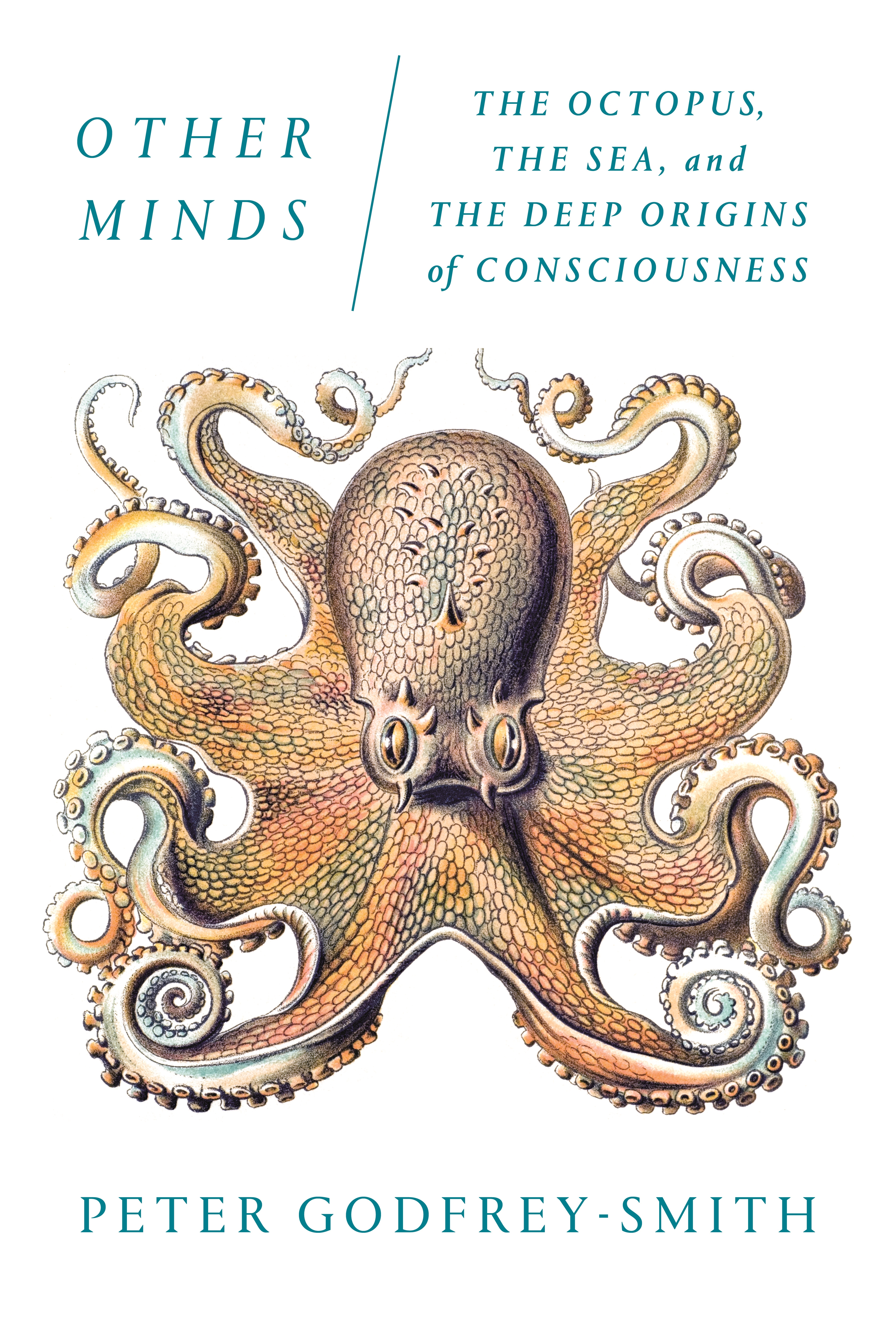
Other Minds
The Octopus, the Sea, and the Deep Origins of Consciousness
Follow the surprising paths evolution took toward consciousness, from ancient oceans to octopus intelligence.
- Themes
- Evolution of consciousness, Cephalopod intelligence, Animal minds
Minds from the Sea
Come here for
- A philosophical look at minds built along radically different evolutionary paths
- Octopus intelligence explored through science and scuba-diving encounters
Expect
- Big questions about consciousness grounded in marine biology
- A close comparison between octopus minds and our own
Where it sits
- 33%Evolution
- 29%Marine Biology
- 26%Neuroscience
How strongly BookFrontier reads the book as belonging to each subject.
Nearest books
Matched by our semantic model. Ordered by what its readers also loved.
 I Contain MultitudesEd Yong55% subject match
 Entangled LifeMerlin Sheldrake52% subject match
 The Book of EelsPatrik Svensson60% subject matchShares Marine Biology
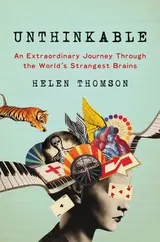 UnthinkableHelen Thomson62% subject matchShares Neuroscience
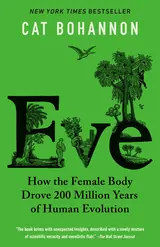 EveCat Bohannon50% subject matchShares Evolution
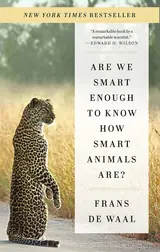 Are We Smart Enough to Know How Smart Animals Are?Frans de Waal68% subject match
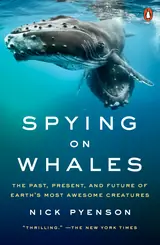 Spying on WhalesNick Pyenson61% subject matchShares Marine Biology
 An Immense WorldEd Yong61% subject match
For younger readers: The Escape Artist, Solitary Animals, Unfathomable: 20 Wild (But True) Stories About the Ocean
Start with three books, and this one can be the first.
Members get a new edition every morning: a route out from their books to essays, research and talks, with the reason for each.
Sign upAbout this book
Philosopher Peter Godfrey-Smith dons a wet suit and journeys into the depths of consciousness in Other Minds
Although mammals and birds are widely regarded as the smartest creatures on earth, it has lately become clear that a very distant branch of the tree of life has also sprouted higher intelligence: the cephalopods, consisting of the squid, the cuttlefish, and above all the octopus.
Continue reading
In captivity, octopuses have been known to identify individual human keepers, raid neighboring tanks for food, turn off lightbulbs by spouting jets of water, plug drains, and make daring escapes. How is it that a creature with such gifts evolved through an evolutionary lineage so radically distant from our own? What does it mean that evolution built minds not once but at least twice? The octopus is the closest we will come to meeting an intelligent alien. What can we learn from the encounter?
In Other Minds, Peter Godfrey-Smith, a distinguished philosopher of science and a skilled scuba diver, tells a bold new story of how subjective experience crept into being—how nature became aware of itself. As Godfrey-Smith stresses, it is a story that largely occurs in the ocean, where animals first appeared. Tracking the mind’s fitful development, Godfrey-Smith shows how unruly clumps of seaborne cells began living together and became capable of sensing, acting, and signaling. As these primitive organisms became more entangled with others, they grew more complicated. The first nervous systems evolved, probably in ancient relatives of jellyfish; later on, the cephalopods, which began as inconspicuous mollusks, abandoned their shells and rose above the ocean floor, searching for prey and acquiring the greater intelligence needed to do so. Taking an independent route, mammals and birds later began their own evolutionary journeys.
But what kind of intelligence do cephalopods possess? Drawing on the latest scientific research and his own scuba-diving adventures, Godfrey-Smith probes the many mysteries that surround the lineage. How did the octopus, a solitary creature with little social life, become so smart? What is it like to have eight tentacles that are so packed with neurons that they virtually “think for themselves”? What happens when some octopuses abandon their hermit-like ways and congregate, as they do in a unique location off the coast of Australia?
By tracing the question of inner life back to its roots and comparing human beings with our most remarkable animal relatives, Godfrey-Smith casts crucial new light on the octopus mind—and on our own.
Publisher details
Publisher categories
- Marine Life
- Evolution
- Science & Society
- Authors
- Peter Godfrey-Smith
- Publisher
- Farrar Straus & Giroux
- Published
- October 17, 2017
- Format
- Print & ebook
- Reading lane
- Marine Life