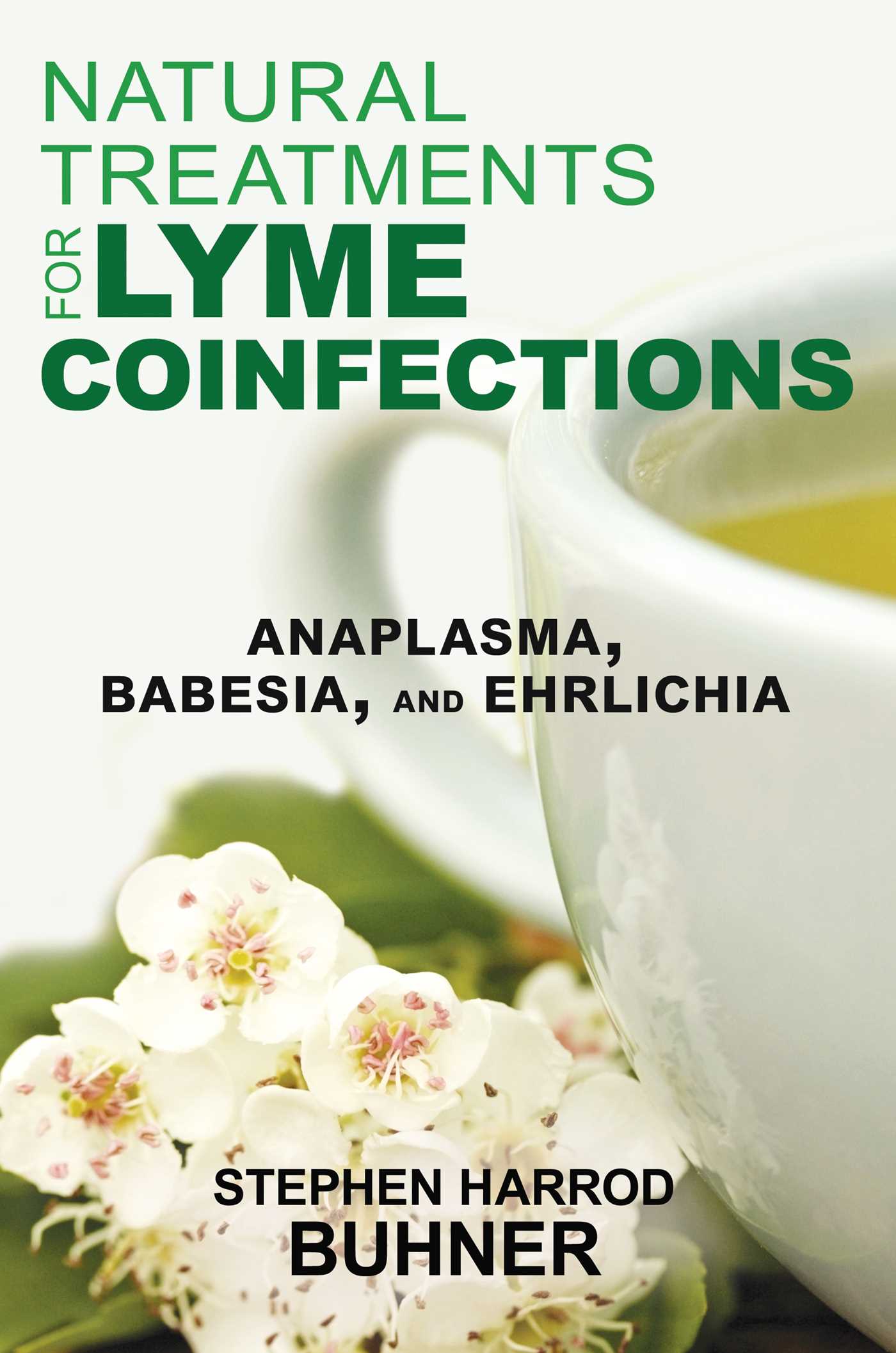
Natural Treatments for Lyme Coinfections
Anaplasma, Babesia, and Ehrlichia
Inner Traditions/Bear & Company · Print & ebook · February 22, 2015
A guide to the natural treatment of three coinfections of Lyme disease • Reviews the latest scientific research on Babesia, Ehrlichia, and Anaplasma • Reveals how these three conditions often go undiagnosed, complicate the treatment of Lyme disease, and cause symptoms from headache to seizures • Outlines effective natural treatments with herbs and supplements for specific symptoms and to combat overreactions of the immune system and the inflammation response Harvard researchers estimate there are nearly 250,000 new Lyme disease infections each year--only 10 percent of which will be accurately diagnosed.
We earn from qualifying purchases.
- Who it’s for
- Stephen Buhner examines three Lyme coinfections and outlines natural approaches using herbs and supplements.
- Genres
- Infectious Diseases, Alternative & Complementary Medicine, Herbal Medicine
- Published
- Inner Traditions/Bear & Company, February 22, 2015
Nearest books
Matched by what the books are about, then ordered by what their readers also loved. Most of these share its genre: Infectious Diseases.
 The Respiratory SolutionDr. Cass Ingram, Cass Ingram45% matchAlso shares Alternative & Complementary Medicine
 Healing the Thyroid With AyurvedaMarianne Teitelbaum53% match
 Why Can't I Get Better? Solving the Mystery of Lyme and Chronic DiseaseRichard Horowitz, Richard I. Horowitz70% match
 How Can I Get Better?Richard Horowitz, Richard I. Horowitz68% match
 BittenKris Newby61% match
 ChronicSteven Phillips, Dana Parish59% match
 Ancient RemediesDr. Josh Axe, Josh Axe55% matchAlso shares Alternative & Complementary Medicine and Herbal Medicine
For younger readers: Patient Zero, Plague-busters!, When Plague Strikes
Start with three books, and this one can be the first.
Members get a new edition every morning: a route out from their books to essays, research and talks, with the reason for each.
Join the waitlistAbout this book
A guide to the natural treatment of three coinfections of Lyme disease • Reviews the latest scientific research on Babesia, Ehrlichia, and Anaplasma • Reveals how these three conditions often go undiagnosed, complicate the treatment of Lyme disease, and cause symptoms from headache to seizures • Outlines effective natural treatments with herbs and supplements for specific symptoms and to combat overreactions of the immune system and the inflammation response Harvard researchers estimate there are nearly 250,000 new Lyme disease infections each year--only 10 percent of which will be accurately diagnosed.
Continue reading
One of the largest factors in misdiagnosis of Lyme is the presence of other tick-borne infections, which mask or aggravate the symptoms of Lyme disease as well as complicate treatment. Three newly emergent Lyme coinfections are Babesia, Ehrlichia, and Anaplasma. Tens of thousands of people are known to be asymptomatically infected and at least ten percent will become symptomatic this year--with symptoms ranging from chronic headache and arthritis to seizures. Distilling the latest scientific research on Babesia, Ehrlichia, Anaplasma, and Lyme disease, Stephen Buhner examines the complex synergy between these infections and reveals how they can go undiagnosed or resurface after antibiotic treatment. He explains how these organisms create cytokine cascades in the body--essentially sending the immune system into an overblown, uncontrolled inflammatory response in much the same way rheumatoid arthritis or cancer can. Providing an in-depth guide for those suffering from Babesia, Ehrlichia, or Anaplasma infection as well as for clinicians who work with those infected by these organisms, Buhner details effective natural holistic methods centered on herbs and supplements, such as Ashwaganda and Chinese Skullcap, and reveals how to treat specific symptoms, interrupt the cytokine cascades, reduce inflammation, and bring the immune system back into balance. He explains how these natural methods not only complement conventional Lyme disease treatments involving antibiotics and other pharmaceuticals but also provide relief when other forms of treatment have failed.
Lyme Coinfections
Stephen Buhner examines three Lyme coinfections and outlines natural approaches using herbs and supplements.
Come here for
- Herbs and supplements for specific symptoms
- Explanations of Babesia, Ehrlichia, and Anaplasma
Expect
- Discussion of cytokine cascades and inflammation
- Ways natural treatments may complement conventional Lyme care
Where it sits
| Herbal Medicine | 54% |
|---|---|
| Alternative & Complementary Medicine | 42% |
| Infectious Diseases | 36% |
Percentages are BookFrontier’s reading of the book.
Publisher categories
- Health & Wellness
- Brain & Nervous System Disorders
- Alternative & Complementary Medicine
- Authors
- Stephen Harrod Buhner
- Publisher
- Inner Traditions/Bear & Company
- Published
- February 22, 2015
- Format
- Print & ebook
- Reading lane
- Health & Wellness