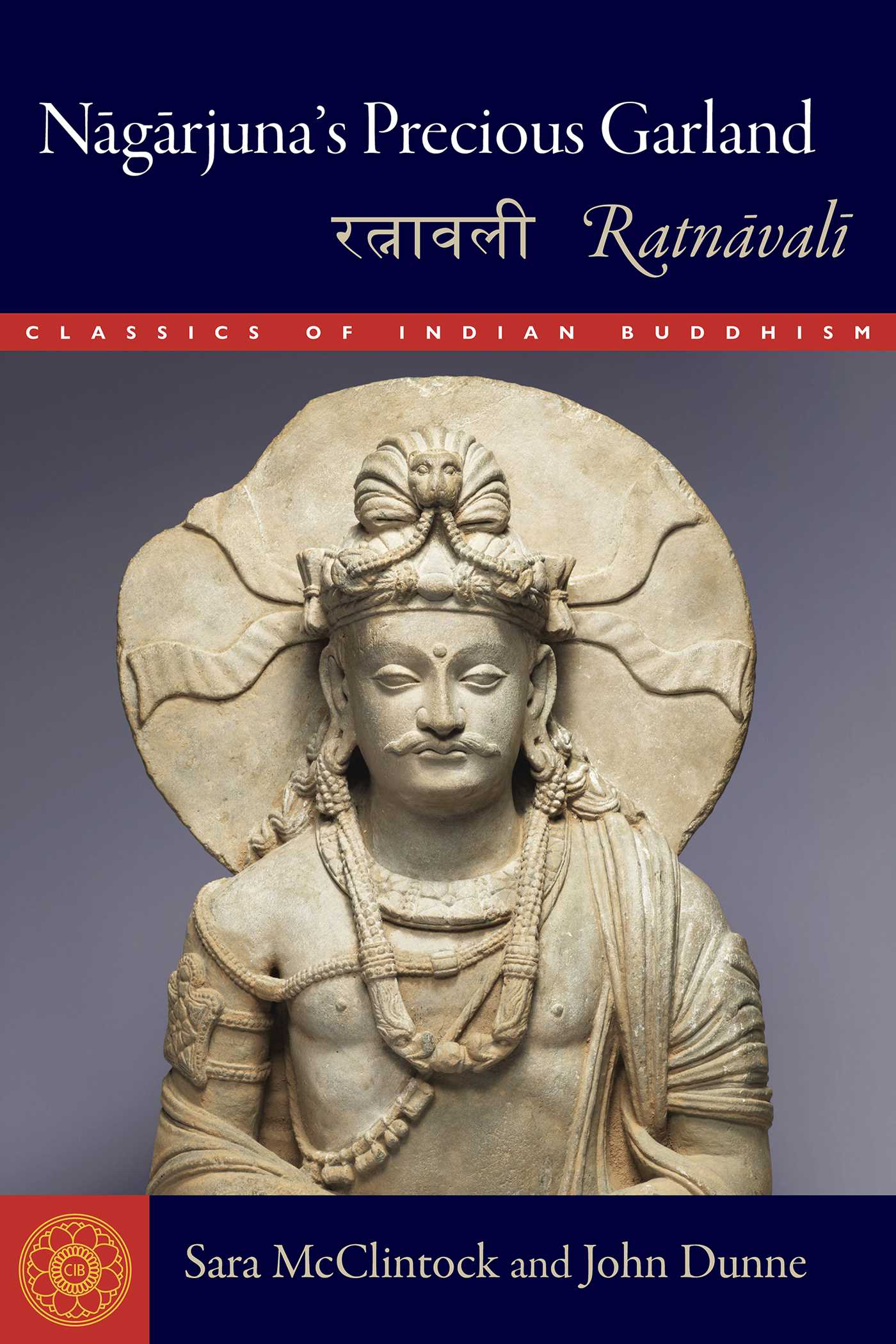
Nagarjuna’s verses link worldly responsibilities with spiritual aims, including statecraft and daily life.
Advice for a King
Come here for
- Advice on statecraft addressed to an unnamed ruler
- Buddhist teaching that brings worldly and transcendent aims together
Expect
- A complete English translation based on surviving Sanskrit verses and an Indian commentary
- Working editions of the Sanskrit and Tibetan verses
Where it sits
How strongly BookFrontier reads the book as belonging to each subject.
Nearest books
Matched by our semantic model. Ordered by what its readers also loved. Most of these share its genres: Buddhist Sacred Writings and Buddhist Thought.
 Nagarjuna's Middle WayMark Siderits, Shoryu Katsura62% subject matchAlso shares Buddhism - General
 The Numerical Discourses of the BuddhaBhikkhu Bodhi, Gautama Buddha66% subject match
 The Perfection of Wisdom TraditionGareth Sparham, Ngok Loden Sherab66% subject match
 Samatha and VipasyanaB. Alan Wallace, Eva Natanya64% subject match
 Inside Vasubandhu's YogacaraBen Connelly64% subject match
 The DhammapadaDr. Max Muller64% subject match
 The Middle Length Discourses of the BuddhaBhikkhu Nanamoli, Bhikkhu Bodhi64% subject match
 The Long Discourses of the BuddhaMaurice Walshe, Venerable Sumedho Thera64% subject match
Start with three books, and this one can be the first.
Members get a new edition every morning: a route out from their books to essays, research and talks, with the reason for each.
Sign upAbout this book
Discover the eloquence and insight of the philosopher Nagarjuna, held by tradition to be a second Buddha, in this concise instruction for a king that is considered a masterpiece of Buddhist literature.
In this profound work of five hundred verses, we encounter a presentation of Buddhism that integrates both the worldly and the transcendent.
Continue reading
The clear and sagacious advice laid out on every page serves as a road map to one’s highest goal—whether that goal is a better life, here called the Dharma of ascendance, or the ultimate one of spiritual freedom, the Dharma of the highest good. The verses, written for an unnamed ruler, touch on questions of statecraft, but their broader themes speak to us today because they tackle the difficulty of integrating one’s spiritual journey with the social and political demands of daily life.
Nagarjuna was an Indian Buddhist teacher, probably of the second century CE, who was renowned for his astute articulation of the philosophy of the Middle Way (Madhyamaka). His thoroughgoing critique of all forms of essentialism became a touchstone for Mahayana Buddhism in India, Tibet, and throughout East Asia, and his importance for the development of the Mahayana tradition can scarcely be exaggerated.
The translators here first rendered Nagarjuna’s letter for the Dalai Lama’s teachings on the work in Los Angeles in 1997. While that commemorative edition was translated from the Tibetan, the present volume prioritizes the surviving Sanskrit verses along with the only known Indian commentary, by the eleventh-century scholar Ajitamitra. This is the first complete translation in English of the Precious Garland that takes the Indian text and commentary as its primary authorities. In addition, the translators provide rigorous working editions of the Sanskrit and Tibetan verses they translate.
This elegant and precise rendering of Nagarjuna’s work is certain to become the touchstone translation of this celebrated Buddhist text.
Publisher details
Publisher categories
- Buddhist Thought
- Buddhism - General
- Buddhist Sacred Writings
- Authors
- Sara L. McClintock, John D. Dunne
- Publisher
- Wisdom Publications
- Published
- March 5, 2024
- Format
- Print & ebook
- Reading lane
- Buddhist Thought