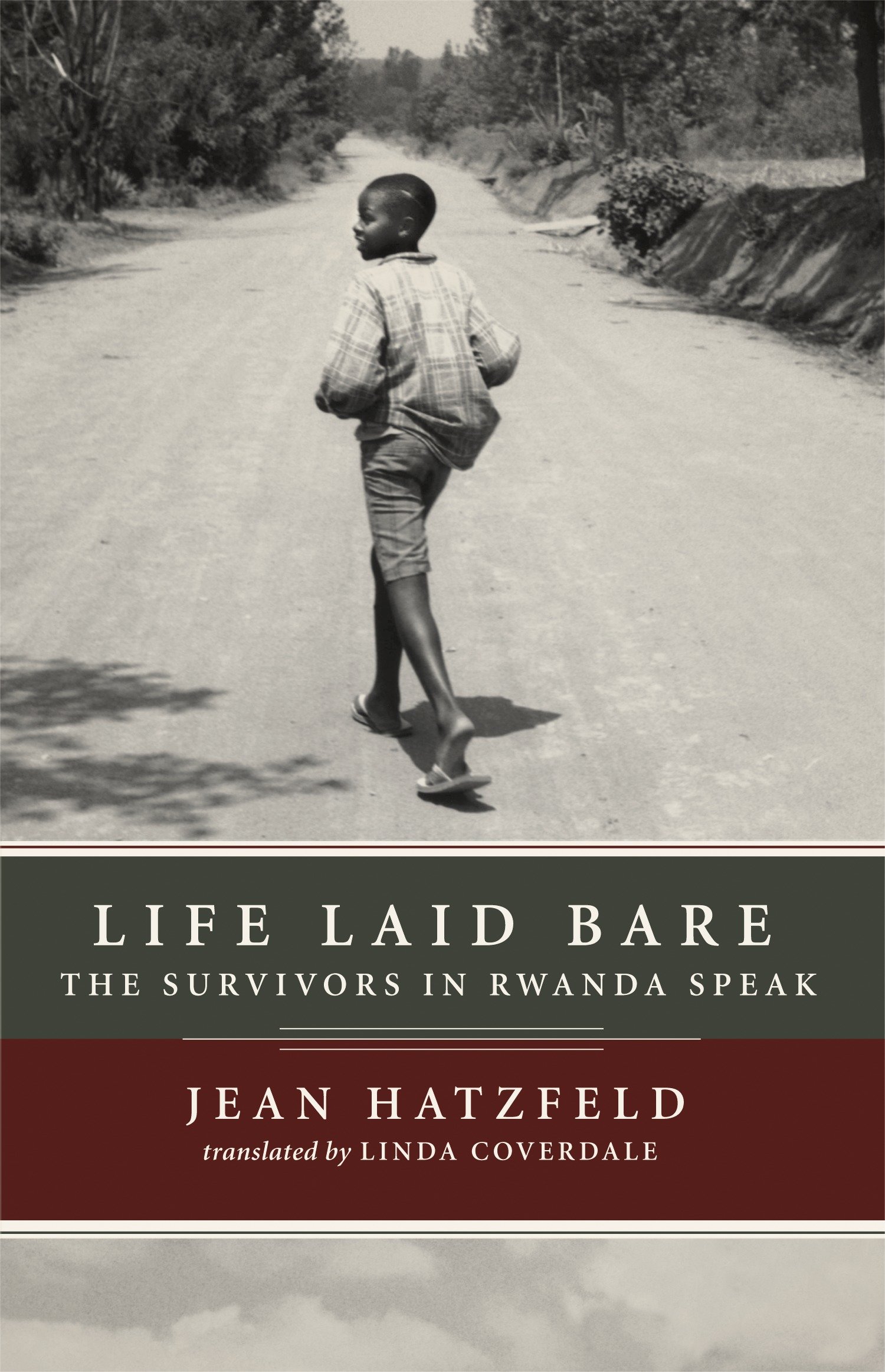
Life Laid Bare
The Survivors in Rwanda Speak
Survivors’ voices make this painful history intimate, asking what it means to bear witness.
Bearing Witness
Come here for
- Firsthand testimony that brings the human cost of Rwanda’s genocide into close focus
- A difficult, attentive account of survival and the duty to remember
Expect
- Fourteen survivors recount loss and reflect on how life continues
- Their testimony sits alongside Hatzfeld’s descriptions of Rwanda’s countryside
Where it sits
How strongly BookFrontier reads the book as belonging to each subject.
Nearest books
Matched by our semantic model. Ordered by what its readers also loved. Most of these share its genres: Genocide & War Crimes and East African History.
 Machete SeasonJean Hatzfeld76% subject match
 No Place Left to Bury the DeadNicole Itano57% subject match
 We Wish to Inform You That Tomorrow We Will Be Killed with Our FamiliesPhilip Gourevitch80% subject match
 This Voice in My HeartGilbert Tuhabonye, Gary Brozek66% subject matchAlso shares Survival Stories
 Shake Hands with the DevilRoméo Dallaire64% subject match
 From Red EarthDenise Uwimana75% subject match
 A Thousand HillsStephen Kinzer59% subject match
 Mirror to the ChurchEmmanuel M. Katongole, Jonathan Wilson-Hartgrove70% subject match
For younger readers: Alive in the Killing Fields, How Dare the Sun Rise, Four Perfect Pebbles
Start with three books, and this one can be the first.
Members get a new edition every morning: a route out from their books to essays, research and talks, with the reason for each.
Sign upAbout this book
"To make the effort to understand what happened in Rwanda is a painful task that we have no right to shirk–it is part of being a moral adult."
–Susan Sontag
Continue reading
In the late 1990s, French author and journalist Jean Hatzfeld made several journeys into the hilly, marshy region of the Bugesera, one of the areas most devastated by the Rwandan genocide of April 1994, where an average of five out of six Tutsis were hacked to death with machete and spear by their Hutu neighbors and militiamen. In the villages of Nyamata and N'tarama, Hatzfeld interviewed fourteen survivors of the genocide, from orphan teenage farmers to the local social worker. For years the survivors had lived in a muteness as enigmatic as the silence of those who survived the Nazi concentration camps. In Life Laid Bare, they speak for those who are no longer alive to speak for themselves; they tell of the deaths of family and friends in the churches and marshes to which they fled, and they attempt to account for the reasons behind the Tutsi extermination. For many of the survivors "life has broken down," while for others, it has "stopped," and still others say that it "absolutely must go on."
These horrific accounts of life at the very edge contrast with Hatzfeld's own sensitive and vivid descriptions of Rwanda's villages and countryside in peacetime. These voices of courage and resilience exemplify the indomitable human spirit, and they remind us of our own moral responsibility to bear witness to these atrocities and to never forget what can come to pass again. Winner of the Prix France Culture and the Prix Pierre Mille, Life Laid Bare allows us, in the author's own words, "to draw as close as we can get to the Rwandan genocide."
Publisher details
Publisher categories
- Central African History
- Genocide & War Crimes
- Social Science Essays
- Authors
- Jean Hatzfeld
- Publisher
- Other Press
- Published
- October 15, 2007
- Format
- Print & ebook
- Reading lane
- Central African History