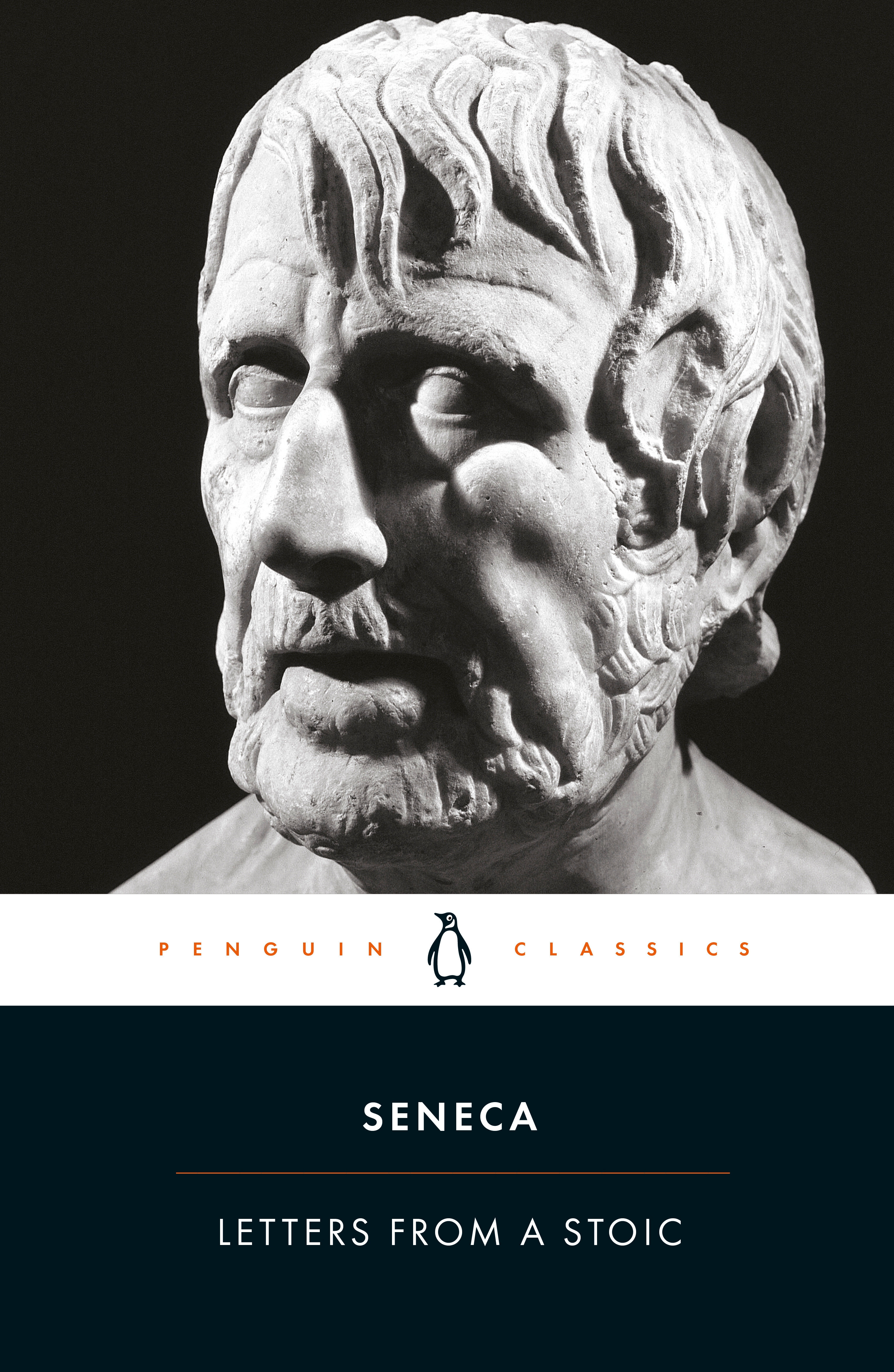
Letters from a Stoic
Seneca makes Stoic composure feel less like hardness than a humane way to meet life’s setbacks.
- Themes
- Stoic self-mastery, Friendship and courage, Human dignity and compassion
Stoicism, Humanely
Come here for
- Stoic counsel tempered by wit, friendship, and regard for ordinary courage
Expect
- Letters confronting fear, emotional excess, slavery, and arena cruelty
Where it sits
How strongly BookFrontier reads the book as belonging to each subject.
Nearest books
Matched by our semantic model. Ordered by what its readers also loved.
 EssaysMichel de Montaigne50% subject match
 Beyond Good and EvilFriedrich Nietzsche54% subject matchShares Philosophers & Their Ideas
 Discourses and Selected WritingsEpictetus, Robert Dobbin64% subject matchShares Philosophers & Their Ideas and Ethics
 On the Shortness of LifeSeneca73% subject matchShares Ethics
 EthicsBenedict de Spinoza51% subject matchShares Ethics
 Lives of the Eminent PhilosophersPamela Mensch, James Miller61% subject match
 How to LiveSarah Bakewell48% subject matchShares Philosophers & Their Ideas
For younger readers: Famous Men of Rome
Start with three books, and this one can be the first.
Members get a new edition every morning: a route out from their books to essays, research and talks, with the reason for each.
Sign upAbout this book
"It is philosophy that has the duty of protecting us...without it no one can lead a life free of fear or worry."
For several years of his turbulent life, Seneca was the guiding hand of the Roman Empire. His inspired reasoning derived mainly from the Stoic principles, which had originally been developed some centuries earlier in Athens.
Continue reading
This selection of Seneca's letters shows him upholding the austere ethical ideals of Stoicism—the wisdom of the self-possessed person immune to overmastering emotions and life’s setbacks—while valuing friendship and the courage of ordinary men, and criticizing the harsh treatment of slaves and the cruelties in the gladiatorial arena. The humanity and wit revealed in Seneca’s interpretation of Stoicism is a moving and inspiring declaration of the dignity of the individual mind.
Penguin Classics is the leading publisher of classic literature in the English-speaking world, representing a global bookshelf of the best works throughout history and across genres and disciplines. Readers trust the series to provide authoritative texts enhanced by introductions and notes by distinguished scholars and contemporary authors, as well as up-to-date translations by award-winning translators.
Publisher details
Publisher categories
- Ancient Rome
- Letters & Correspondence
- Ancient Philosophy
- Authors
- Seneca
- Publisher
- Penguin Publishing Group
- Published
- July 30, 1969
- Format
- Print & ebook
- Reading lane
- Ancient Rome