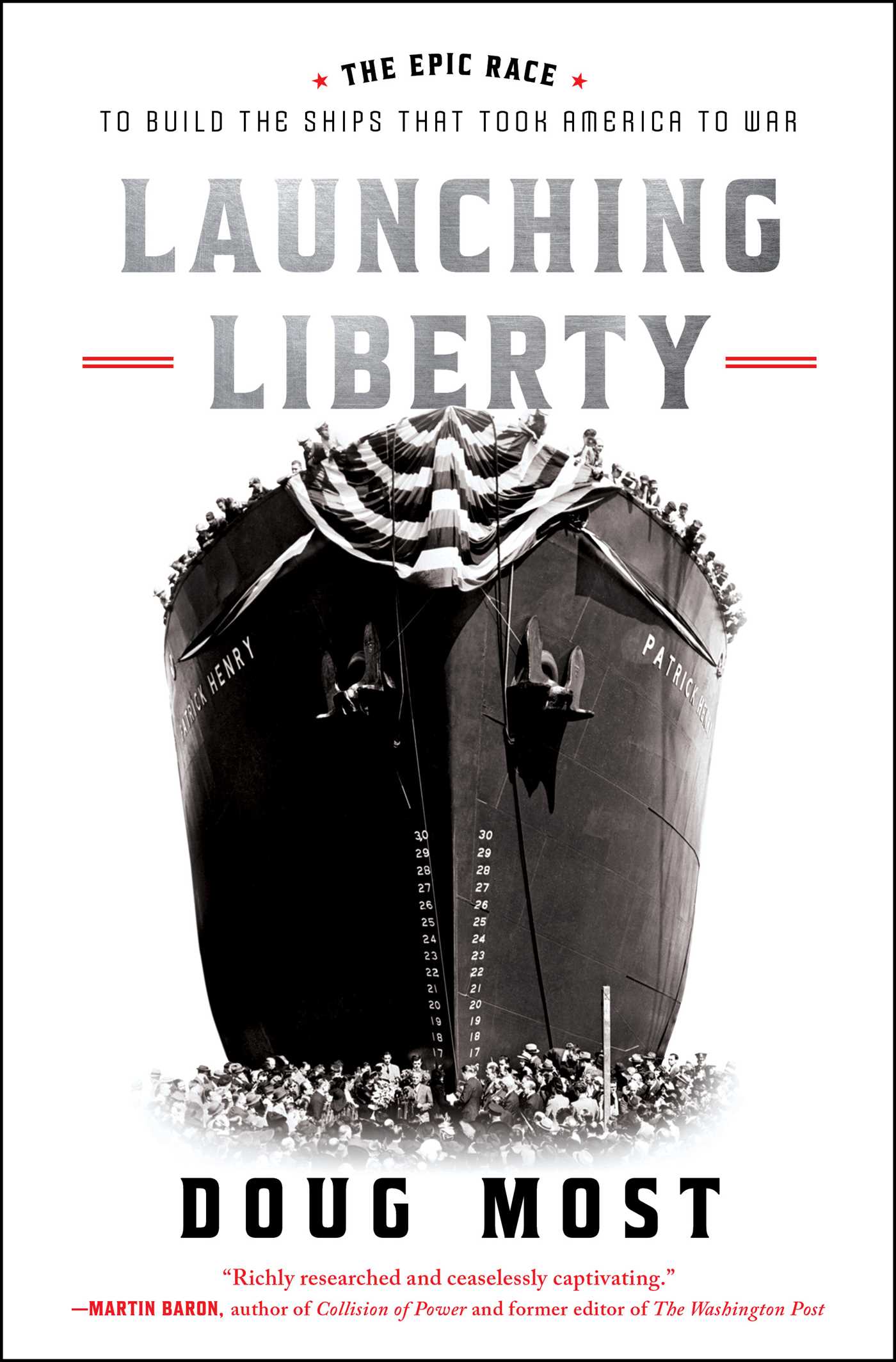
Launching Liberty
The Epic Race to Build the Ships That Took America to War
- Themes
- World War II mobilization, Shipbuilding innovation, Workers seeking greater equality
- Pacing
- Fast
Who it’s for
- Readers interested in U.S. World War II shipbuilding and the home-front war effort
- Readers drawn to the experiences of women and African American wartime workers
Where it sits
How strongly BookFrontier reads the book as belonging to each subject.
Nearest books
Matched by our semantic model. Ordered by what its readers also loved. Most of these share its genre: World War II History.
 HMS BelfastAlexander Pocklington52% subject matchAlso shares Naval History and Maritime History
 The American RevolutionGeoffrey C. Ward, Ken Burns54% subject match
 The Wounded GenerationDavid Nasaw53% subject match
 Codename NemoCharles Lachman54% subject matchAlso shares Naval History
 The Devil Reached Toward the SkyGarrett M. Graff57% subject match
 The Last Stand of the Tin Can SailorsJames D. Hornfischer57% subject matchAlso shares Naval History
 Freedom's ForgeArthur Herman68% subject match
 A Man and His ShipSteven Ujifusa66% subject match
For younger readers: Abandon Ship!, The Boys in the Boat, What Was Pearl Harbor?
Start with three books, and this one can be the first.
Members get a new edition every morning: a route out from their books to essays, research and talks, with the reason for each.
Sign upAbout this book
Out of nothing but the government’s behest, a few bold men conjured a giant ship-building industry in 1940 and launched the ships that took America to war and to victory.
In 1940, the shadow of war loomed large over American life. President Roosevelt understood that it wasn’t a matter of if the United States would be pulled into battle, but when. He foresaw a “new kind of war,” one that hinged on efforts at home.
Continue reading
Long before the attack on Pearl Harbor, German U-boats were relentlessly attacking American vessels, prompting Roosevelt to launch a monumental ship-building campaign. He knew that no matter how much weaponry and how many tanks, planes and trucks America built, the “Arsenal of Democracy” would be useless unless it could be brought in massive volume, and at breakneck speed, to troops fighting overseas.
Launching Liberty tells the remarkable story of how FDR partnered with private businessmen to begin the production of cargo freighters longer than a football field—ships he affectionately dubbed “ugly ducklings.” These colossal Liberty Ships took over six months to build at the start of his $350 million emergency shipbuilding program, far too long. The government turned to Henry Kaiser, the man who had delivered the Boulder Dam ahead of schedule and under budget, but had never built a ship in his life. Kaiser established a network of shipyards from coast to coast and recruited tens of thousands of workers eager to contribute to the war effort. Many, particularly African Americans and women, traveled from some of the most downtrodden, rural parts of the nation to help their country and to find a better life of greater equality.
As German U-boats maintained their pace of attack, Roosevelt and Kaiser initiated a bold, nationwide competition among shipyards to see who could construct ships the fastest. Driven by duty and the thrill of innovation, workers reduced the shipbuilding timeline from months to weeks and then to days. Launching Liberty is a tapestry of voices reflecting the diverse American experience of World War II. From the halls of the White House to the cramped quarters of half-finished cargo ships, we hear from naval architects, welders, nurses, engineers, daycare providers, and mothers balancing family life with the demands of wartime economy. This book uncovers the inspiring, untold stories of those who rose to the challenge during one of America’s most tumultuous times.
Publisher details
Publisher categories
- World War II History
- Naval History
- Warships & Submarines
- Authors
- Doug Most
- Publisher
- Simon & Schuster
- Published
- August 19, 2025
- Format
- Print & ebook
- Reading lane
- World War II History