
LatinoLand
A Portrait of America's Largest and Least Understood Minority
Marie Arana pairs personal experience and research to illuminate Latino histories and lives in America.
Many Histories
Come here for
- A nuanced portrait of Latino diversity in the United States
- Little-known history alongside personal interviews and deep research
Expect
- A layered account that resists treating Latino communities as a monolith
- Accessible history grounded in interviews and the author’s own perspective
Where it sits
How strongly BookFrontier reads the book as belonging to each subject.
Nearest books
Matched by our semantic model. Ordered by what its readers also loved. Most of these share its genre: Immigration & Emigration.
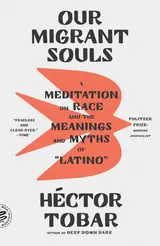 Our Migrant SoulsHéctor Tobar68% subject matchAlso shares Hispanic American Studies
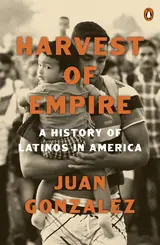 Harvest of EmpireJuan Gonzalez74% subject matchAlso shares Hispanic American Studies and Immigration Policy
 Once I Was YouMaria Hinojosa59% subject matchAlso shares Immigration Policy
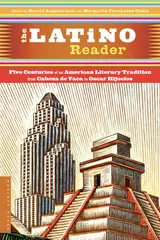 The Latino ReaderHarold Augenbraum, Margarite Fernández Olmos70% subject matchAlso shares Hispanic American Studies
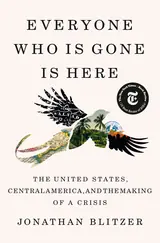 Everyone Who Is Gone Is HereJonathan Blitzer56% subject matchAlso shares Immigration Policy
 The Making of Asian AmericaErika Lee55% subject match
 Fresh Banana LeavesJessica Hernandez, Ph.D.51% subject match
For younger readers: The Other Side, Dreamers, ¡Ay, Mija!
Start with three books, and this one can be the first.
Members get a new edition every morning: a route out from their books to essays, research and talks, with the reason for each.
Sign upAbout this book
“A perfect representation of Latino diversity” (The Washington Post), LatinoLand draws from hundreds of interviews and prodigious research to give us both a vibrant portrait and the little-known history of our largest and fastest-growing minority, in “a work of prophecy, sympathy, and courage” (Junot Díaz, Pulitzer Prize–winning author).
Continue reading
LatinoLand is an exceptional, all-encompassing overview of Hispanic America based on personal interviews, deep research, and Marie Arana’s life experience as a Latina. At present, Latinos comprise twenty percent of the US population, a number that is growing. By 2050, census reports project that one in every three Americans will claim Latino heritage.
But Latinos are not a monolith. They do not represent a single group. The largest groups are Mexicans, Puerto Ricans, Dominicans, Salvadorans, and Cubans. Each has a different cultural and political background. Puerto Ricans, for example, are US citizens, whereas some Mexican Americans never immigrated because the US-Mexico border shifted after the US invasion of 1848, incorporating what is now the entire southwest of the United States. Cubans came in two great waves: those escaping communism in the early years of Castro, many of whom were professionals and wealthy, and those permitted to leave in the Mariel boat lift twenty years later, representing some of the poorest Cubans, including prisoners.
As LatinoLand shows, Latinos were some of the earliest immigrants to what is now the US—some of them arriving in the 1500s. They are racially diverse—a random infusion of white, Black, indigenous, and Asian. Once overwhelmingly Catholic, they are becoming increasingly Protestant and Evangelical. They range from domestic workers and day laborers to successful artists, corporate CEOs, and US senators. Formerly solidly Democratic, they now vote Republican in growing numbers. They are as culturally varied as any immigrants from Europe or Asia.
Marie Arana draws on her own experience as the daughter of an American mother and Peruvian father who came to the US at age nine, straddling two worlds, as many Latinos do. “Thorough, accessible, and necessary” (Ms. magazine), LatinoLand unabashedly celebrates Latino resilience and character and shows us why we must understand the fastest-growing minority in America.
Publisher details
Publisher categories
- 21st-Century America
- Immigration & Emigration
- Hispanic American Studies
- Authors
- Marie Arana
- Publisher
- Simon & Schuster
- Published
- February 18, 2025
- Format
- Print & ebook
- Reading lane
- 21st-Century America