
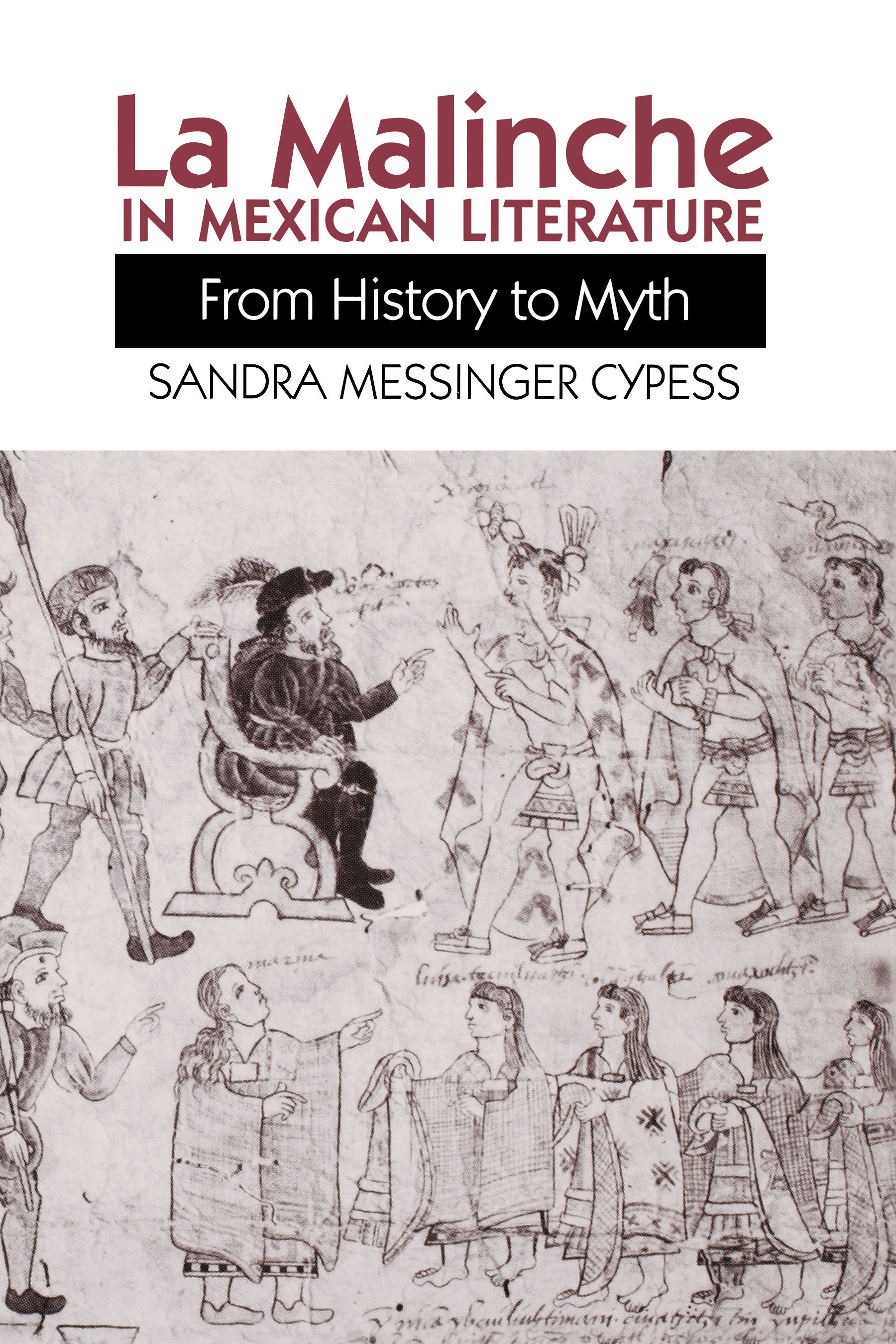
Book
La Malinche in Mexican Literature
From History to Myth
Sandra Messinger Cypess
University of Texas Press · Print & ebook · December 1, 1991
Reading lane: Hispanic American Lit Crit
Of all the historical characters known from the time of the Spanish conquest of the New World, none has proved more pervasive or controversial than that of the Indian interpreter, guide, mistress, and confidante of Hernán Cortés, Doña Marina—La Malinche—Malintzin.
At a Glance
Who It's For
Book Details
- Authors
- Sandra Messinger Cypess
- Publisher
- University of Texas Press
- Published
- December 1, 1991
- Format
- Print & ebook
- Theme
- Hispanic American Lit Crit · Caribbean & Latin American Criticism
- Reading lane
- Hispanic American Lit Crit
Affinity
Publisher Categories
Caribbean & Latin American Criticism
About This Book
Of all the historical characters known from the time of the Spanish conquest of the New World, none has proved more pervasive or controversial than that of the Indian interpreter, guide, mistress, and confidante of Hernán Cortés, Doña Marina—La Malinche—Malintzin. The mother of Cortés's son, she becomes not only the mother of the mestizo but also the Mexican Eve, the symbol of national betrayal. Very little documented evidence is available about Doña Marina. This is the firs...
Read full description
Similar Books

The Inner Life of Mestizo Nationalism
Estelle Tarica · University of Minnesota Press
Affinity signal
Hispanic American Lit Crit
Caribbean & Latin American Criticism

Buenas Noches, American Culture
María DeGuzmán · Indiana University Press
Affinity signal
Hispanic American Lit Crit
Caribbean & Latin American Criticism

Unspeakable Violence
Nicole M. Guidotti-Hernández · Duke University Press
Affinity signal
Hispanic American Lit Crit
Caribbean & Latin American Criticism