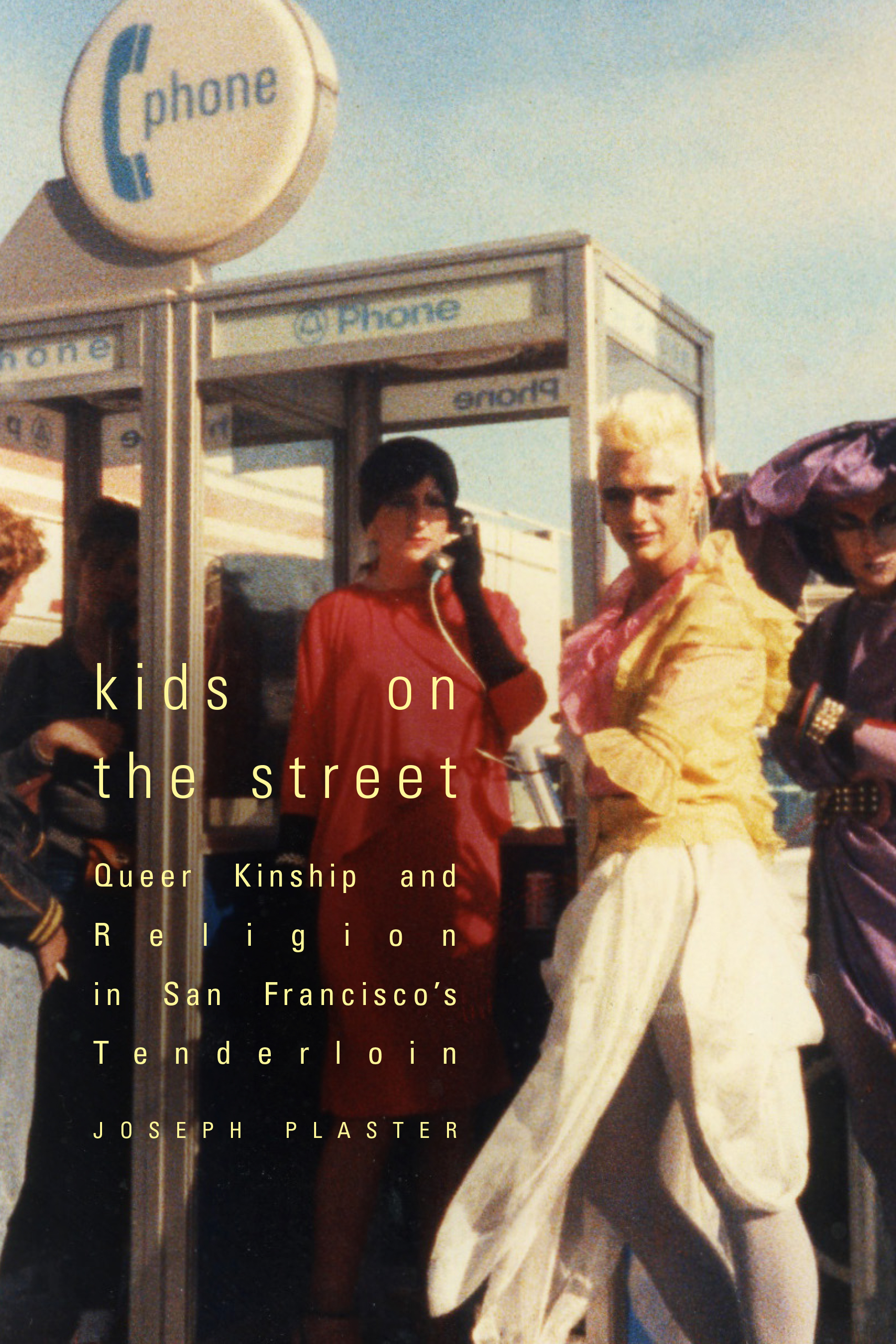
Kids on the Street
Queer Kinship and Religion in San Francisco's Tenderloin
A history of Tenderloin youth traces queer kinship, religious practice, and mutual aid.
- Themes
- Queer kinship and mutual aid, Religious practices among queer youth, Tenderloin queer history
Tenderloin Kinship
Come here for
- Queer kinship networks
- Religious practices and migratory patterns
Expect
- San Francisco’s Tenderloin, from the 1950s to the present
- A history alongside narratives of gay progress and pride
Where it sits
How strongly BookFrontier reads the book as belonging to each subject.
Nearest books
Matched by our semantic model. Ordered by what its readers also loved.
 Season of the WitchDavid Talbot55% subject match
 Beyond DefinitionMarci Blackman, Trebor Healey54% subject match
 ¡Cuéntamelo!Julián Delgado Lopera51% subject matchShares LGBTQ+ Studies
 A Short History of San FranciscoTom Cole51% subject match
 Creating a Place For OurselvesBrett Beemyn51% subject match
 Hidden MercyMichael J. O'Loughlin50% subject match
 Prairie FairiesValerie J. Korinek49% subject match
For younger readers: Last Night at the Telegraph Club, Punk Like Me, Hello, Cruel World
Start with three books, and this one can be the first.
Members get a new edition every morning: a route out from their books to essays, research and talks, with the reason for each.
Sign upAbout this book
In Kids on the Street Joseph Plaster explores the informal support networks that enabled abandoned and runaway queer youth to survive in tenderloin districts across the United States. Tracing the history of the downtown lodging house districts where marginally housed youth regularly lived beginning in the late 1800s, Plaster focuses on San Francisco’s Tenderloin from the 1950s to the present.
Continue reading
He draws on archival, ethnographic, oral history, and public humanities research to outline the queer kinship networks, religious practices, performative storytelling, and migratory patterns that allowed these kids to foster social support and mutual aid. He shows how they collectively and creatively managed the social trauma they experienced, in part by building relationships with johns, bartenders, hotel managers, bouncers, and other vice district denizens. By highlighting a politics where the marginal position of street kids is the basis for a moral economy of reciprocity, Plaster excavates a history of queer life that has been overshadowed by major narratives of gay progress and pride.
Publisher details
Publisher categories
- 21st-Century America
- Gay Studies
- Urban Life
- Authors
- Joseph Plaster
- Publisher
- Duke University Press
- Published
- February 24, 2023
- Format
- Print & ebook
- Reading lane
- 21st-Century America