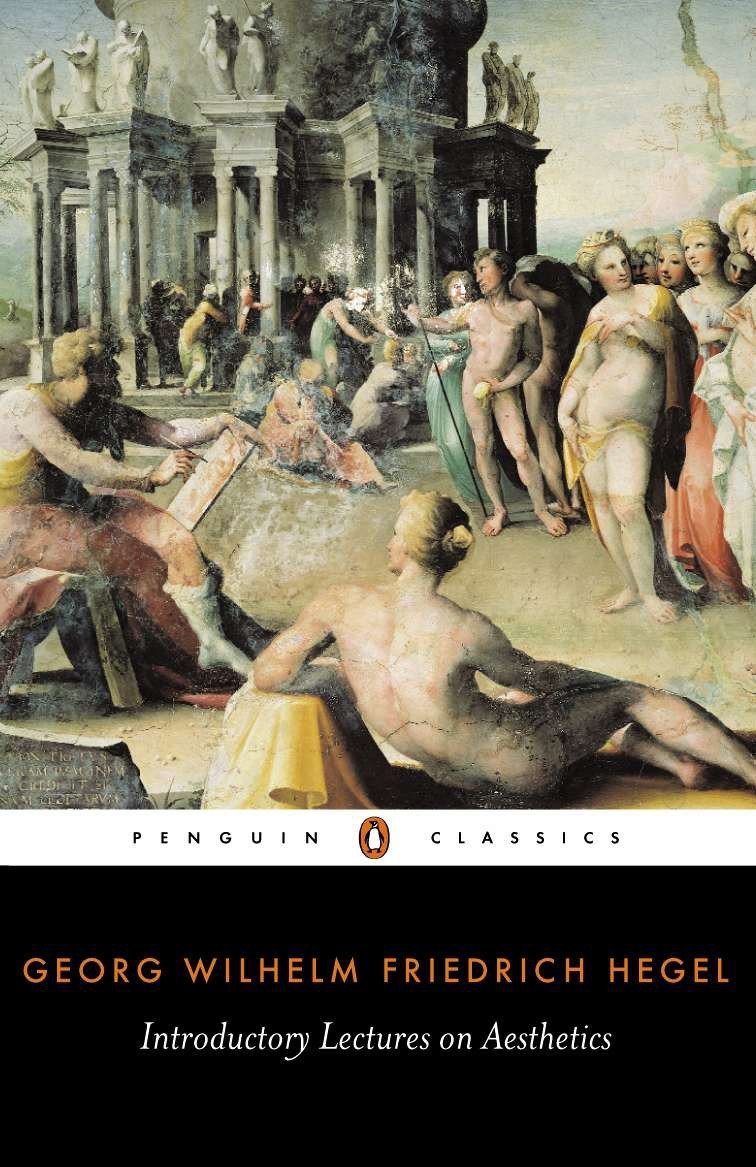
Introductory Lectures on Aesthetics
Hegel’s account of art is both deeply admiring and sharply doubtful about its modern prospects.
- Themes
- Art and aesthetics, Art's place in modernity, Classical and modern art
Art Under Pressure
Come here for
- A bold pairing of classical ideals and modern unease
- A philosophical case for taking art seriously
Expect
- Passionately argued lectures from 1820s Berlin
- Questions about how art meets a changing world
Where it sits
How strongly BookFrontier reads the book as belonging to each subject.
Nearest books
Matched by our semantic model. Ordered by what its readers also loved.
 Studies in the History of the RenaissanceWalter Pater, Matthew Beaumont55% subject matchShares Aesthetics and Art Criticism & Ideas
 The Birth of TragedyFriedrich Nietzsche, Michael Tanner60% subject matchShares Aesthetics
 On Late StyleEdward W. Said50% subject matchShares Art Criticism & Ideas
 On PaintingLeon Battista Alberti, Martin Kemp49% subject matchShares Aesthetics and Art Criticism & Ideas
 A History of Philosophy, Volume 2: Medieval PhilosophyFrederick Copleston45% subject match
 Lives of the Eminent PhilosophersPamela Mensch, James Miller50% subject match
 IlluminationsWalter Benjamin51% subject matchShares Aesthetics and Art Criticism & Ideas
 Prolegomena to Any Future Metaphysics: And the Letter to Marcus Herz, February 1772Immanuel Kant, James W. Ellington48% subject match
Start with three books, and this one can be the first.
Members get a new edition every morning: a route out from their books to essays, research and talks, with the reason for each.
Sign upAbout this book
No philosopher has held a higher opinion of art than Hegel, yet nor was any so profoundly pessimistic about its prospects - despite living in the German golden age of Goethe, Mozart and Schiller. For if the artists of classical Greece could find the perfect fusion of content and form, modernity faced complicating - and ultimately disabling - questions.
Continue reading
Christianity, with its code of unworldliness, had compromised the immediacy of man's relationship with reality, and ironic detachment had alienated him from his deepest feelings. Hegel's Introductory Lectures on Aesthetics were delivered in Berlin in the 1820s and stand today as a passionately argued work that challenged the ability of art to respond to the modern world.
Publisher details
Publisher categories
- Art Criticism & Ideas
- German Literary Collections
- Aesthetics
- Authors
- Georg Wilhelm Friedrich Hegel, Michael Inwood
- Publisher
- Penguin Publishing Group
- Published
- January 4, 1994
- Format
- Print & ebook
- Reading lane
- Art Criticism & Ideas