
Introduction to Programming in Java
An Interdisciplinary Approach
Java programming through examples from mathematics, physics, chemistry, biology, and computer science.
- Themes
- Java programming basics, Programming in scientific fields, Algorithms and data structures
Java Applications
Come here for
- Applications from applied math, physics, chemistry, biology, and computer science
- Exercises and opportunities for creative engagement with programming
Expect
- Coverage of sorting and searching algorithms
- Coverage of stacks, queues, and symbol tables
Where it sits
How strongly BookFrontier reads the book as belonging to each subject.
Nearest books
Matched by our semantic model. Ordered by what its readers also loved. Most of these share its genres: Java Programming and Object-Oriented Programming.
 JavaWalter Savitch, Kenrick Mock77% subject match
 Java: A Beginner's Guide, Eighth EditionSchildt, Herbert72% subject match
 Learning JavaMarc Loy, Patrick Niemeyer72% subject match
 Java FoundationsJohn Lewis, Peter DePasquale71% subject match
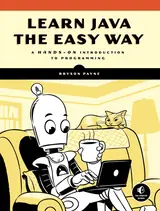 Learn Java the Easy WayBryson Payne70% subject match
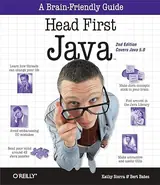 Head First JavaKathy Sierra, Bert Bates70% subject match
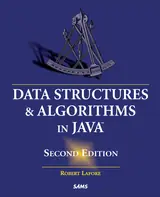 Data Structures and Algorithms in JavaRobert Lafore69% subject matchAlso shares Algorithms
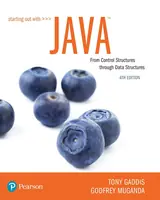 Starting Out with JavaTony Gaddis, Godfrey Muganda69% subject matchAlso shares Algorithms
For younger readers: Python for Kids, 2nd Edition, Python for Kids, Coding Projects in Scratch
Start with three books, and this one can be the first.
Members get a new edition every morning: a route out from their books to essays, research and talks, with the reason for each.
Sign upAbout this book
Programming skills are indispensable in today’s world, not just for computer science students, but also for anyone in any scientific or technical discipline. An Introduction to Programming in Java, Second Edition, by Robert Sedgewick and Kevin Wayne is an accessible, interdisciplinary treatment that emphasizes important and engaging applications, not toy problems.
Continue reading
The authors supply the tools needed for students and professionals to learn that programming is a natural, satisfying, and creative experience, and to become conversant with one of the world’s most widely used languages.
This example-driven guide focuses on Java’s most useful features and brings programming to life for every student in the sciences, engineering, and computer science.
Coverage includes
- Basic elements of programming: variables, assignment statements, built-in data types, conditionals, loops, arrays, and I/O, including graphics and sound
- Functions, modules, and libraries: organizing programs into components that can be independently debugged, maintained, and reused
- Algorithms and data structures: sort/search algorithms, stacks, queues, and symbol tables
- Applications from applied math, physics, chemistry, biology, and computer science
Drawing on their extensive classroom experience, the authors provide Q&As, exercises, and opportunities for creative engagement with the material throughout. Together with the companion materials, this book empowers people pursue a modern approach to teaching and learning programming.
Companion web site contains
- Chapter summaries
- Supplementary exercises, some with solutions
- Detailed instructions for installing a Java programming environment
- Program code and test data suitable for easy download
- Detailed creative exercises, projects, and other supplementary mat
And companion studio-produced online videos provide students and professionals with the opportunity to engage with the material at their own pace and instructors the opportunity to spend their time with students helping them to succeed on assignments and exams.
Publisher details
Publisher categories
- Programming Languages
- Java Programming
- Authors
- Robert Sedgewick, Kevin Wayne
- Publisher
- Pearson Education
- Published
- March 30, 2017
- Format
- Print & ebook
- Reading lane
- Programming Languages