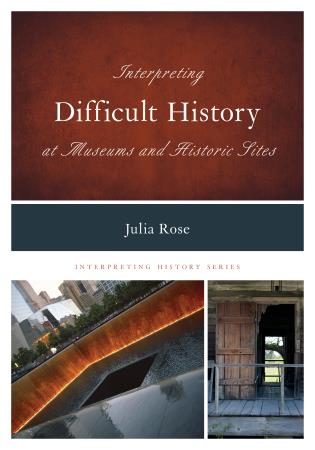
Interpreting Difficult History at Museums and Historic Sites
Museum interpretation methods meet psychoanalytic educational theory in addressing histories of oppression and trauma.
Difficult History
Come here for
- Examples of difficult knowledge
- Detailed examples of interpretation methods
Expect
- An in-depth explanation of the theories behind the methods
- Ethical representations of historical individuals and communities who have suffered
Where it sits
How strongly BookFrontier reads the book as belonging to each subject.
Nearest books
Matched by our semantic model. Ordered by what its readers also loved.
 The houses of historyAnna Green, Kathleen Troup49% subject matchShares Studying History
 The MuseumSamuel J. Redman51% subject matchShares Museum Studies & Curation
 Dangerous GamesMargaret MacMillan48% subject match
 The Modern Historiography ReaderAdam Budd47% subject matchShares Studying History
 Clues, Myths, and the Historical MethodCarlo Ginzburg47% subject match
 What Is History?Edward Hallett Carr46% subject match
 The Historian's CraftMarc Bloch46% subject matchShares Studying History
For younger readers: We Bury Nothing, The History of Western Art in Comics Part One: From Prehistory to the Renaissance, The Holocaust
Start with three books, and this one can be the first.
Members get a new edition every morning: a route out from their books to essays, research and talks, with the reason for each.
Sign upAbout this book
Interpreting Difficult History at Museums and Historic Sites is framed by educational psychoanalytic theory and positions museum workers, public historians, and museum visitors as learners. Through this lens, museum workers and public historians can develop compelling and ethical representations of historical individuals, communities, and populations who have suffered.
Continue reading
It includes various examples of difficult knowledge, detailed examples of specific interpretation methods, and will give readers an in-depth explanation of the psychoanalytic educational theories behind the methodologies. Audiences can more responsibly and productively engage in learning histories of oppression and trauma when they are in measured and sensitive museum learning environments and public history venues. To learn more, check out the website here: http://interpretingdifficulthistory.com/
Publisher details
Publisher categories
- Management
- History
- Authors
- Julia Rose
- Publisher
- Rowman
- Published
- May 2, 2016
- Format
- Print & ebook
- Reading lane
- Management