
Book
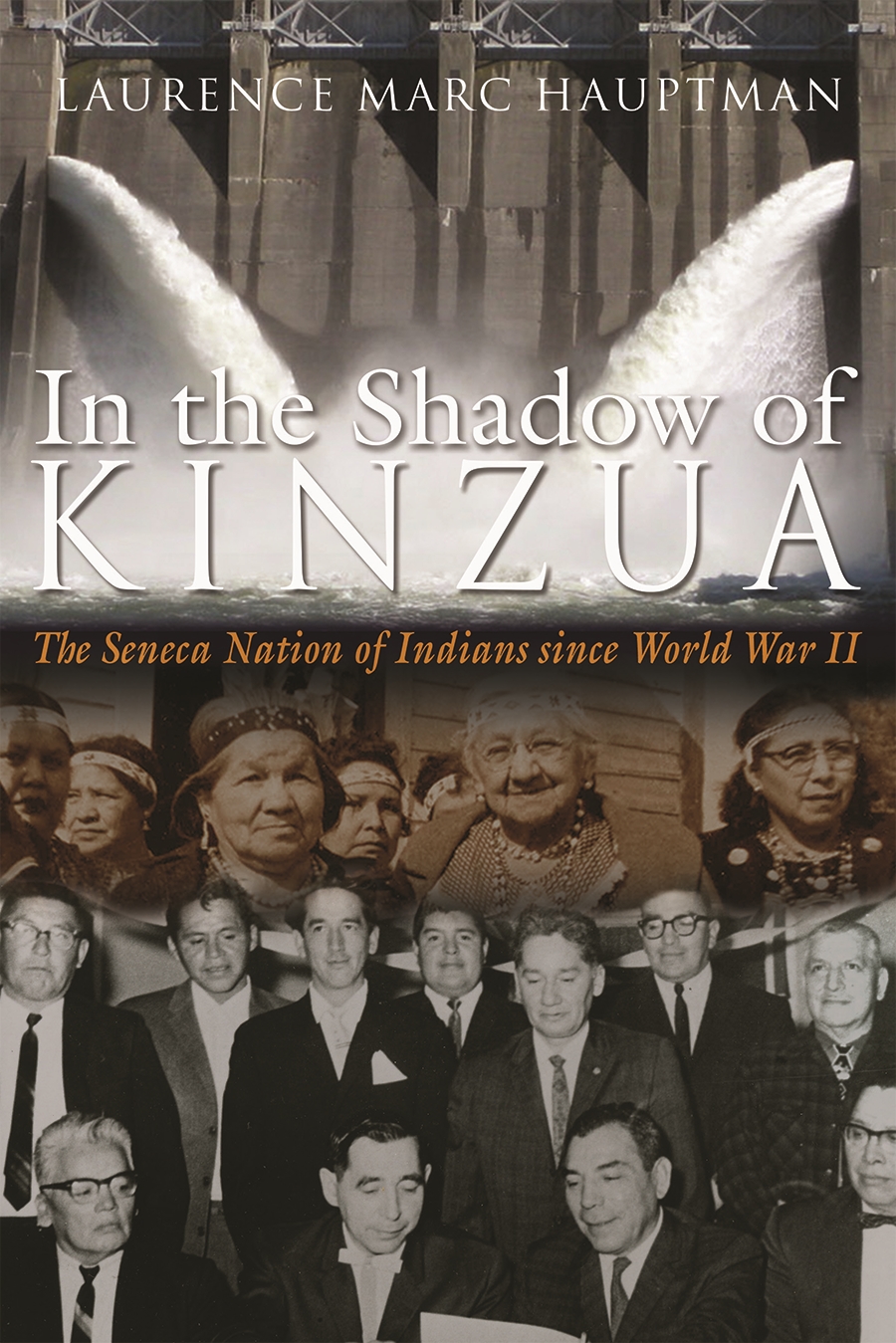
In the Shadow of Kinzua
The Seneca Nation of Indians Since World War II
Laurence M. Hauptman
Syracuse University Press · Print & ebook · January 22, 2014
Reading lane: Middle Atlantic History
The Kinzua Dam has cast a long shadow on Seneca life since World War II.
At a Glance
Who It's For
Book Details
- Authors
- Laurence M. Hauptman
- Publisher
- Syracuse University Press
- Published
- January 22, 2014
- Format
- Print & ebook
- Theme
- Middle Atlantic History · Midwest History
- Reading lane
- Middle Atlantic History
Affinity
Publisher Categories
Native American History
Middle Atlantic History
Regional Policy
About This Book
The Kinzua Dam has cast a long shadow on Seneca life since World War II. The project, formally dedicated in 1966, broke the Treaty of Canandaigua of 1794, flooded approximately 10,000 acres of Seneca lands in New York and Pennsylvania, and forced the relocation of hundreds of tribal members. Hauptman offers both a policy study, detailing how and why Washington, Harrisburg, and Albany came up with the idea to build the dam, and a community study of the Seneca Nation in the po...
Read full description
Similar Books

Black Indians
William Loren Katz · Atheneum Books for Young Readers
Affinity signal
Native American U.S. History for Teens
Native American Life (U.S.)

Johnstown Flood
David McCullough · Simon & Schuster
Affinity signal
Flood Control Engineering
Midwest History

The World, the Text, and the Indian
Scott Richard Lyons · State University of New York Press
Affinity signal
Indigenous Lit Crit
Indic Literary Criticism

Indian Nation
Cheryl Walker · Duke University Press
Affinity signal
Indigenous Lit Crit
Native American U.S. History for Teens

An Indigenous Peoples' History of the United States for Young People
Roxanne Dunbar-Ortiz · Beacon Press
Affinity signal
Native American U.S. History for Teens
Native American Life (U.S.)