
- Themes
- Artistic ambition, Personal decline, Exile
Who it’s for
- Readers interested in literary correspondence and Rimbaud’s life
- English-language readers exploring Rimbaud through his letters
Where it sits
How strongly BookFrontier reads the book as belonging to each subject.
Nearest books
Matched by our semantic model. Ordered by what its readers also loved.
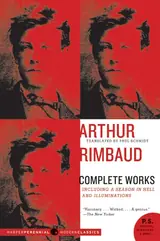 Arthur Rimbaud: Complete WorksArthur Rimbaud80% subject matchShares Letters & Correspondence and French Poetry
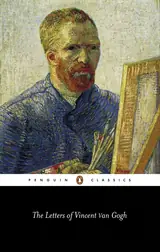 The Letters of Vincent van GoghVincent Van Gogh, Ronald de Leeuw56% subject matchShares Letters & Correspondence
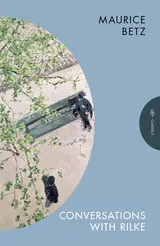 Conversations with RilkeMaurice Betz55% subject matchShares Letters & Correspondence and Writers' Lives
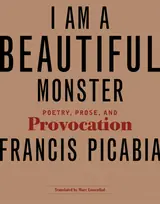 I Am a Beautiful MonsterFrancis Picabia54% subject matchShares French Poetry
 Letters to a Young PoetRainer Maria Rilke50% subject matchShares Letters & Correspondence
 The Collected Poems of Li HeLi He49% subject match
 Essays and Poems by Ralph Waldo EmersonRalph Waldo Emerson49% subject match
 Sonnets to OrpheusRainer Maria Rilke49% subject match
For younger readers: King Arthur and the Knights of the Round Table, I Just Hope It's Lethal
Start with three books, and this one can be the first.
Members get a new edition every morning: a route out from their books to essays, research and talks, with the reason for each.
Sign upAbout this book
One of the most written-about literary figures in the past decade, Arthur Rimbaud left few traces when he abandoned poetry at age twenty-one and disappeared into the African desert. Although the dozen biographies devoted to Rimbaud’s life depend on one main source for information—his own correspondence—a complete edition of these remarkable letters has never been published in English. Until now.
Continue reading
A moving document of decline, Rimbaud’s letters begin with the enthusiastic artistic pronouncements of a fifteen-year-old genius, and end with the bitter what-ifs of a man whose life has slipped disastrously away. But whether soapboxing on the essence of art, or struggling under the yoke of self-imposed exile in the desert of his later years, Rimbaud was incapable of writing an uninteresting sentence. As translator and editor Wyatt Mason makes clear in his engaging Introduction, the letters reveal a Rimbaud very different from our expectations. Rimbaud—presented by many biographers as a bohemian wild man—is unveiled as “diligent in his pursuit of his goals . . . wildly, soberly ambitious, in poetry, in everything.”
I Promise to Be Good: The Letters of Arthur Rimbaud is the second and final volume in Mason’s authoritative presentation of Rimbaud’s writings. Called by Edward Hirsch “the definitive translation for our time,” Mason’s first volume, Rimbaud Complete (Modern Library, 2002), brought Rimbaud’s poetry and prose into vivid focus. In I Promise to Be Good, Mason adds the missing epistolary pieces to our picture of Rimbaud. “These letters,” he writes, “are proofs in all their variety—of impudence and precocity, of tenderness and rage—for the existence of Arthur Rimbaud.” I Promise to Be Good allows English-language readers to see with new eyes one of the most extraordinary poets in history.
Publisher details
Publisher categories
- Writers' Lives
- Letters & Correspondence
- French Literary Criticism
- Authors
- Arthur Rimbaud
- Publisher
- Random House Publishing Group
- Published
- November 9, 2004
- Format
- Print & ebook
- Reading lane
- Writers' Lives