
Humankind
A Hopeful History
A hopeful, argument-driven look at what people are like—and why that matters.
Why It Lands
Come here for
- Optimistic social theory, with a historian’s eye
- Big questions about human nature, handled plainly
Expect
- Careful explanation over slogan
- A sturdy mix of history and economic thought
Where it sits
How strongly BookFrontier reads the book as belonging to each subject.
Nearest books
Matched by our semantic model. Ordered by what its readers also loved.
 Homo DeusYuval Noah Harari66% subject match
 RangeDavid Epstein58% subject match
 NexusYuval Noah Harari65% subject match
 Talking to StrangersMalcolm Gladwell62% subject matchShares Social Psychology
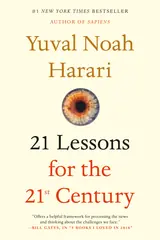 21 Lessons for the 21st CenturyYuval Noah Harari67% subject match
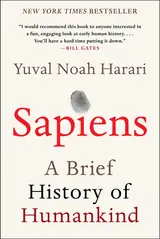 SapiensYuval Noah Harari71% subject match
 Guns, Germs, and SteelJared Diamond62% subject match
For younger readers: Unstoppable Us, Volume 1: How Humans Took Over the World, Big Lies
Start with three books, and this one can be the first.
Members get a new edition every morning: a route out from their books to essays, research and talks, with the reason for each.
Sign upAbout this book
AN INSTANT NEW YORK TIMES BESTSELLER
The “lively” (The New Yorker), “convincing” (Forbes), and “riveting pick-me-up we all need right now” (People) that proves humanity thrives in a crisis and that our innate kindness and cooperation have been the greatest factors in our long-term success as a species.
Continue reading
If there is one belief that has united the left and the right, psychologists and philosophers, ancient thinkers and modern ones, it is the tacit assumption that humans are bad. It's a notion that drives newspaper headlines and guides the laws that shape our lives. From Machiavelli to Hobbes, Freud to Pinker, the roots of this belief have sunk deep into Western thought. Human beings, we're taught, are by nature selfish and governed primarily by self-interest.
But what if it isn't true? International bestseller Rutger Bregman provides new perspective on the past 200,000 years of human history, setting out to prove that we are hardwired for kindness, geared toward cooperation rather than competition, and more inclined to trust rather than distrust one another. In fact this instinct has a firm evolutionary basis going back to the beginning of Homo sapiens.
From the real-life Lord of the Flies to the solidarity in the aftermath of the Blitz, the hidden flaws in the Stanford prison experiment to the true story of twin brothers on opposite sides who helped Mandela end apartheid, Bregman shows us that believing in human generosity and collaboration isn't merely optimistic—it's realistic. Moreover, it has huge implications for how society functions. When we think the worst of people, it brings out the worst in our politics and economics. But if we believe in the reality of humanity's kindness and altruism, it will form the foundation for achieving true change in society, a case that Bregman makes convincingly with his signature wit, refreshing frankness, and memorable storytelling.
"The Sapiens of 2020." —The Guardian
"Humankind made me see humanity from a fresh perspective." —Yuval Noah Harari, author of the #1 bestseller Sapiens
Longlisted for the 2021 Andrew Carnegie Medal for Excellence in Nonfiction
One of the Washington Post's 50 Notable Nonfiction Works in 2020
Publisher details
Publisher categories
- World History
- Civilizations
- History of Science
- How Cultures Work
Show all 5 publisher categories
- Social Theory
- Authors
- Rutger Bregman
- Publisher
- Little, Brown and Company
- Published
- November 16, 2021
- Format
- Print & ebook
- Reading lane
- World History