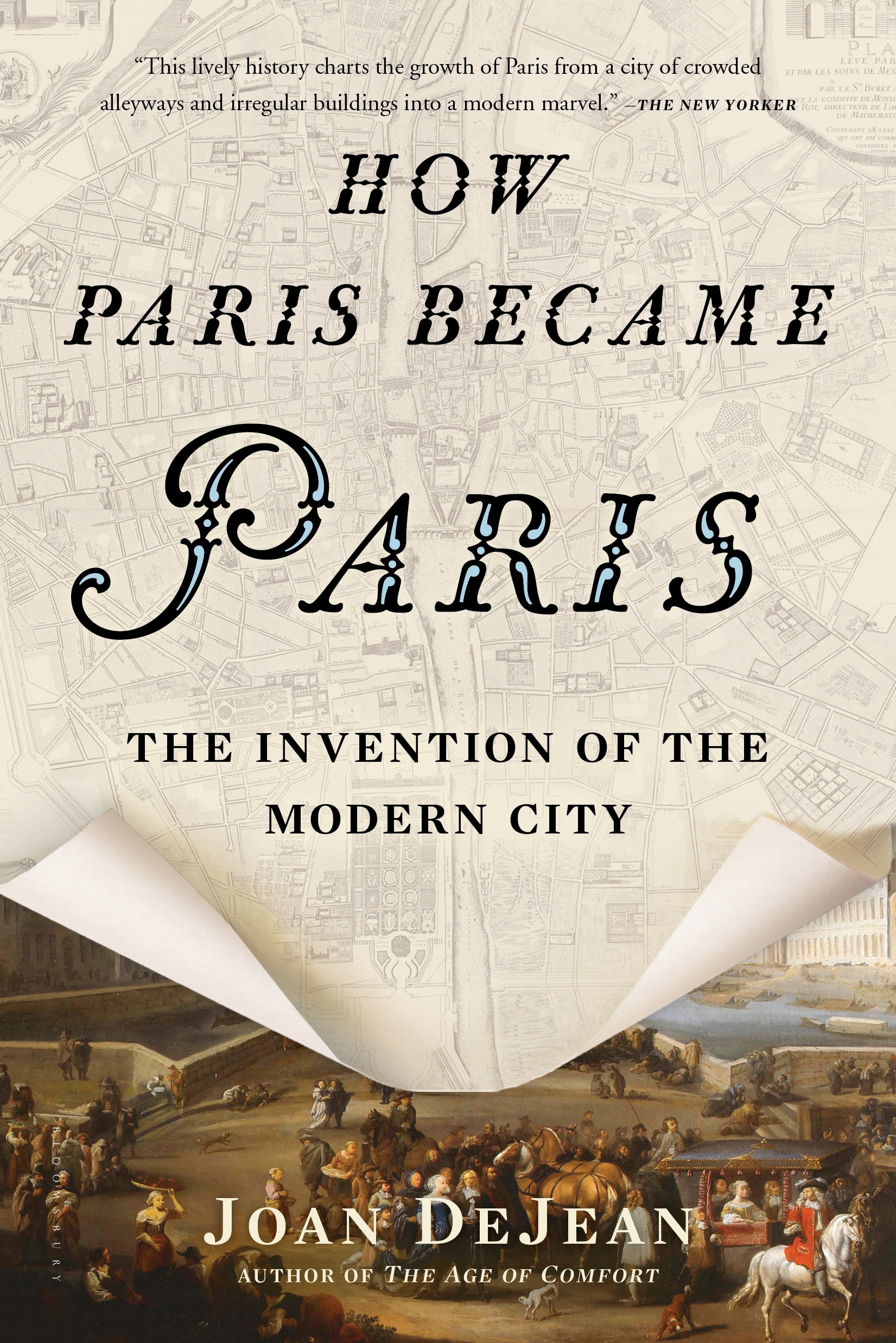
How Paris Became Paris
The Invention of the Modern City
- Who it’s for
- For readers interested in Parisian history and the origins of modern urban planning.
- Themes
- Parisian history, Urban planning, Public life in cities
Where it sits
How strongly BookFrontier reads the book as belonging to each subject.
Nearest books
Matched by our semantic model. Ordered by what its readers also loved.
 Proust's DuchessCaroline Weber52% subject matchShares French History
 The Regency YearsRobert Morrison46% subject match
 City on the EdgeMark Goldman46% subject match
 Lessons from Madame ChicJennifer L. Scott55% subject matchShares France Travel
 A New World BeginsJeremy Popkin55% subject matchShares French History
For younger readers: Eiffel's Tower for Young People, Cities, Manhattan
Start with three books, and this one can be the first.
Members get a new edition every morning: a route out from their books to essays, research and talks, with the reason for each.
Sign upAbout this book
"This lively history charts the growth of Paris from a city of crowded alleyways and irregular buildings into a modern marvel."--New Yorker
At the beginning of the seventeenth century, Paris was known for isolated monuments but had not yet put its brand on urban space. Like other European cities, it was still emerging from its medieval past. But in a mere century Paris would be transformed into the modern and mythic city we know today.
Continue reading
Though most people associate the signature characteristics of Paris with the public works of the nineteenth century, Joan DeJean demonstrates that the Parisian model for urban space was in fact invented two centuries earlier, when the first complete design for the French capital was drawn up and implemented. As a result, Paris saw many changes. It became the first city to tear down its fortifications, inviting people in rather than keeping them out. Parisian urban planning showcased new kinds of streets, including the original boulevard, as well as public parks and the earliest sidewalks and bridges without houses. Venues opened for urban entertainment of all kinds, from opera and ballet to a pastime invented in Paris, recreational shopping. Parisians enjoyed the earliest public transportation and street lighting, and Paris became Europe's first great walking city.
A century of planned development made Paris both beautiful and exciting. It gave people reasons to be out in public as never before and as nowhere else. And it gave Paris its modern identity as a place that people dreamed of seeing. By 1700, Paris had become the capital that would revolutionize our conception of the city and of urban life.
Publisher details
Publisher categories
- History of Architecture
- Urban & Land Use Planning
- French History
- Authors
- Joan DeJean
- Publisher
- Bloomsbury USA
- Published
- April 7, 2015
- Format
- Print & ebook
- Reading lane
- History of Architecture