BookFrontier
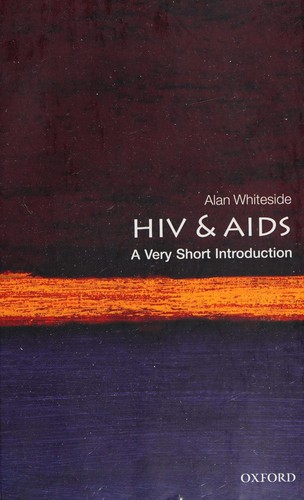
HIV and AIDS: a Very Short Introduction by Alan Whiteside

Book

HIV and AIDS: a Very Short Introduction

2nd Edition, Kindle Edition

Alan Whiteside

Oxford University Press · Ebook · December 2, 2016

Reading lane: Epidemiology

In 2008 it was believed that HIV/AIDS was without doubt the worst epidemic to hit humankind since the Black Death.

At a Glance

Why This Clicks

Compact Overview

A concise, authoritative guide for a focused read on HIV and AIDS.

Come here for

  • compact HIV/AIDS overview
  • steady explanatory read

Expect

  • clear, compact framing
  • short-form introduction, not a deep dive

Book Details

Authors
Alan Whiteside
Publisher
Oxford University Press
Published
December 2, 2016
Format
Ebook
Theme
Epidemiology
Reading lane
Epidemiology

Affinity

Publisher Categories

  • Epidemiology

About This Book

In 2008 it was believed that HIV/AIDS was without doubt the worst epidemic to hit humankind since the Black Death. The first case was identified in 1981; by 2004 it was estimated that about 40 million people were living with the disease, and about 20 million had died. Yet the outlook today is a little brighter. Although HIV/ AIDS continues to be a pressing public health issue the epidemic has stabilised globally, and it has become evident it is not, nor will it be, a global...

Read full description

In 2008 it was believed that HIV/AIDS was without doubt the worst epidemic to hit humankind since the Black Death. The first case was identified in 1981; by 2004 it was estimated that about 40 million people were living with the disease, and about 20 million had died. Yet the outlook today is a little brighter. Although HIV/ AIDS continues to be a pressing public health issue the epidemic has stabilised globally, and it has become evident it is not, nor will it be, a global issue. The worst affected regions are southern and eastern Africa. Elsewhere, HIV is found in specific, usually, marginalised populations, for example intravenous drug users in Russia. Although there still remains no cure for HIV, there have been unprecedented breakthroughs in understanding the disease and developing drugs. Access to treatment over the last ten years has turned AIDS into a chronic disease, although it is still a challenge to make antiviral treatment available to all that require it. We also have new evidence that treatment greatly reduces infectivity, and this has led to the movement of "Treatment as Prevention". In this Very Short Introduction Alan Whiteside provides an introduction to AIDS, tackling the science, the international and local politics, the fascinating demographics, and the devastating consequences of the disease. He looks at the problems a developing international "AIDS fatigue" poses to funding for sufferers, but also shows how domestic resources are increasingly being mobilised, despite the stabilisation of international funding. Finally Whiteside considers how the need to understand and change our behaviour has caused us to reassess what it means to be human and how we should operate in the globalizing world. ABOUT THE SERIES: The Very Short Introductions series from Oxford University Press contains hundreds of titles in almost every subject area. These pocket-sized books are the perfect way to get ahead in a new subject quickly. Our expert authors combine facts, analysis, perspective, new ideas, and enthusiasm to make interesting and challenging topics highly readable.

Similar Books