
Book
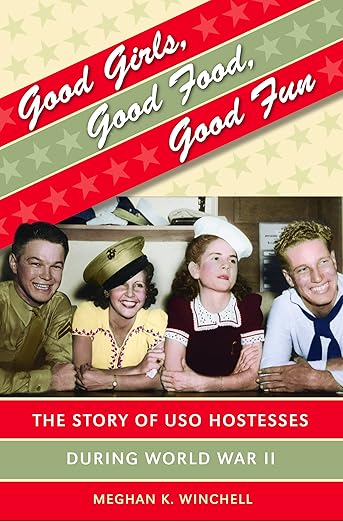
Good Girls, Good Food, Good Fun
The Story of USO Hostesses During World War II
Meghan K. Winchell
The University of North Carolina Press · Print & ebook · January 1, 2015
Reading lane: 20th‑Century America
Throughout World War II, when Saturday nights came around, servicemen and hostesses happily forgot the war for a little while as they danced together in USO clubs, which served as havens of stability in a time of social, moral, and geographic upheaval.
Disclosure: Some outbound links are affiliate links. If you buy through them, we may earn a commission. It doesn't affect which books we include. Learn more in our disclosure policy.
At a Glance
Who It's For
Book Details
- Authors
- Meghan K. Winchell
- Publisher
- The University of North Carolina Press
- Published
- January 1, 2015
- Format
- Print & ebook
- Theme
- 20th‑Century America · 20th‑Century History
- Reading lane
- 20th‑Century America
Affinity
Publisher Categories
World War II History
Women's Studies
About This Book
Throughout World War II, when Saturday nights came around, servicemen and hostesses happily forgot the war for a little while as they danced together in USO clubs, which served as havens of stability in a time of social, moral, and geographic upheaval. Meghan Winchell demonstrates that in addition to boosting soldier morale, the USO acted as an architect of the gender roles and sexual codes that shaped the “greatest generation.” Combining archival research with extensive fir...
Read full description
Similar Books

Strongman
Kenneth C. Davis · Square Fish
Shared affinity
20th‑Century America

Crimes and Cover-ups in American Politics
Donald Jeffries, Dr. Ron Paul · Skyhorse
Shared affinity
Affinity match is still building for this title.

Muggins
Grant Hayter-Menzies, Mark Zuehlke · Heritage House
Shared affinity
20th‑Century America
Acid Dreams
Martin A. Lee, Bruce Shlain · Grove/Atlantic
Shared affinity
20th‑Century America
20th‑Century History
Modern History

The Last Ships From Hamburg
Steven Ujifusa · HarperCollins
Shared affinity
Affinity match is still building for this title.
The Georgetown Set
Gregg Herken · Knopf Doubleday Publishing Group
Shared affinity
Affinity match is still building for this title.

Three Revolutions
Simon Hall · Faber & Faber
Shared affinity
Affinity match is still building for this title.

The Incredible '60s
Jules Archer, Todd Gitlin · Sky Pony
Shared affinity
Affinity match is still building for this title.