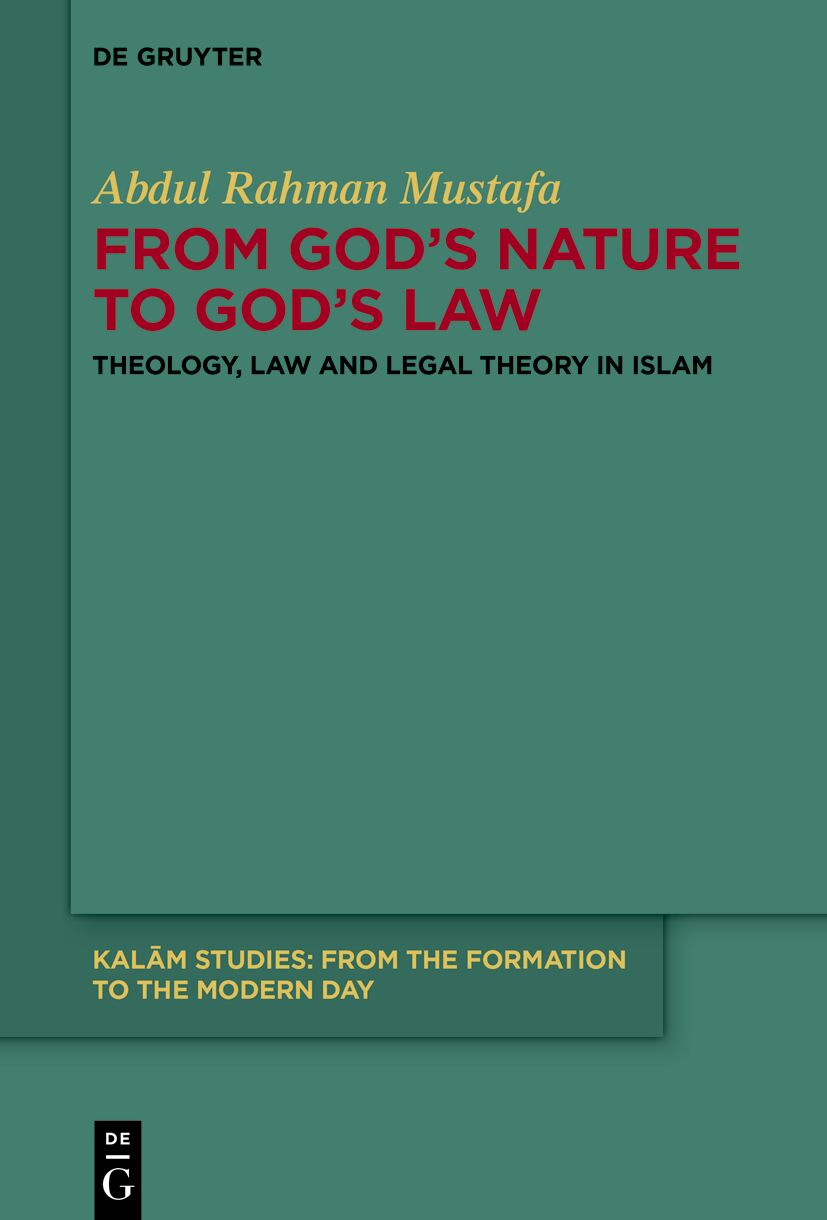
A study of how two scholars connected ideas about God with Islamic law.
God’s Voluntary Attributes
Come here for
- Ibn Taymiyyah and Ibn al-Qayyim’s critiques of dialectical theology
- Their account of the link between divine attributes and Islamic law
Expect
- Theological and jurisprudential thought in focus
- An argument for law grounded in God’s voluntary attributes
Where it sits
How strongly BookFrontier reads the book as belonging to each subject.
Nearest books
Matched by our semantic model. Ordered by what its readers also loved. Most of these share its genre: Islamic Law.
 Speaking in God's NameKhaled Abou El Fadl57% subject match
 Sectarian MilieuJohn E. Wansbrough54% subject match
 Law and Tradition in Classical Islamic ThoughtM. Cook, N. Haider53% subject match
For younger readers: No god but God: The Origins and Evolution of Islam, Islamic Faith and Worship, Uthman Ibn Affan
Start with three books, and this one can be the first.
Members get a new edition every morning: a route out from their books to essays, research and talks, with the reason for each.
Sign upAbout this book
This study explores the ways in which theological ideas regarding the nature of God shaped the jurisprudential and legal landscape of Islam. Focusing on the traditionalist theological and jurisprudential thought of Ibn Taymiyyah (d. 728/1328) and Ibn al-Qayyim (d. 751/1350), this study traces the way in which these towering scholars critiqued the dominant theological-jurisprudential tradition of their day, which was influenced by dialectical theology.
Continue reading
Against the dialectical theologians, Ibn Taymiyyah and Ibn al-Qayyim argued that an authentically fideist, consistent and rational theory of Islamic law could only emerge from an acceptance of the reality of God’s voluntary attributes.
Publisher details
Publisher categories
- African History
- Religion & Spirituality
- Islam - General
- Islamic Theology
- Authors
- Abdul Rahman Mustafa
- Publisher
- De Gruyter
- Published
- November 4, 2024
- Format
- Print & ebook
- Reading lane
- African History