
Freakonomics Revised and Expanded Edition
A Rogue Economist Explores the Hidden Side of Everything
Rigorous, playful explanations that make hidden incentives feel legible.
- Themes
- economics, incentives, behavioral science
- Pacing
- Mixed
Sharp Explanations
Come here for
- economics with a sharp, sideways eye
- career-and-business questions cut down to size
Expect
- social theory with a specialist’s bite
- classroom-friendly framing, not a soft read
Where it sits
How strongly BookFrontier reads the book as belonging to each subject.
Nearest books
Matched by our semantic model. Ordered by what its readers also loved.
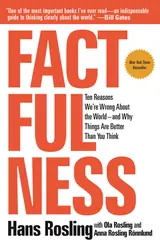 FactfulnessHans Rosling, Anna Rosling Rönnlund54% subject matchShares Economics
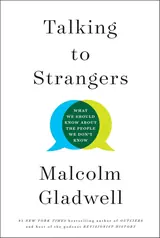 Talking to StrangersMalcolm Gladwell55% subject matchShares Social Psychology
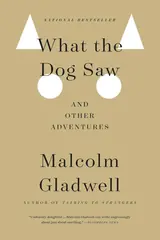 What the Dog SawMalcolm Gladwell55% subject matchShares Social Psychology
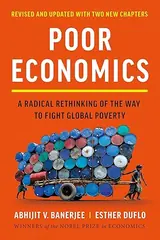 Poor EconomicsAbhijit V. Banerjee, Esther Duflo61% subject match
For younger readers: Big Money
Start with three books, and this one can be the first.
Members get a new edition every morning: a route out from their books to essays, research and talks, with the reason for each.
Sign upAbout this book
The legendary bestseller that encouraged millions of readers to look at the hidden side of everything
Which is more dangerous: a gun or a swimming pool? Why do drug dealers still live with their moms? What do real estate agents and the KKK have in common?
These may not sound like typical questions for an economist to ask. But Steven D. Levitt is not a typical economist.
Continue reading
He is a much-heralded scholar who uses data analysis to study the riddles of everyday life—from cheating and crime to sports and child-rearing—and whose conclusions turn conventional wisdom on its head. Freakonomics Rev Ed is a groundbreaking collaboration between Levitt and Stephen J. Dubner, an award-winning author and journalist. Some of these questions concern life-and-death issues; others have an admittedly freakish quality. Thus the new field of study contained in this book: freakonomics.
Through forceful storytelling and wry insight, Levitt and Dubner show that pop economics is, at root, the study of incentives—how people get what they want, or need, especially when other people want or need the same thing. In Freakonomics Rev Ed, they explore the hidden side of everything. The inner workings of a crack gang. The myths of campaign finance. The telltale marks of a cheating schoolteacher. What unites all these stories is a belief in counterintuitive thinking: that the modern world, despite a great deal of complexity and downright deceit, is not impenetrable, is not unknowable, and—if the right questions are asked—is even more intriguing than we think. All it takes is a new way of looking. Freakonomics Rev Ed establishes this unconventional premise: If morality represents how we would like the world to work, then behavioral economics represents how it actually does work. It is true that readers of this book will be armed with enough riddles and stories to last a thousand cocktail parties. But Freakonomics can provide more than that. It will literally redefine the way we view the modern world.
This revised and expanded edition of the book contains a smattering of bonus material, including selected Freakonomics columns from The New York Times Magazine; a Q&A with Steven Levitt, Stephen Dubner, and Angela Duckworth; and the New York Times Magazine profile Dubner wrote about Levitt that started it all.
This exploration of the hidden side of everything reveals:
- Incentives Are Everywhere: Why do drug dealers still live with their moms? It all comes down to understanding how people—from criminals to teachers—respond to economic, social, and moral incentives.
- Challenging Conventional Wisdom: Discover what schoolteachers and sumo wrestlers have in common, why real estate agents might not have your best interest at heart, and how common knowledge is often completely wrong.
- Case Studies in Economics: See how sifting through data reveals surprising truths about crime rates, parenting strategies, and more, showing that the modern world is more intriguing than we think.
- Real-World Economics: Learn which is more dangerous, a gun or a swimming pool, and other riddles of everyday life that demonstrate how economics represents the way the world actually works.
Publisher details
Publisher categories
- Business Development
- Finance
- Marketing
- Real Estate
Show all 8 publisher categories
- Business Statistics
- Economics
- Economic Theory
- Education Resources
- Authors
- Steven D. Levitt, Stephen J. Dubner
- Publisher
- HarperCollins
- Published
- May 19, 2020
- Format
- Print & ebook
- Reading lane
- Business Development