
Four Views on the Book of Revelation
Four approaches to Revelation’s vivid imagery offer a focused encounter with competing interpretations.
- Themes
- Interpretations of Revelation, Apocalyptic imagery, Biblical prophecy
Reading Revelation Differently
Come here for
- The puzzle of Revelation’s vivid, unsettling imagery
- Comparing historical, symbolic, and literal readings
Expect
- Four interpretations set side by side
- Fair-minded critique, with room to form your own view
Where it sits
How strongly BookFrontier reads the book as belonging to each subject.
Nearest books
Matched by our semantic model. Ordered by what its readers also loved.
 Turning PointsNoll, Mark A., Komline, David51% subject match
 Exalting Jesus in ActsTony Merida52% subject match
 RevelationN.T. Wright72% subject matchShares NT Commentary: Revelation and Eschatology
 The Meaning of the PentateuchJohn H. Sailhamer54% subject match
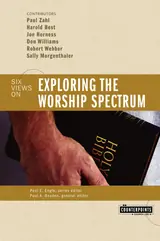 Exploring the Worship SpectrumZondervan51% subject match
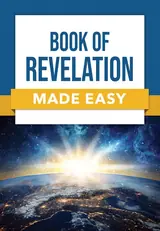 Book of Revelation Made EasyRose Publishing79% subject matchShares NT Commentary: Revelation, Eschatology and Prophecy & Biblical Themes
 The Bible UnfilteredMichael S. Heiser52% subject match
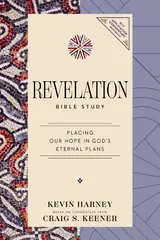 Revelation Bible StudyKevin G. Harney, Craig S. Keener74% subject matchShares NT Commentary: Revelation and Eschatology
For younger readers: The Wind, the Road and the Way
Start with three books, and this one can be the first.
Members get a new edition every morning: a route out from their books to essays, research and talks, with the reason for each.
Sign upAbout this book
Of all the books of the Bible, few are as fascinating or as intimidating as Revelation.
Four grim horsemen, the Antichrist, the ten-horned beast, the ultimate battle at Armageddon, the "mark of the beast." It's no wonder that these images have griped the imagination of so many--and have been variously interpreted as symbolizing everything from Hitler and Gorbachev to credit cards and the Internet.
Is the book of Revelation a blueprint for the future?
Continue reading
A book of powerful symbolic imagery with warnings for the church? Is it essentially an imaginative depiction of historical events in the first century?
Four Views on the Book of Revelation explores four interpretations of the book of the Apocalypse:
- Preterist – a historical interpretation, arguing that most of John’s prophecies occurred in the first century, soon after his writing of them.
- Idealist – a spiritual or symbolic interpretation, arguing that the events in Revelation are not literal, and that apocalyptic literature requires a different approach than the Gospels or Epistles.
- Classical dispensationalism – a literal interpretation based on a reading of Revelation that pays close attention to the rules of grammar and the separate eras of covenantal history.
- Progressive dispensationalism – a modification of classical that has its root in the understanding of Christ's reign beginning immediately after the resurrection.
The Counterpoints series presents a comparison and critique of scholarly views on topics important to Christians that are both fair-minded and respectful of the biblical text. Each volume is a one-stop reference that allows readers to evaluate the different positions on a specific issue and form their own, educated opinion.
Publisher details
Publisher categories
- New Testament Interpretation
- Prophecy & Biblical Themes
- Revelation Studies
- Authors
- Zondervan
- Publisher
- Zondervan Academic
- Published
- April 6, 1998
- Format
- Print & ebook
- Reading lane
- New Testament Interpretation