
Fighting in Paradise
Labor Unions, Racism, and Communists in the Making of Modern Hawai‘i
Gerald Horne traces how labor organizing, racial repression, and statehood debates shaped modern Hawaii.
Hawaii Labor Struggles
Come here for
- Plantation and dock labor organizing
- McCarthyite attacks on the ILWU
Expect
- Union struggles from the 1930s through the 1950s
- The wartime halt to organizing and the statehood debate
Where it sits
How strongly BookFrontier reads the book as belonging to each subject.
Nearest books
Matched by our semantic model. Ordered by what its readers also loved.
 The Apocalypse of Settler ColonialismGerald Horne38% subject match
 Captive ParadiseJames L. Haley67% subject matchShares Western U.S. History
 Lost KingdomJulia Flynn Siler59% subject matchShares Western U.S. History
 Taking HawaiiStephen Dando-Collins57% subject matchShares Western U.S. History
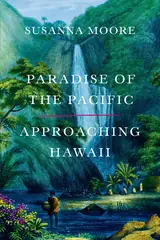 Paradise of the PacificSusanna Moore57% subject matchShares Western U.S. History
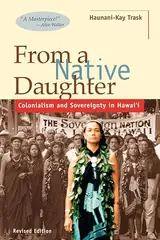 From a Native DaughterHaunani-Kay Trask57% subject match
 A Collective BargainJane McAlevey55% subject matchShares Unions & Labor
 Fight Like HellKim Kelly54% subject match
For younger readers: Shift Happens: The History of Labor in the United States, Days of Infamy: How a Century of Bigotry Led to Japanese American Internment, When Can We Go Back to America?
Start with three books, and this one can be the first.
Members get a new edition every morning: a route out from their books to essays, research and talks, with the reason for each.
Sign upAbout this book
Powerful labor movements played a critical role in shaping modern Hawaii, beginning in the 1930s, when International Longshore and Warehousemen’s Union (ILWU) representatives were dispatched to the islands to organize plantation and dock laborers. They were stunned by the feudal conditions they found in Hawaii, where the majority of workers—Hawaiian, Japanese, Chinese, and Filipino in origin—were routinely subjected to repression and racism at the hands of white bosses.
Continue reading
The wartime civil liberties crackdown brought union organizing to a halt; but as the war wound down, Hawaii workers’ frustrations boiled over, leading to an explosive success in the forming of unions. During the 1950s, just as the ILWU began a series of successful strikes and organizing drives, the union came under McCarthyite attacks and persecution. In the midst of these allegations, Hawaii’s bid for statehood was being challenged by powerful voices in Washington who claimed that admitting Hawaii to the union would be tantamount to giving the Kremlin two votes in the U.S. Senate, while Jim Crow advocates worried that Hawaii’s representatives would be enthusiastic supporters of pro–civil rights legislation.
Hawaii’s extensive social welfare system and the continuing power of unions to shape the state politically are a direct result of those troubled times. Based on exhaustive archival research in Hawaii, California, Washington, and elsewhere, Gerald Horne’s gripping story of Hawaii workers’ struggle to unionize reads like a suspense novel as it details for the first time how radicalism and racism helped shape Hawaii in the twentieth century.
Publisher details
Publisher categories
- Labor & Workforce
- Western U.S. History
- Oceania History
- Social History
Show all 6 publisher categories
- Labor & Industrial Relations
- Race & Discrimination
- Authors
- Gerald Horne
- Publisher
- University of Hawaii Press
- Published
- July 31, 2011
- Format
- Print & ebook
- Reading lane
- Labor & Workforce