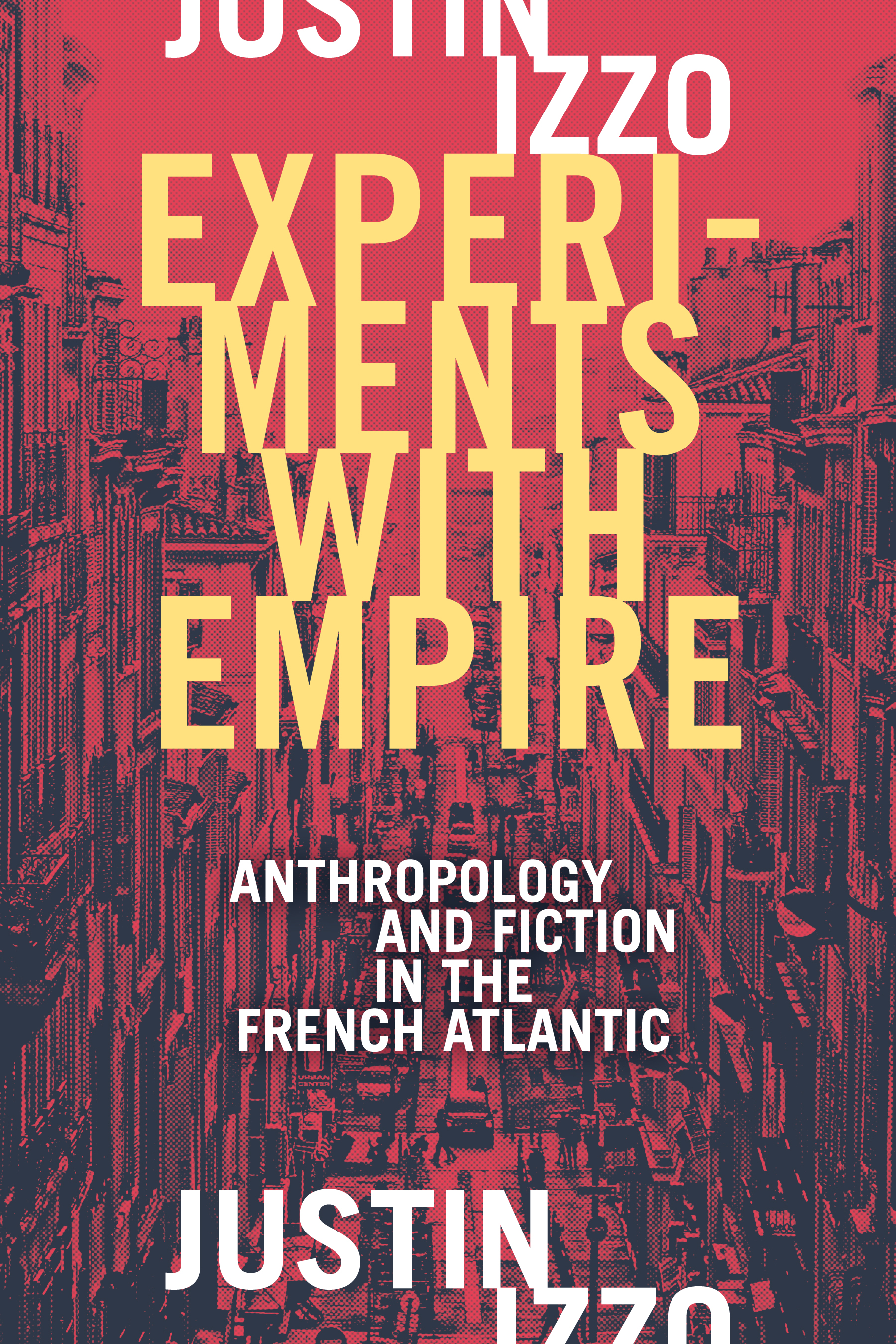
Justin Izzo traces how writers and artists used ethnographic fiction to think beyond empire’s boundaries.
Ethnography Meets Fiction
Come here for
- Ethnography and fiction in novels, films, and ethnographies
- Works by Michel Leiris, Jean Rouch, Amadou Hampâté Bâ, and Patrick Chamoiseau
Expect
- Twentieth-century work from France, West Africa, and the Caribbean
- Attention to imperialism’s complicated legacy and imagined democratic futures
Where it sits
How strongly BookFrontier reads the book as belonging to each subject.
Nearest books
Matched by our semantic model. Ordered by what its readers also loved. Most of these share its genre: Colonialism & Its Aftermath.
 Empire UnseenMelanie Lamotte60% subject match
 The Brink of FreedomDavid Kazanjian53% subject match
 After BarbaryTimothy Mason Roberts52% subject match
For younger readers: Kiffe Kiffe Tomorrow
Start with three books, and this one can be the first.
Members get a new edition every morning: a route out from their books to essays, research and talks, with the reason for each.
Sign upAbout this book
In Experiments with Empire Justin Izzo examines how twentieth-century writers, artists, and anthropologists from France, West Africa, and the Caribbean experimented with ethnography and fiction in order to explore new ways of knowing the colonial and postcolonial world.
Continue reading
Focusing on novels, films, and ethnographies that combine fictive elements and anthropological methods and modes of thought, Izzo shows how empire gives ethnographic fictions the raw materials for thinking beyond empire's political and epistemological boundaries. In works by French surrealist writer Michel Leiris and filmmaker Jean Rouch, Malian writer Amadou Hampâté Bâ, Martinican author Patrick Chamoiseau, and others, anthropology no longer functions on behalf of imperialism as a way to understand and administer colonized peoples; its relationship with imperialism gives writers and artists the opportunity for textual experimentation and political provocation. It also, Izzo contends, helps readers to better make sense of the complicated legacy of imperialism and to imagine new democratic futures.
Publisher details
Publisher categories
- Literary Theory
- Comparative Literature
- How Cultures Work
- Authors
- Justin Izzo
- Publisher
- Duke University Press
- Published
- June 7, 2019
- Format
- Print & ebook
- Reading lane
- Literary Theory