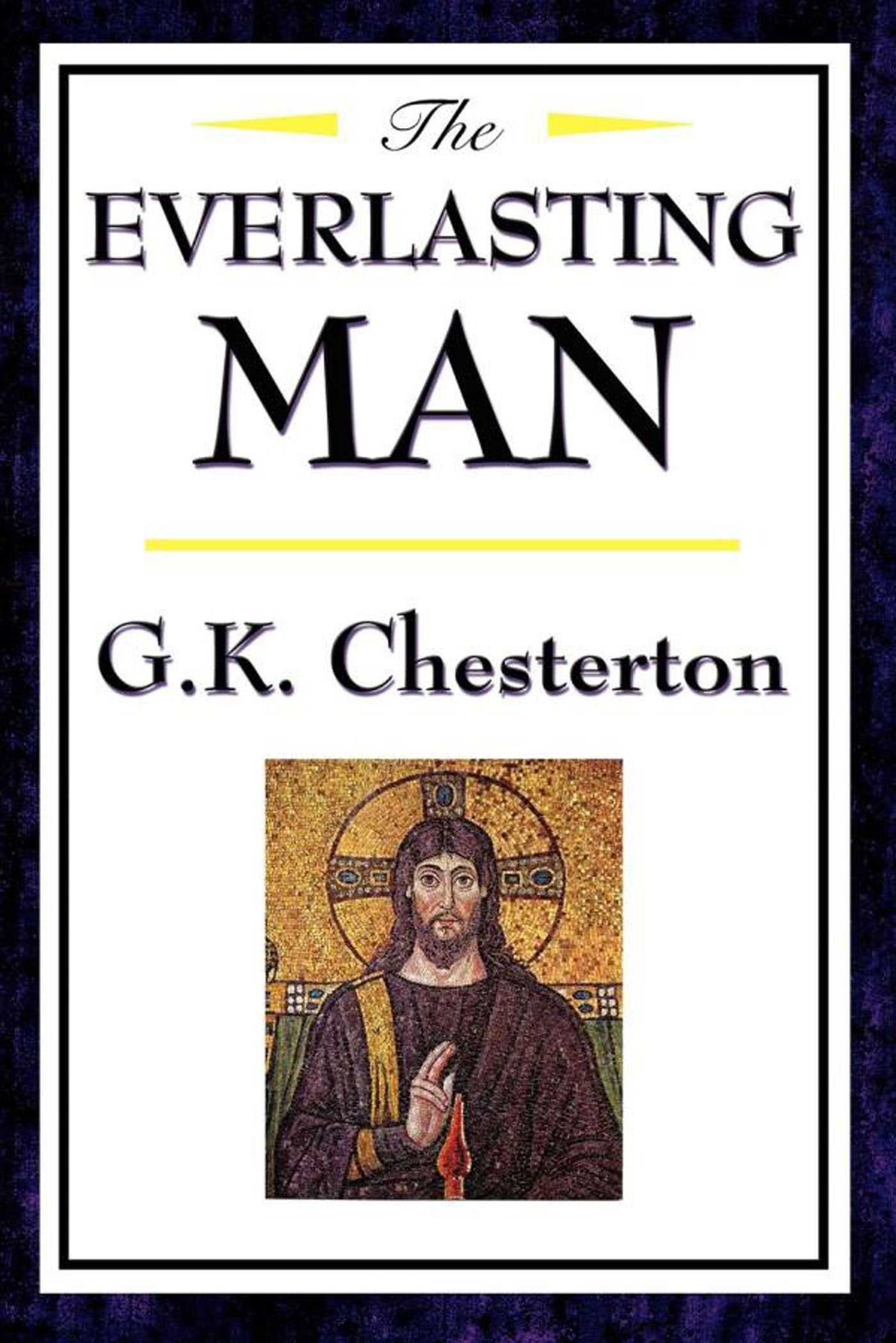
Everlasting Man
Chesterton makes the history of humanity and Christianity a question of spiritual meaning.
History with a Question
Come here for
- A sweeping view of humanity, Christ, and Christianity
- Chesterton’s challenge to tidy stories of civilization’s progress
Expect
- Layered historical and religious argument
- A serious, contemplative account of Western civilization’s spiritual journey
Where it sits
How strongly BookFrontier reads the book as belonging to each subject.
Nearest books
Matched by our semantic model. Ordered by what its readers also loved. Most of these share its genre: Christian Apologetics.
 OrthodoxyGilbert K. Chesterton68% subject match
 HereticsG. K. Chesterton56% subject match
 What's Wrong with the WorldG. K. Chesterton53% subject match
 Mere ChristianityC. S. Lewis45% subject match
 Surprised by JoyC. S. Lewis44% subject match
 Life of ChristFulton J. Sheen51% subject match
 The Man Who Was ThursdayG. K. Chesterton50% subject match
 The Sovereignty of GodArthur W. Pink54% subject match
For younger readers: The Story of the Middle Ages
Start with three books, and this one can be the first.
Members get a new edition every morning: a route out from their books to essays, research and talks, with the reason for each.
Sign upAbout this book
The Everlasting Man is a history of mankind, Christ and Christianity written by G. K. Chesterton. It is to some extent a deliberate rebuttal of H. G. Wells' "Outline of History," disputing Wells' portrayals of human life and civilization as a seamless development from animal life and of Jesus Christ as merely another charismatic figure.
Continue reading
Whereas "Orthodoxy" detailed Chesterton's own spiritual journey, in this book he tries to illustrate the spiritual journey of mankind, or at least of Western civilization.
Publisher details
Publisher categories
- Catholicism
- Religion in the Arts
- Christian Apologetics
- Authors
- G. K. Chesterton
- Publisher
- Start Publishing LLC
- Published
- December 19, 2012
- Format
- Print & ebook
- Reading lane
- Catholicism