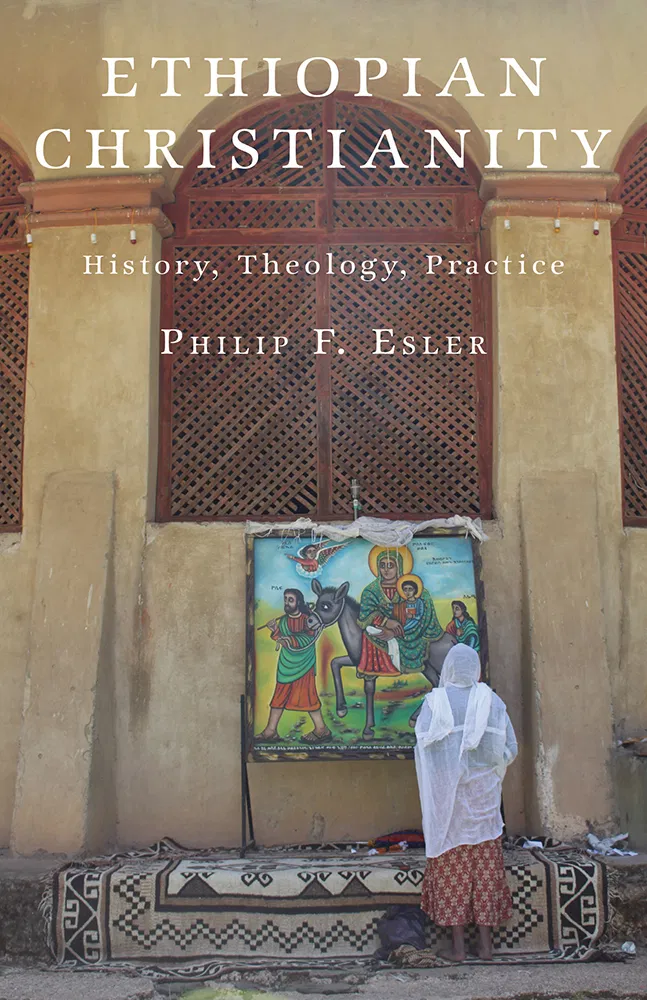
Ethiopian Christianity
History, Theology, Practice
A history of Ethiopian Christianity in its political, cultural, and religious contexts.
Faith and Monarchy
Come here for
- The church’s close relationship with the monarchy, through Haile Selassie’s death in 1974
- Ethiopian Orthodox theology, literature, art, architecture, and music
Expect
- Profiles of Protestant denominations and Roman Catholicism
- Discussion of relations with Islam and other Christian churches
Where it sits
How strongly BookFrontier reads the book as belonging to each subject.
Nearest books
Matched by our semantic model. Ordered by what its readers also loved.
 The Orthodox ChurchTimothy Ware50% subject matchShares Orthodox Christianity
 ChristianityDavid Chidester64% subject matchShares Christian History
 Twelve ChurchesFergus Butler-Gallie62% subject matchShares Christian History
 Turning PointsNoll, Mark A., Komline, David60% subject matchShares Christian History
 Church History in Plain Language, Fifth EditionBruce Shelley58% subject match
 Ethiopia - Culture Smart!Sarah Howard58% subject matchShares East African History
 Bullies and SaintsZondervan, John Dickson57% subject match
 Early North African ChristianityEastman, David L.56% subject match
For younger readers: God’s Timeline, Who Was Jesus?
Start with three books, and this one can be the first.
Members get a new edition every morning: a route out from their books to essays, research and talks, with the reason for each.
Sign upAbout this book
In Ethiopian Christianity Philip Esler presents a rich and comprehensive history of Christianity?s flourishing. But Esler is ever careful to situate this growth in the context of Ethiopia?s politics and culture. In so doing, he highlights the remarkable uniqueness of Christianity in Ethiopia.
Ethiopian Christianity begins with ancient accounts of Christianity?s introduction to Ethiopia by St. Frumentius and King Ezana in the early 300s CE.
Continue reading
Esler traces how the church and the monarchy closely coexisted, a reality that persisted until the death of Haile Selassie in 1974. This relationship allowed the emperor to consider himself the protector of Orthodox Christianity. The emperor's position, combined with Ethiopia?s geographical isolation, fostered a distinct form of Christianity--one that features the inextricable intertwining of the ordinary with the sacred and rejects the two-nature Christology established at the Council of Chalcedon.
In addition to his historical narrative, Esler also explores the cultural traditions of Ethiopian Orthodoxy by detailing its intellectual and literary practices, theology, and creativity in art, architecture, and music. He provides profiles of the flourishing Protestant denominations and Roman Catholicism. He also considers current challenges that Ethiopian Christianity faces--especially Orthodoxy?s relations with other religions within the country, in particular Islam and the Protestant and Roman Catholic churches. Esler concludes with thoughtful reflections on the long-standing presence of Christianity in Ethiopia and hopeful considerations for its future in the country?s rapidly changing politics, ultimately revealing a singular form of faith found nowhere else.
Publisher details
Publisher categories
- East African History
- Christian History
- Orthodox Christianity
- Authors
- Philip F. Esler
- Publisher
- Baylor University Press
- Published
- November 1, 2021
- Format
- Print & ebook
- Reading lane
- East African History